York is a city of deep working-class pride and its communities have learned — out of necessity, over generations — to carry more than they should have to carry alone. The trauma burdens of York's manufacturing families, and its veterans deserve the most qualified, most specialized clinical care in Pennsylvania. That care is now available in your home through telehealth — or in person at our Lancaster office, just 25 miles away on I-30.
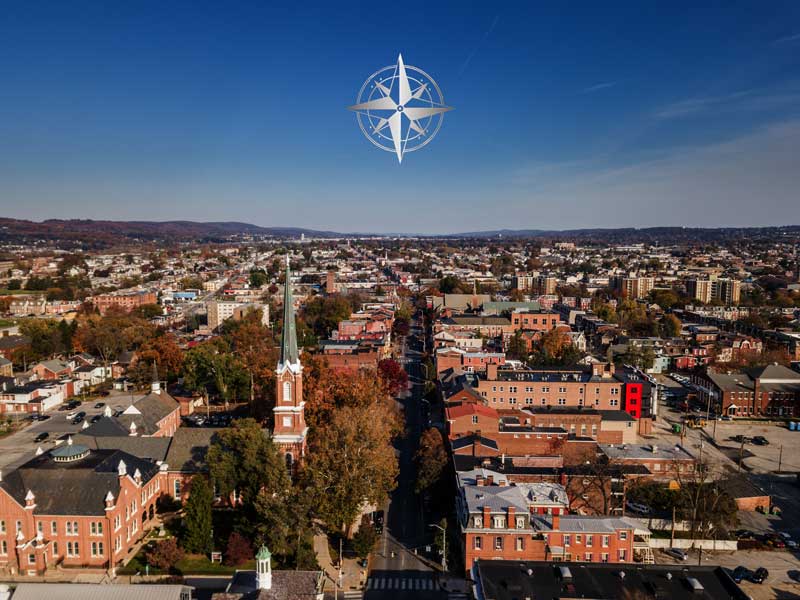
York is one of Pennsylvania's oldest and most storied cities — a place that served briefly as the seat of the Continental Congress in 1777, that built a manufacturing economy whose products were known nationwide, and that has navigated the full arc of American urban experience: industrial prosperity, post-industrial contraction, concentrated urban poverty, and the slow, generational work of a community reckoning with what those experiences have cost and what they have produced. Today's York — a city of roughly 45,000 inside a county of nearly 460,000 — is a place of genuine cultural vitality, significant economic inequality, and unmet clinical need that the city's existing mental health infrastructure has never been fully equipped to address.
York's trauma burden is urban and specific in ways that distinguish it sharply from the rural and post-extractive counties that make up much of ACRS's service area. The wounds here are those of urban poverty and the concentrated stress of under-resourced neighborhoods; of working-class manufacturing families whose industrial employers have contracted or departed; and of veterans and first responders who served from a city that has its own particular relationship to service and sacrifice.
At Advanced Counseling and Research Services, our licensed trauma specialists serve York residents through secure telehealth — and through in-person appointments at our Lancaster office, just 25 miles north on I-30. York is the closest major city to ACRS in Pennsylvania. Every York resident deserves access to the most qualified trauma specialists in the state. That access has never been closer.
York's Unmet Trauma Burden — Urban, Layered, and Long Overdue for Specialized Care
York's trauma landscape is shaped by forces specific to its history, its demographics, and its position as a post-industrial city whose needs have consistently outrun its resources. ACRS's certified clinical trauma professionals are trained to work with all of these realities:
The 1969 York race riots and the long aftermath of racial violence: In July and August of 1969, York experienced some of the most serious racial violence of any American city that summer — rioting that produced multiple deaths, including the shooting deaths of Lillie Belle Allen, a Black woman killed by a white mob, and Patrolman Henry C. Schaad, a white police officer killed while responding to the violence. The events of 1969 left wounds in York's Black community — and in the city's white working-class neighborhoods — that were not addressed clinically at the time and whose transmission across generations has never been given adequate clinical acknowledgment. Decades later, prosecutions brought in the early 2000s forced a partial reckoning, but the psychic legacy of that summer — the fear, the grief, the specific trauma of communities that experienced or witnessed or lost people to racial violence — remains present in York in ways that specialized trauma care is equipped to address and that generalist mental health services have never been organized to reach.
Manufacturing deindustrialization and working-class economic grief: York was for much of the twentieth century a proudly productive manufacturing city — home to York Barbell, York International (the air conditioning manufacturer whose products cooled much of postwar America), Pfaltzgraff pottery, and dozens of other industrial employers that anchored working-class livelihoods across the county. The contraction of that manufacturing base — plant closures, workforce reductions, the specific grief of watching industries that defined a community's identity and provided its economic stability move away or shrink — has left a multigenerational psychological legacy that York's clinical infrastructure has addressed only partially. ACRS's certified clinical trauma professionals recognize and treat the specific patterns of post-industrial community grief, including the way that economic loss intersects with identity, purpose, and the working-class pride that made acknowledging difficulty harder than it might otherwise have been.
Opioid and fentanyl epidemic in an urban community with concentrated need: York city has been among the hardest-hit communities in southcentral Pennsylvania in the opioid epidemic — with rates of overdose death and addiction that reflect the underlying conditions of concentrated urban poverty, unaddressed trauma, limited economic opportunity, and the specific vulnerabilities of communities that have never had adequate access to specialized clinical services. Recovery without treating underlying trauma consistently fails. ACRS's certified clinical trauma professionals address both, through telehealth or in person at our Lancaster office.
Veterans from a working-class city with a strong service tradition: York County has a strong military service tradition — and York's working-class and lower-income communities have contributed to that tradition in the proportions that have always characterized communities where military service is one of the most accessible paths to education, stability, and purpose. Veterans returning to York's urban neighborhoods return to communities that honor their service and are poorly equipped to address what that service cost them. ACRS provides specialized, evidence-based PTSD care for York veterans that delivers what the city's own clinical infrastructure has never had the depth to provide.
First responders in an urban environment with concentrated demands: York's police officers, firefighters, and EMS professionals work in an urban environment whose calls involve community violence, overdose, poverty-related crisis, and the full spectrum of what a post-industrial city with concentrated disadvantage produces. The cumulative psychological cost of working that environment — day after day, year after year, in a professional culture that has never made room for acknowledging it — is a specific and serious clinical burden. Telehealth provides access to specialized trauma care that is completely confidential, available from home, and not dependent on anyone in the department knowing you sought it.
Domestic violence with urban-specific barriers to safety: For domestic violence survivors in York, the barriers to accessing help are compounded by urban factors specific to the city: concentrated social networks in tight-knit neighborhoods where everyone knows everyone, economic dependency in a context of limited employment opportunities, and housing instability that limits options for leaving. Telehealth provides access to trauma-informed care from a private moment at home — without requiring transportation, community visibility, or the kind of logistical planning that crisis situations make nearly impossible.
ACRS's certified clinical trauma professionals are trained specifically to work with complex, layered trauma — not just acute single-event PTSD. Whether you are in York city, West York, Red Lion, Spring Grove, Hanover, or anywhere across York County, we meet you where you are.
Why York Residents Choose ACRS
Personalized, Trauma-Informed Care — Via Telehealth or In Person, Just 25 Miles Away
We work collaboratively with you to develop a Trauma-Informed Care Plan that addresses your specific needs and goals.
One-on-one sessions with a certified traumatologist — via secure video on your phone, tablet, or computer, or in person at our Lancaster office just 25 miles from York on I-30.
Secure, HIPAA-compliant video therapy from the comfort and complete privacy of your own home — no waiting room, no neighborhood visibility, no one in York who needs to know.
Specialized, compassionate PTSD care for York veterans and active military families — via telehealth at home, or in person at our Lancaster office. You served. You deserve care that honors what you've been through, with the depth and specialization that York's existing clinical infrastructure has never been able to match.
First Responders
York's police officers, firefighters, and EMS professionals carry the cumulative weight of urban crisis response in a post-industrial city — and do so in a professional culture that has always treated acknowledgment of that weight as incompatible with the job. Our trauma specialists understand that culture and provide completely confidential telehealth care on your schedule, from your home, with no department visibility and no waiting room in your community.
Survivors of Domestic Violence
Individuals With Substance Use Disorders
Two Ways to Access Care: Telehealth at Home, or In Person in Lancaster
Our Lancaster office is at 313 W Liberty St STE 224, Lancaster, PA 17603 — approximately 25 miles from downtown York via I-30 North. Whether you choose telehealth or in-person care, your first step is a free, confidential 10-minute consultation.
For most Pennsylvania counties in ACRS's service area, telehealth is the primary or only realistic path to specialized trauma care — because the distance to our Lancaster office makes in-person attendance genuinely impractical on a consistent basis. York is different. At roughly 25 miles on I-30, York is the closest major city to our Lancaster office in the state. For York residents who want to come in person — who prefer a face-to-face clinical environment, who don't have reliable privacy at home for a telehealth session, or who simply want the option — in-person appointments are a real and practical choice.
For York residents who prefer telehealth — for reasons of privacy, scheduling, transportation, childcare, work demands, or simply because they want access to care from the comfort and safety of their own home — our secure video platform delivers the same clinical quality as being in the room. Evidence-based telehealth therapy produces outcomes fully comparable to in-person care for trauma, anxiety, and PTSD.
Here is what York clients tell us they value:
Real choice — telehealth at home or a 25-minute drive to our Lancaster office on I-30; York residents have both options in a way that virtually no other community in our service area does.
Complete privacy — in York's tight-knit urban and suburban neighborhoods, being seen in a therapist's waiting room carries meaning. Your telehealth session is known only to you.
Culturally competent care — clinicians who understand York's specific history, its working-class heritage, and the particular ways that trauma presents in the communities we serve.
Depth of specialization — certified clinical trauma professionals with advanced credentials in evidence-based trauma treatment, including specific training in intergenerational trauma, and complex PTSD, that York's generalist provider pool does not match.
Sessions that fit your schedule — including evenings through Thursday, because trauma doesn't wait for business hours and York's working families can't always leave work at 4pm.
It works. Evidence-based therapy — telehealth or in-person — delivers measurable, lasting results for trauma, anxiety, OCD, ADHD, and PTSD.
ACRS Treatment Modalities for Anxiety, Trauma, and PTSD
Brainspotting operates on the principle that where you look affects how you feel. A therapist helps you identify "brainspots" — eye positions linked to stored emotional experiences or trauma in the brain. By maintaining focus on the brainspot while fostering mindfulness and connection, the brain processes and releases unresolved emotions at a profound neurobiological level.
Brainspotting is effective for PTSD, Anxiety, Depression, chronic pain, and performance issues — and is particularly well-suited to the layered, often wordless trauma carried by many York residents: the intergenerational residue of racial violence and community grief, the accumulated chronic stress of concentrated poverty, the occupational trauma of first responders and veterans, and the specific wounds that are carried in the body long before they find words. These are precisely the kinds of trauma that neurobiological approaches reach most effectively.
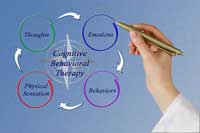
CBT is a short-term, goal-oriented psychotherapy that helps you identify and challenge unhelpful thought patterns and develop healthier coping mechanisms. It is highly effective for Anxiety, Depression, and PTSD — and its practical, skills-based structure resonates with York residents who want results they can use in their daily lives, including veterans, first responders, and working-class community members who value directness and want to understand what they're working toward and how to measure progress.
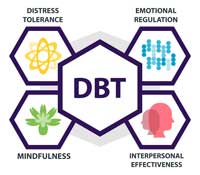
DBT teaches four core skill sets — Mindfulness, Distress Tolerance, Emotion Regulation, and Interpersonal Effectiveness — to help you navigate overwhelming emotions and build healthier relationships. Especially effective for borderline personality disorder, self-harm, and suicidal ideation.
EMDR (Eye Movement Desensitization and Reprocessing) is a gold-standard treatment for trauma and PTSD. It involves recalling disturbing memories while focusing on bilateral stimulation, helping your brain reprocess traumatic memories and reduce their emotional intensity. Effective for PTSD, Anxiety, Phobias, and other trauma-related conditions.
Exposure and Response Prevention (ERP) Therapy
ERP is the gold-standard, evidence-based treatment for OCD and related Anxiety Disorders. It involves gradually exposing you to feared thoughts or situations while helping you resist compulsive responses — breaking the OCD cycle and restoring your sense of control.
PE is a type of CBT used to treat PTSD and Anxiety disorders. It involves gradually confronting feared memories and avoided situations in a safe environment. Through repeated exposure, the anxiety associated with trauma triggers diminishes over time — helping you reclaim your life.
Other Therapy Techniques
Narrative Therapy: Encourages you to tell your story, helping you understand and reclaim your own experiences — including the stories of York residents who grew up in neighborhoods shaped by the 1969 riots without anyone ever giving them a clinical space to ask what that history means for them personally; of manufacturing families whose working-class identity was built around work that no longer exists in the same form; and of veterans who came home to a city that is proud of them without knowing how to help them.
Somatic Experiencing: Focuses on your body's physical response to trauma and works to release stored tension — particularly valuable for York residents whose chronic stress of urban poverty or occupational demands has left the body in a state of vigilance that doesn't resolve when the immediate stressor passes, and for anyone whose trauma history has been carried physically for so long that it has become the background condition of their daily life rather than a recognized wound.
Mindfulness and Relaxation Techniques: Meditation and deep breathing to help manage trauma-related stress and Anxiety — practices that can be grounded in whatever environment York residents actually inhabit: the Codorus Creek corridor through the city, the quiet of a suburban backyard, the particular stillness available in any home when children are asleep and there is finally a moment that belongs only to you. Mindfulness does not require a special location. It requires a clinical framework and consistent practice. ACRS provides both.
Psychoeducation: Understanding trauma and its effects — including the specific clinical dimensions of racial trauma and intergenerational community grief, the chronic stress of concentrated urban poverty, immigration-related trauma, the occupational burden of first responder and veteran service, and the neurobiology of how unaddressed trauma changes the nervous system over time — to help you understand your own experience in terms that are accurate, clinically grounded, and specifically applicable to life in York. Understanding what has happened to you, and why your responses to it make complete sense, is itself part of healing.
Our Experienced Anxiety, Trauma, and PTSD Counselors
Our counselors are trained in Trauma-Informed Care and have extensive experience helping individuals heal from traumatic experiences — including the specific and layered trauma of York's communities: the working-class grief of York's manufacturing families, and the veterans and first responders whose service has never been matched with adequate specialized clinical support.
Specialized Expertise in York's Specific Trauma Landscape: Certified Traumatologists with advanced credentials in evidence-based trauma treatment — EMDR, Brainspotting, CBT, DBT, Prolonged Exposure, and more — including complex PTSD, post-industrial economic grief, and veteran and first responder PTSD. York has generalist mental health providers. ACRS has specialists whose depth of training and focus specifically on trauma sets them apart from anything else available in southcentral Pennsylvania.
Two Access Points — Telehealth at Home or In Person in Lancaster: York residents have a choice that virtually no other community in ACRS's service area has. Secure telehealth from home, or a 25-minute drive north on I-30 to our Lancaster office at 313 W Liberty St STE 224. Both options deliver the same quality of specialized, certified clinical trauma care. You choose what works for you.
Complete Privacy, Regardless of How You Access Care: Whether you choose telehealth — where your session is known only to you — or in-person appointments in Lancaster rather than in your own York neighborhood, ACRS provides care with a level of privacy and confidentiality that respects the social realities of communities where help-seeking visibility matters.
York is a city that knows how to survive. Its communities have navigated more than most, with less institutional support than they deserved, and with the particular kind of toughness that comes from having no other choice. That resilience is real. And some of what those communities have been through has produced wounds that resilience alone doesn't heal. Specialized trauma care does. For the first time, that care is available to every York resident — at home through telehealth, or in person at a Lancaster office that is closer to York than most York residents realize.
Contact us today for a free, confidential 10-minute consultation. We'll listen, answer your questions, and help you find the right path forward.
Cheryl has over 20 years of experience providing the highest-quality trauma and PTSD therapy to clients across Pennsylvania — including post-industrial grief and the concentrated stress of communities that have always received less institutional support than their needs required. York is 25 miles from our Lancaster office. Specialized, certified trauma care has never been more accessible to the people of York than it is right now.
"York has carried a lot — and it has carried most of it without adequate clinical support. The manufacturing families who built their lives around work that contracted out from under them. The veterans and first responders who gave this city everything without anyone asking what it cost. Every one of them deserves the best trauma care in Pennsylvania. We are 25 miles away. Telehealth means we are closer still. Healing starts here."