
Online Trauma Therapy & Telehealth Counseling
in Pennsylvania & Florida — Secure Virtual Sessions with Psychotraumatology Experts


Office Location & Hours (Lancaster)
Mon–Thu 9am–7pm |
Fri 9am–5pm

Healing from trauma doesn’t require leaving your home. Through secure telehealth, our psychotraumatology experts deliver the same evidence-based care — virtual EMDR, Brainspotting, CBT, DBT, and more — to residents across Pennsylvania and Florida. You deserve support that fits your life and respects your comfort.
At Advanced Counseling and Research Services (ACRS), we understand that trauma, PTSD, anxiety, and related challenges can make traditional in-person sessions feel overwhelming. That’s why we offer full-service online trauma therapy and telehealth counseling for clients physically located in Pennsylvania or Florida.
Receive expert, trauma-informed care from licensed clinicians without the stress of travel, traffic, or leaving your safe space. Our secure platform ensures confidentiality while delivering the same high-quality psychotraumatology services you would receive in our Lancaster office.
Trauma & Mental Health Conditions We Specialize In Treating
- Anxiety Disorders & Panic
- ADHD & ADD
- Depression
- Grief & Loss
- Moral Injury & Occupational Trauma
- Obsessive-Compulsive Disorder (OCD)
- Overdose Loss (Survivors of Overdose Loss)
- Phobias
- Post-Traumatic Stress Disorder (PTSD)
- Substance Use & Co-Occurring Disorders
- Sudden/Accidental Death
- Suicide Loss (Survivors of Suicide Loss)
- Trauma — Single Event and Complex/Chronic
- Veteran & First Responder PTSD
Who Telehealth Trauma Therapy Is Ideal For
- Busy professionals balancing work, family, and healing
- Trauma survivors who prefer the privacy and control of their own environment
- Rural or underserved residents across Pennsylvania and Florida
- Veterans, first responders, and others with mobility or scheduling challenges
- Anyone seeking specialized care like virtual EMDR or Brainspotting without long commutes
- Individuals in Pennsylvania Dutch country, Amish/Mennonite communities, or urban/suburban areas who value convenience
How Our Telehealth Trauma Therapy Works
We use HIPAA-compliant, encrypted video conferencing for secure, private sessions. No special software downloads are required in most cases — simply click a secure link from your computer, tablet, or smartphone.
Step 1: Free 10-Minute Consultation
Discuss your needs, answer questions about telehealth, and determine if our approach is the right fit.
Step 2: Comprehensive Assessment
Our clinicians conduct a thorough trauma-informed evaluation to build your personalized treatment plan.
Step 3: Regular Virtual Sessions
Experience the same evidence-based modalities adapted seamlessly for online delivery — with the comfort of home.
Key Components of Telehealth Trauma Therapy
Telehealth trauma therapy delivers evidence-based treatment through secure video sessions, allowing you to heal from the comfort and safety of your own space. Here's what a typical outpatient program includes:
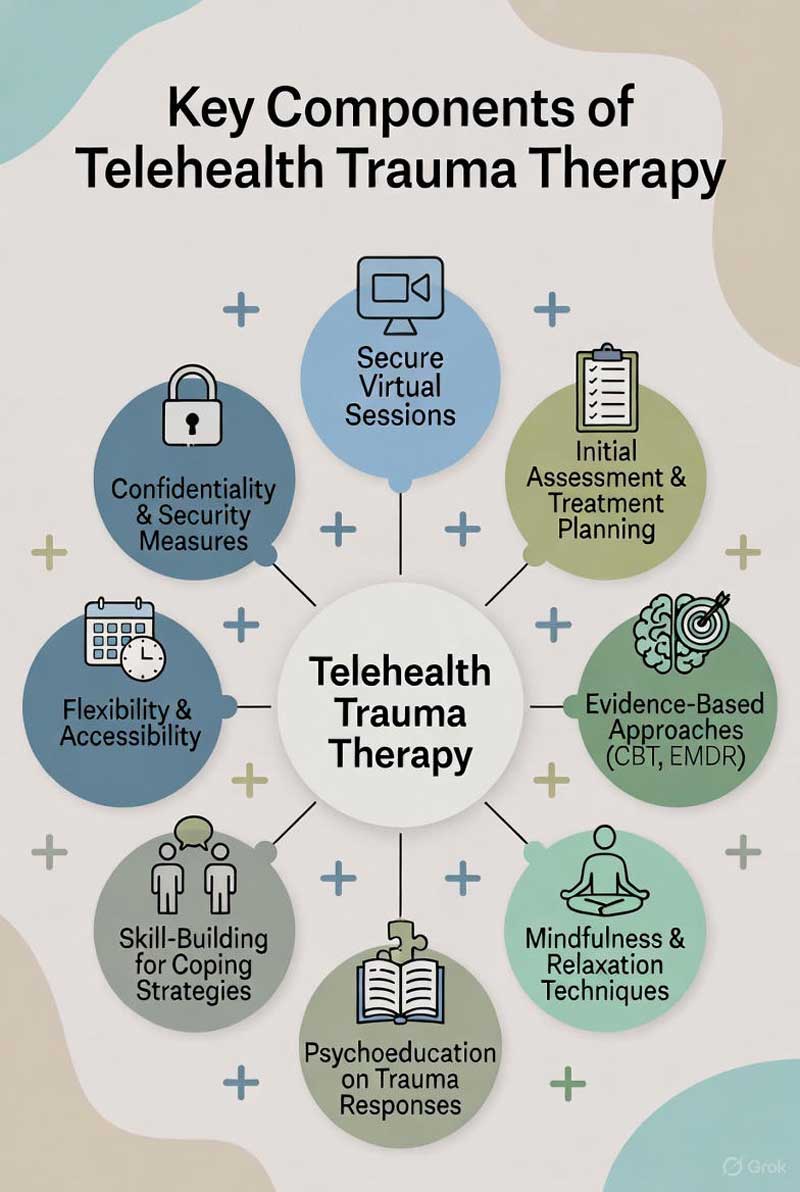
- Secure Virtual Sessions: Most therapy occurs via HIPAA-compliant video conferencing (with phone options available). This format supports real-time interaction while prioritizing your privacy and convenience.
- Initial Assessment: Your therapist begins with a thorough evaluation of your trauma history, symptoms, and goals to create a personalized treatment plan—just as in in-person care.
- Evidence-Based Approaches Delivered Via Telehealth:
Virtual EMDR Therapy
Gold-standard trauma processing using bilateral stimulation adapted for video. Highly effective for PTSD and single-event or complex trauma.
Online Brainspotting
Powerful somatic approach for accessing and releasing deep trauma stored in the body — excellent for anxiety, environmental trauma, and more.
Telehealth CBT & DBT
Skills-based therapy for anxiety, depression, emotion regulation, and building resilience — with practical tools you can apply immediately.
Prolonged Exposure (PE) & Other Approaches
Virtual delivery of exposure therapy, narrative work, somatic experiencing, mindfulness, and psychoeducation — all within a trauma-informed framework.
- Psychoeducation: Learn about trauma's effects on the mind and body, plus effective coping strategies, empowering you in your recovery.
- Skill-Building and Homework: Develop practical tools for emotional regulation, distress tolerance, and self-care, often with between-session exercises.
- Strong Therapeutic Alliance: Therapists foster trust, empathy, and support through the screen—research shows relationships built via telehealth are just as effective.
- Flexibility and Accessibility: No travel required, easier scheduling, and reduced barriers—ideal for busy lives, mobility challenges, or rural locations.
- Confidentiality and Security: All sessions use encrypted, HIPAA-compliant platforms to protect your privacy.
Telehealth vs. In-Person Therapy at ACRS
Telehealth Advantages
- No travel time or costs
- Greater privacy and reduced stigma
- Flexible scheduling, including evenings
- Ideal for trauma survivors sensitive to leaving home
- Same licensed clinicians and modalities
In-Person Benefits (Lancaster Office)
- Face-to-face connection in a dedicated healing space
- Hybrid options available when clinically appropriate
Many clients start with telehealth and transition to hybrid care as they progress.
Benefits of Telehealth Trauma Therapy
Telehealth trauma therapy offers powerful advantages that make high-quality care more reachable and effective. Here are the key benefits:
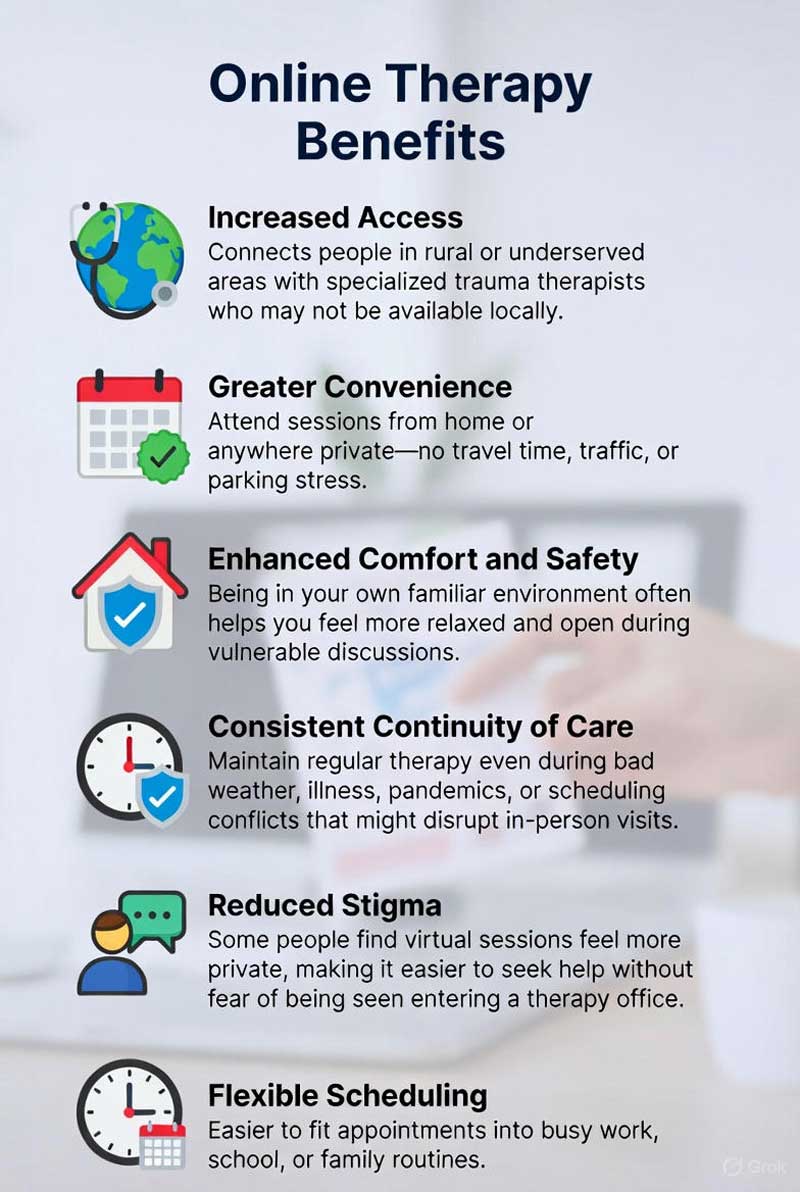
- Increased Access: Connects people in rural or underserved areas with specialized trauma therapists who may not be available locally.
- Greater Convenience: Attend sessions from home or anywhere private—no travel time, traffic, or parking stress.
- Enhanced Comfort and Safety: Being in your own familiar environment often helps you feel more relaxed and open during vulnerable discussions.
- Consistent Continuity of Care: Maintain regular therapy even during bad weather, illness, pandemics, or scheduling conflicts that might disrupt in-person visits.
- Reduced Stigma: Some people find virtual sessions feel more private, making it easier to seek help without fear of being seen entering a therapy office.
- Flexible Scheduling: Easier to fit appointments into busy work, school, or family routines.
Important Considerations
- Technology Needs: You'll need a reliable internet connection and a device (computer, tablet, or smartphone) with camera and microphone. We can help guide you if needed.
- Therapist Expertise: Our clinicians are fully trained and experienced in delivering evidence-based trauma therapy via telehealth for optimal results.
Medicare Coverage Note
Currently, Medicare fully covers telehealth mental health services (including trauma therapy) without requiring in-person visits.
Starting January 31, 2026 (unless extended by Congress), new Medicare patients may need an in-person evaluation within 6 months before beginning telehealth, with at least one in-person visit annually thereafter.
We offer flexible hybrid options and can discuss your specific insurance coverage during your free consultation.
Important Considerations for Telehealth Trauma Therapy
While telehealth is highly effective for most trauma survivors, it’s important to understand a few practical considerations so you can make the best choice for your healing journey.
- Non-Verbal Cues: Video can sometimes make subtle body language or physical signals harder to notice. Our clinicians are trained to compensate with clear verbal check-ins and trauma-informed attunement.
- Complex or High-Risk Cases: Severe dissociation or situations needing immediate safety monitoring may benefit from hybrid or in-person support. Many clients with significant PTSD still thrive in telehealth with proper preparation.
- Technology Needs: A stable internet connection and private space help create the safest experience. We provide setup guidance and backup phone options if needed.
- Adaptations for Somatic & Experiential Work: Approaches like Brainspotting or certain somatic techniques translate very well online through guided eye positions, bilateral audio, and focused presence — with outcomes often comparable to in-person sessions.
- Personal Fit: Some people simply feel more grounded in a physical office. That’s why we offer flexible hybrid models tailored to your comfort and progress.
At Advanced Counseling and Research Services, we specialize in adapting evidence-based psychotraumatology approaches — including virtual EMDR and Brainspotting — for secure telehealth. Research continues to show strong outcomes for online trauma therapy when delivered by trained clinicians. Many clients start with telehealth for convenience and privacy, then transition to in-person or hybrid care as needed. Your therapist will collaboratively determine what feels safest and most effective for you during your free initial consultation.
What Our Telehealth Clients Say
"Telehealth made such a difference for me after losing my wife to cancer. No added stress from travel, more time for myself, and the comfort of home helped me open up. I made real, lasting progress with trauma processing I never thought possible online."
Licensure & Service Areas
Our clinicians hold active licenses allowing them to provide telehealth services to individuals physically located in:
- Pennsylvania — Full statewide coverage including Lancaster, Berks, and surrounding counties
- Florida — Serving clients throughout the state via compliant telehealth registration
You must be physically present in PA or FL during sessions. We verify location and provide clear guidance on platform security and privacy.
Why Pennsylvania & Florida Residents Choose ACRS Telehealth
- Certified Clinical Trauma Professionals with advanced psychotraumatology training
- Secure, HIPAA-compliant platform prioritizing your confidentiality
- No waitlist — flexible scheduling including evenings
- Hybrid model available — combine telehealth with in-person in Lancaster when desired
- Insurance-friendly options and transparent fees
- Focus on real healing: processing trauma while building resilience and emotional freedom