Bradford County's farming families, landowners, and rural communities have faced upheaval that most of Pennsylvania never saw. The trauma that came with it — environmental, economic, and community-wide — deserves specialized care. Telehealth delivers it to your door.
Bradford County sits along the North Branch of the Susquehanna River in Pennsylvania's northcentral tier — rolling farmland, dairy operations, woodlands, and small boroughs that had organized their lives around agriculture and local industry for generations. Towanda, the county seat, was a quiet river town. Canton, Troy, Wyalusing, Sayre — each a community with its own character and its own long-rooted sense of place.
Then the Marcellus Shale drilling arrived. Beginning in 2008, Bradford County became Pennsylvania's ground zero for the natural gas boom. By 2012, roughly 2,000 wells had been drilled and permitted in the county, making it the most heavily drilled region in the entire Marcellus formation. Towanda transformed from a sleepy Susquehanna River town into a boomtown almost overnight. Hotels filled with drilling crews. Roads were jammed with heavy equipment. Rigs ran twenty-four hours a day, seven days a week. Hundreds of millions of dollars in lease payments flowed to landowners. Tax revenues jumped. For a time, it looked like uncomplicated good fortune.
It was not that simple. Chesapeake Energy was fined $1.1 million by Pennsylvania's DEP — the largest fine against a gas operator in state history at the time — for contaminating 17 drinking water wells in Bradford County. In April 2011, seven families near Towanda were evacuated after 10,000 gallons of fracking wastewater spilled into Towanda Creek and the Susquehanna River. Research documented the presence of drilling chemicals — including a known carcinogen — in the drinking water of Bradford County homes. Three families received a $1.6 million settlement after Chesapeake contaminated their wells. A Penn State study found that in counties with high drilling density, dairy cow numbers fell sharply — compounding the stress on farming families already navigating a difficult industry. And beneath the economic disruption, the opioid crisis was building. Bradford County recorded one of Pennsylvania's most significant statistical increases in opioid overdose rates during the COVID-19 pandemic.
This is specific, layered, and largely unaddressed trauma. Advanced Counseling and Research Services provides specialized, certified trauma care to Bradford County residents via secure telehealth — so that the 130-mile distance to our Lancaster office is not a barrier to accessing Pennsylvania's most credentialed trauma specialists. Healing starts here.
Bradford County's Trauma Burden — Documented, Layered, and Underserved
Bradford County communities carry specific, overlapping trauma burdens that general counseling approaches are rarely equipped to address. Our certified clinical trauma professionals are trained to work with each of these realities:
Environmental contamination of land and water — a violation of the foundational safety of home: For farming families and rural landowners, the land is not just an economic asset. It is identity, inheritance, and the physical foundation of daily life. When that land's water becomes unsafe — when a well that a family has drunk from for generations is contaminated by industrial drilling fluid, when a neighbor's field is flooded with fracking wastewater, when the creek your children played in carries a DEP citation — the psychological injury is profound and specific. It is not merely property damage. It is the destruction of a basic sense of safety, belonging, and trust in the ground beneath your feet. This form of environmental trauma is documented in clinical research and rarely treated in rural areas where mental health resources are already scarce. ACRS's certified traumatologists are trained to work with exactly this kind of injury.
Agricultural and farm family stress: Bradford County has long been dairy and farming country. The disruption of the gas boom — increased truck traffic on farm roads, noise from round-the-clock drilling operations, water quality concerns affecting livestock, and the documented correlation between high-density drilling and declining dairy herd numbers — added new layers to the chronic, accumulating stress that farm families already carry: land debt, unpredictable commodity markets, the emotional weight of multi-generational operations that may not be viable for the next generation. That sustained, high-stakes stress is a form of trauma. It does not resolve without clinical support, and it is almost never acknowledged by the general mental health system as the specific category of need that it is.
Boom-bust economic instability and community disruption: The Marcellus gas boom brought rapid, dramatic economic change to a county that had been stable and slow-moving for decades. The pace of change itself — the transformation of Towanda, the influx of an out-of-county workforce, the sudden high incomes followed by the volatility of energy markets — created a form of community disorientation that is psychologically real but rarely named. Communities that were tight-knit and self-defined found themselves navigating a landscape that no longer looked or felt like their own. When gas prices dropped and drilling activity contracted, the economic hangover was significant. Boom-bust cycles in resource extraction communities are documented as producing elevated rates of anxiety, depression, and substance use — all of which trace back to underlying, unaddressed trauma.
The opioid and fentanyl crisis in a rural county with acute provider shortages: Bradford County showed one of Pennsylvania's most statistically significant increases in opioid overdose rates during the COVID-19 pandemic. Two-thirds of federally designated Mental Health Care Professional Shortage areas in the United States are in rural or partially rural areas — and Bradford County fits that profile precisely. The shortage is not abstract: there are simply too few qualified mental health providers in this part of Pennsylvania to meet the need. For individuals and families struggling with substance use — which clinical research consistently links to underlying untreated trauma — the lack of local specialized providers means the root causes go unaddressed even when treatment is sought. ACRS provides the deeper, trauma-focused care that makes lasting recovery more achievable, directly to your home via telehealth.
Veterans in a rural county far from VA facilities: Bradford County has a meaningful veteran population. The distance from Towanda to VA facilities in Wilkes-Barre or Syracuse makes specialized veteran mental health care genuinely difficult to access. ACRS provides gold-standard treatments for veteran PTSD — EMDR, Brainspotting, and Prolonged Exposure therapy — via secure telehealth, on your schedule, with complete confidentiality and no institutional bureaucracy.
First responders serving a geographically spread county: Bradford County's firefighters, EMS crews, and law enforcement officers cover one of Pennsylvania's larger counties by land area, much of it rural. The combination of geographic isolation, the opioid crisis, farm and industrial accident response, and the specific demands of serving a community under sustained economic and environmental stress accumulates psychological weight that is rarely acknowledged or treated. ACRS provides fully confidential telehealth care with evening hours through Thursday.
Domestic violence and intimate partner abuse: In small, isolated communities where everyone knows everyone — and where economic instability and substance use are elevated — the conditions for domestic violence are compounded. For survivors in Bradford County's small boroughs and rural townships, seeking care locally means risking being recognized. Telehealth provides access to specialized, trauma-informed care from the privacy and safety of your own home.
ACRS's certified clinical trauma professionals are trained for complex, layered, and chronic trauma — not only for single-event PTSD. We meet you where you are.
Why Bradford County Residents Choose ACRS
Specialized, Trauma-Informed Care — Delivered Directly to Your Home
We work collaboratively with you to develop a Trauma-Informed Care Plan that addresses your specific needs and goals.
Secure, HIPAA-compliant video therapy that delivers Pennsylvania's most credentialed trauma specialists directly to Bradford County — no two-hour drive to Lancaster, no waitlist, no referral.
A highly personalized, private approach to care — for landowners, farm operators, business owners, and professionals who need complete discretion and maximum scheduling flexibility.
Specialized PTSD care for Bradford County veterans — via secure telehealth, with no long drive to a VA facility and no institutional delays. EMDR, Brainspotting, and Prolonged Exposure therapy on your schedule, in your home.
First Responders
Bradford County's first responders cover a geographically large, rural county under sustained pressure. Our trauma specialists understand that culture and provide fully confidential telehealth care — on your schedule, with no community visibility and no waiting room in your own borough.
Survivors of Domestic Violence
Individuals With Substance Use Disorders
Why Telehealth Is the Right Choice for Bradford County
Towanda is approximately 130 miles from our Lancaster office via US-220 North — roughly a two-hour-fifteen-minute drive under normal conditions. For most Bradford County residents, especially those managing farm operations, family responsibilities, or the demanding schedules of rural life, that is not a realistic option for regular therapy appointments. Telehealth removes the barrier entirely while delivering the same certified, specialized care.
Bradford County is one of the communities across Pennsylvania where the rural mental health provider shortage is sharpest. Two-thirds of all federally designated Mental Health Care Professional Shortage areas in the country are in rural or partially rural regions. The specialized clinical credentials ACRS provides — Certified Traumatologists trained in EMDR, Brainspotting, CBT, DBT, and Prolonged Exposure — are not consistently available in Bradford County's local provider market. Telehealth makes that level of specialization directly accessible from your home in Towanda, Sayre, Wyalusing, Canton, Troy, or anywhere else in the county.
You must be physically located in Pennsylvania during your telehealth session. Our Lancaster office is accessible via US-220 South and the Pennsylvania Turnpike for those who prefer or are able to travel in-person, though for most Bradford County residents telehealth is the more practical and equally effective option.
Here is what Bradford County clients tell us they value:
No two-hour drive to Lancaster and back on top of an emotionally demanding therapy session — especially during calving season, planting, or harvest.
Access to Certified Traumatologists with advanced credentials in EMDR, Brainspotting, DBT, CBT, and Prolonged Exposure — focused exclusively on trauma and PTSD. General counselors serve important functions, but they are not trained to the level that complex, layered, or environmentally rooted trauma requires.
No waitlist, no referral — appointments available now, without the weeks-long delays common in rural community mental health systems.
Evening hours through Thursday — essential for farm families and anyone whose daytime schedule is built around the work of the land.
Complete privacy — in a small county where everyone knows everyone, telehealth means no one in your community sees your car in a therapist's parking lot.
You are in your own home — the familiar environment that, even when it carries difficult associations, is where you can find the words most easily.
It works. Telehealth delivers outcomes fully validated by clinical research for trauma, PTSD, and anxiety — equivalent to in-person care.
ACRS Treatment Modalities for Anxiety, Trauma, and PTSD
Brainspotting operates on the principle that where you look affects how you feel. A therapist helps you identify "brainspots" — eye positions linked to stored emotional experiences or trauma in the brain. By maintaining focus on the brainspot while fostering mindfulness and connection, the brain processes and releases unresolved emotions at a profound neurobiological level.
Brainspotting is effective for PTSD, Anxiety, Depression, chronic pain, and performance issues — and is particularly well-suited to the body-carried, place-rooted, and often unspoken trauma common in Bradford County communities where environmental disruption, farm stress, and community upheaval have been building for years without clinical language.
CBT is a short-term, goal-oriented psychotherapy that helps you identify and challenge unhelpful thought patterns and develop healthier coping mechanisms. Highly effective for Anxiety, Depression, and PTSD — and its structured, practical approach resonates especially well with clients who value concrete tools and measurable progress over open-ended process.
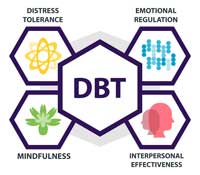
DBT teaches four core skill sets — Mindfulness, Distress Tolerance, Emotion Regulation, and Interpersonal Effectiveness — to help you navigate overwhelming emotions and build healthier relationships. Particularly effective for borderline personality disorder, self-harm, and suicidal ideation, and for anyone managing the sustained, high-stakes stress of economic instability, environmental uncertainty, or chronic community upheaval.
EMDR (Eye Movement Desensitization and Reprocessing) is a gold-standard treatment for trauma and PTSD. It involves recalling disturbing memories while focusing on bilateral stimulation, helping your brain reprocess traumatic memories and reduce their emotional intensity. Among the most rigorously validated treatments for veteran PTSD and equally effective for civilian trauma from environmental crisis, sudden loss, accidents, and the compounding weight of community disruption.
Exposure and Response Prevention (ERP) Therapy

ERP is the gold-standard, evidence-based treatment for OCD and related Anxiety Disorders. It involves gradually exposing you to feared thoughts or situations while helping you resist compulsive responses — breaking the OCD cycle and restoring your sense of control over your own mind.
PE is a type of CBT used to treat PTSD and Anxiety disorders. It involves gradually confronting feared memories and avoided situations in a safe therapeutic environment. Among the most evidence-supported treatments for veteran PTSD and equally validated for civilian trauma from community crisis, environmental injury, sudden loss, and the specific grief of a way of life disrupted.
Other Therapy Techniques
Narrative Therapy: Encourages you to tell your story and reclaim ownership of your own experience — including the stories of Bradford County farming families and landowners whose relationship with their land has been changed by forces outside their control, and whose grief about that change has rarely found adequate clinical space.
Somatic Experiencing: Focuses on the body's physical response to trauma and works to release stored nervous system tension — particularly valuable for clients whose chronic stress, environmental anxiety, or long-carried community grief manifests as persistent physical symptoms.
Mindfulness and Relaxation Techniques: Meditation and deep breathing to manage trauma-related stress and Anxiety — practices that can be grounded in the particular landscape of Bradford County's river valleys and ridgelines, the physical world that its residents know and to which they have deep attachment.
Psychoeducation: Understanding trauma and its effects — including the specific patterns common in environmental trauma, farm stress, rural isolation, boom-bust economic disruption, veteran experience, and substance use — in terms that are accurate and genuinely applicable to life in Bradford County.
Our Experienced Anxiety, Trauma, and PTSD Counselors
Our counselors are trained in Trauma-Informed Care and have extensive experience helping individuals heal from traumatic experiences — including the specific, layered, and often unspoken trauma carried by Bradford County residents: the violation of environmental safety, the disruption of agricultural community life, the strain of boom-bust economic cycles, and the accumulated weight of rural isolation with inadequate local support.
Choose Bradford County's Anxiety, PTSD, and Trauma Experts
Specialization That Bradford County's Local Market Cannot Consistently Provide: Certified Traumatologists with advanced credentials in EMDR, Brainspotting, CBT, DBT, and Prolonged Exposure — trained specifically to work with complex, layered, and chronic trauma, including the environmental, agricultural, and community-level trauma unique to Bradford County's experience.
No Waitlist, No Referral: Available now — without the weeks-long delays common in rural community mental health systems. Contact us for a free 10-minute consultation and we schedule from there.
Telehealth That Actually Works: Secure, HIPAA-compliant video sessions with face-to-face connection — no two-hour drive to Lancaster, no waiting rooms, full clinical equivalence to in-person care.
Evening Hours Through Thursday: Built specifically for farm families, shift workers, and anyone in Bradford County whose daytime hours belong to their work.
Bradford County's farming families and rural communities have navigated disruption that most of Pennsylvania never witnessed — the transformation of their land, their water, their communities, and their economy in less than a decade, with little acknowledgment of what that cost psychologically. The people who lived through that deserve care that takes the full weight of it seriously.
Contact us today to set up a free, confidential 10-minute consultation. We'll listen, answer your questions, and help you find the right path forward.
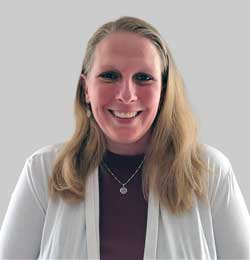
Cheryl has over 20 years of experience providing the highest-quality trauma and PTSD therapy to clients across Pennsylvania — including those in Bradford County communities who have lived through some of the most significant environmental and economic disruption in the state's recent history and who deserve specialized care that understands the full weight of what they've navigated.
"Bradford County's families — on farms, in small towns along the Susquehanna, across communities that were transformed by forces they didn't choose — have carried real trauma without adequate support for too long. Telehealth means the distance to Lancaster is not a barrier. Specialized care is available now, at your door."