Butler County built the Jeep that won a war and the specialty steel that powers modern infrastructure. It also carried, largely without adequate support, the weight of what happened here on July 13, 2024 — and everything that came before it. Telehealth delivers certified trauma care directly to your home. Healing starts here.

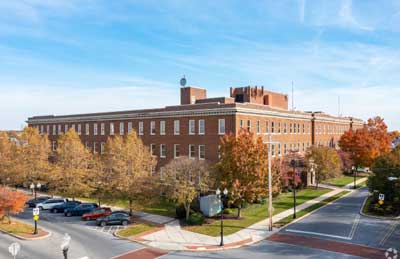
Butler County sits in the rolling hills of western Pennsylvania north of Pittsburgh, along the Connoquenessing Creek. The city of Butler — county seat, population roughly 13,500 — is surrounded by a county of about 185,000 people that contains some of western Pennsylvania's most significant industrial heritage and some of its most consequential recent history.
The Armco Steel plant in Lyndora, which began operation in 1908 as the Forged Steel Wheel Company, became one of the most important specialty steel facilities in the country. At its peak, Armco employed approximately 40 percent of Butler County's entire industrial workforce. The company was unusual in its relationship with its workers — providing healthcare, pensions, scholarships, youth sports programs, a community park along Slippery Rock Creek, and a set of founding principles that a historian described as the "Armco Spirit." The community's identity was organized around that mill for most of the twentieth century.
Pullman-Standard, which manufactured railroad cars along the same creek corridor beginning in 1902, employed 2,500 workers at its peak and produced 60 steel railcars per day. When Pullman-Standard closed in 1982, county unemployment reached 17.5% practically overnight. The mayor of Butler estimated a $60 million loss to the county. School districts lost significant portions of their funding. An estimated 2,000 additional jobs in supplier and contractor businesses vanished in the ripple. What Armco had built across decades as community — the sense of shared identity, mutual care, and economic stability that came from being a steel town — began its slow dismantling.
Then came July 13, 2024. A gunman opened fire at a campaign rally at the Butler Farm Show Grounds in Connoquenessing Township, killing Corey Comperatore — a retired fire chief and community member who died shielding his family — and critically wounding two other attendees. Tens of thousands of people were present. The Pennsylvania Victims Compensation Assistance Program formally recognized that anyone who witnessed or heard the shots could be considered a direct victim. A mental health nurse in Butler County reported consulting with approximately 500 people in the weeks following the shooting, many showing signs of PTSD. NAMI Butler County's executive director described community-wide anxiety and a pervasive sense of violated safety. Butler County has not fully processed what happened that day — and it is carrying that weight on top of everything that came before it.
Advanced Counseling and Research Services provides specialized, certified trauma care to Butler County residents via secure telehealth — so that the 220 miles between Lancaster and Butler is not a barrier to accessing Pennsylvania's most credentialed trauma specialists. Healing starts here.

Mental Health Conditions We Treat
Acute and Complex PTSD — Including Mass Casualty Event Trauma
Butler County's Trauma Burden — Historical, Industrial, and Now Acute
Butler County carries a specific, layered trauma profile that general counseling approaches rarely address at the level of depth it requires. Our certified clinical trauma professionals are trained to work with each of these realities:
The July 13, 2024 assassination attempt and its continuing community trauma: The shooting at the Butler Farm Show Grounds was not a distant news event for Butler County residents. It happened in their community, among their neighbors, at a gathering that tens of thousands attended. Corey Comperatore — the man who was killed — was a retired fire chief from Sarver, a figure of exactly the kind of local civic life that Butler County communities depend on and identify with. The grief for him and the broader community shock of a mass shooting occurring at a county fair venue that Butler residents had attended for generations created a specific, acute, and community-wide trauma event. NAMI Butler County identified anxiety and PTSD symptoms broadly across the community. Pennsylvania's victims' compensation program recognized as direct victims anyone who witnessed or heard the shots — an unusually broad formal recognition of the scope of the psychological harm. A year later, that harm has not resolved. ACRS's certified traumatologists are trained specifically for acute trauma, PTSD, grief from sudden death, and the specific pattern of hypervigilance and disrupted safety that mass shooting events leave in communities. If you were there, if you knew someone who was there, if you live in Butler County and felt the ground shift under what you thought was a safe and familiar place — your experience is real, it deserves clinical attention, and it does not have a natural endpoint without help.
Post-industrial grief and the long decline from the Armco era: For decades, Butler County's economic and community life was organized around the Armco Steel plant and its neighboring industries along Connoquenessing Creek. Armco was not simply an employer — it built Butler's YMCA, contributed to Butler Community College, sponsored youth athletics, funded the hospital, and maintained a 64-acre community park. The "Armco Spirit" was a documented community ethos. When Armco was acquired by AK Steel in 1999 and the founding principles of that relationship began to dissolve, and when Pullman-Standard's sudden closure in 1982 sent 17.5% unemployment through the county practically overnight, what broke was not just employment. It was a community identity, an intergenerational sense of purpose, and a version of mutual care that had been built over nearly a century. That kind of loss is a recognized form of multigenerational community trauma. The families shaped by that decline — whose parents and grandparents organized their lives around mill work and whose own economic trajectories were altered by its ending — carry that loss forward in ways that deserve clinical acknowledgment and specialized care.
The opioid and fentanyl crisis in western Pennsylvania: Butler County shares the western Pennsylvania opioid crisis that has shaped Allegheny, Beaver, Westmoreland, and Armstrong counties for two decades. In communities built around physical labor and industrial identity, where pain management following work injuries was common and where economic displacement produced the chronic stress that underlies substance use, the opioid epidemic has taken a specific and sustained toll. ACRS provides the deeper, trauma-focused care that makes lasting recovery more achievable, by treating the underlying trauma rather than only the surface behavior.
Occupational health legacy — mill work, water contamination, and environmental trauma: By the year 2000, Connoquenessing Creek — the waterway that runs through Butler city and along which both Armco and Pullman-Standard operated — had accumulated enough industrial discharge to rank as the second most polluted waterway in the United States, behind only the Mississippi River. Decades of steel mill operation left documented chromium and toxic compound contamination in the creek and in the area's water systems. Workers and community members who lived alongside that contamination, whose children played near that creek, carry a specific form of environmental and occupational health anxiety that has clinical dimensions distinct from general anxiety. AK Steel entered into EPA settlements in 2001 and 2004 addressing these issues. The physical cleanup has progressed. The psychological aftermath of having lived in proximity to documented industrial contamination — without full information, without adequate recourse — is a recognized category of trauma that ACRS's certified traumatologists are trained to address.
Veterans in a county with deep military roots: Butler County was laid out on land originally granted to Revolutionary War veterans. The Butler city itself was named for General Richard Butler, a Revolutionary War officer killed in battle in 1791. The county has a proud and enduring military tradition, and its veteran population carries the weight of service alongside the specific challenges of accessing specialized PTSD care in a county where the gap between Pittsburgh's VA resources and local access is significant. ACRS provides EMDR, Brainspotting, and Prolonged Exposure therapy — gold-standard veteran PTSD treatments — via secure telehealth, on your schedule, with complete confidentiality.
First responders carrying compound burdens: Butler County's firefighters, EMS crews, and law enforcement officers responded to one of 2024's most significant traumatic events on their home ground. The Butler County Emergency Service Unit was present and engaged at the Farm Show shooting. Those officers and responders carry that experience on top of the ongoing burdens of western Pennsylvania emergency work in a county navigating the opioid crisis, economic stress, and the everyday accumulation of occupational trauma. ACRS provides fully confidential telehealth care on your schedule, with no institutional visibility and no waiting room in your own community.
Rural isolation across Butler County's northern and eastern townships: While the southern tier of Butler County (Cranberry Township, Mars, Zelienople) has grown significantly as a Pittsburgh suburb, the northern two-thirds of the county remain rural — agricultural, small-borough, and underserved by specialized mental health providers. The gap between Cranberry Township's healthcare infrastructure and what is accessible in the county's northern townships is pronounced. Telehealth eliminates that geographic barrier without sacrificing any quality of care. The same certified traumatologists who serve Butler city are available to clients in Slippery Rock, Zelienople, or the county's most rural corners.
ACRS's certified clinical trauma professionals are trained for complex, layered, acute, and chronic trauma — not only for single-event PTSD. We meet you where you are.
Why Butler County Residents Choose ACRS
Specialized, Trauma-Informed Care — Delivered Directly to Your Home
We work collaboratively with you to develop a Trauma-Informed Care Plan that addresses your specific needs and goals.
Secure, HIPAA-compliant video therapy that delivers Pennsylvania's most credentialed trauma specialists directly to Butler County — no 220-mile drive to Lancaster, no waitlist, no referral required.
A highly personalized, private approach to care — for those who need maximum discretion, flexibility, and a clinical relationship fully separate from their community.
Specialized, evidence-based PTSD care for Butler County veterans — via secure telehealth, on your schedule, with no institutional barriers. EMDR, Brainspotting, and Prolonged Exposure therapy for those who have served, with complete confidentiality.
First Responders
Butler County's firefighters, EMS crews, and law enforcement officers were present at one of the most significant acute trauma events of 2024 — on their own home ground. Our trauma specialists understand first responder culture and the specific burden of that combination. We provide fully confidential telehealth care, on your schedule, with no department visibility and no waiting room in your own community.
Survivors of Domestic Violence
Individuals With Substance Use Disorders
Why Telehealth Is the Right Choice for Butler County
Lancaster is approximately 220 miles from Butler — roughly a 3.5-hour drive via I-76 and the Pennsylvania Turnpike. For most Butler County residents, that is not a realistic option for ongoing trauma therapy. Telehealth removes the barrier entirely while delivering the same quality of certified, specialized care.
After the July 13, 2024 shooting, a local mental health nurse in Butler County reported consulting with approximately 500 people showing anxiety and PTSD symptoms. That response reflects both the real scope of the community's need and the reality that local provider capacity — already strained before that event — cannot absorb the demand. ACRS provides telehealth access to Certified Traumatologists with advanced credentials in EMDR, Brainspotting, CBT, DBT, and Prolonged Exposure — the exact treatments most validated for mass casualty event PTSD, industrial and occupational trauma, and the complex, multigenerational community grief that comes from decades of post-industrial decline. That level of specialization is not routinely available within Butler County's local provider market, and telehealth makes it directly accessible from your home anywhere in the county.
You must be physically located in Pennsylvania during your telehealth session. Our Lancaster office is accessible via the Pennsylvania Turnpike (I-76) East for those who wish to travel in-person, though for most Butler County residents telehealth is the more practical and equally effective option.
Here is what Butler County clients tell us they value:
No 220-mile drive to Lancaster before and after a session that may be emotionally demanding.
Certified Traumatologists with advanced credentials in EMDR, Brainspotting, DBT, CBT, and Prolonged Exposure — focused exclusively on trauma and PTSD. That specialization is rare in Butler County's local provider market.
No waitlist, no referral — appointments available now, without the delays common in western Pennsylvania's community mental health networks.
Complete privacy — in a county where many people know many people, telehealth means no one in your community sees you entering a therapist's office.
Evening hours through Thursday — essential for shift workers, mill workers, and anyone whose daytime hours are not available for appointments.
You are in your own home — the familiar and private space where most people find the words most readily.
It works. Telehealth delivers outcomes fully validated by clinical research for trauma, PTSD, and anxiety — equivalent to in-person care.
ACRS Treatment Modalities for Anxiety, Trauma, and PTSD
Brainspotting operates on the principle that where you look affects how you feel. A therapist helps you identify "brainspots" — eye positions linked to stored emotional experiences or trauma in the brain. By maintaining focus on the brainspot while fostering mindfulness and connection, the brain processes and releases unresolved emotions at a profound neurobiological level.
Brainspotting is effective for PTSD, Anxiety, Depression, chronic pain, and performance issues — and is particularly well-suited to the specific, body-carried, often unspoken trauma common in Butler County communities: the visceral memory of a mass shooting, the multigenerational weight of industrial decline, the physical legacy of mill work and environmental exposure.
CBT is a short-term, goal-oriented psychotherapy that helps you identify and challenge unhelpful thought patterns and develop healthier coping mechanisms. Highly effective for Anxiety, Depression, and PTSD — its structured, practical approach resonates with clients who value direct progress and concrete tools for moving forward.
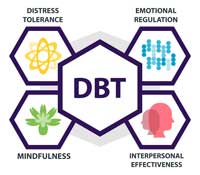
DBT teaches four core skill sets — Mindfulness, Distress Tolerance, Emotion Regulation, and Interpersonal Effectiveness — to help you navigate overwhelming emotions and build healthier relationships. Particularly effective for borderline personality disorder, self-harm, and suicidal ideation, and for anyone managing the sustained high-stakes emotional load of grief, community trauma, economic stress, and recovery.
EMDR (Eye Movement Desensitization and Reprocessing) is a gold-standard treatment for trauma and PTSD. It involves recalling disturbing memories while focusing on bilateral stimulation, helping your brain reprocess traumatic memories and reduce their emotional intensity. Among the most rigorously validated treatments for acute traumatic events, mass casualty event PTSD, veteran PTSD, and the complex compounding of multiple trauma exposures across time — exactly the profile common in Butler County.
Exposure and Response Prevention (ERP) Therapy
ERP is the gold-standard, evidence-based treatment for OCD and related Anxiety Disorders. It involves gradually exposing you to feared thoughts or situations while helping you resist compulsive responses — breaking the OCD cycle and restoring your sense of control over your own mind.
PE is a type of CBT used to treat PTSD and Anxiety disorders. It involves gradually confronting feared memories and avoided situations in a safe therapeutic environment. Among the most evidence-supported treatments for veteran PTSD, acute traumatic event PTSD, and the avoidance behaviors common in the aftermath of mass shootings and industrial disasters — helping you reclaim your life from what happened.
Other Therapy Techniques
Narrative Therapy: Encourages you to tell your story and reclaim ownership of your own experience — including the stories of Butler County families shaped by generations of steel mill work, the sudden loss of Pullman-Standard, the "Armco Spirit" and what followed when it ended, and the experience of July 13, 2024 as a community that did not ask to become a national story.
Somatic Experiencing: Focuses on the body's physical response to trauma and works to release stored nervous system tension — particularly valuable for clients whose acute event trauma, occupational health exposure, or long-carried industrial grief manifests as persistent physical symptoms: hypervigilance, disrupted sleep, chronic tension, and the bodily residue of fear.
Mindfulness and Relaxation Techniques: Meditation and deep breathing grounded in Butler County's specific landscape — the Connoquenessing Creek, the rolling hills toward Slippery Rock, Armco Park along the creek where steel families once gathered — as anchors for present-moment awareness and trauma recovery.
Psychoeducation: Understanding trauma and its effects — including the specific patterns of community trauma following mass violence, post-industrial grief, veteran and first responder occupational trauma, and substance use — in terms accurate and applicable to life in Butler County.
Our Experienced Anxiety, Trauma, and PTSD Counselors
Our counselors are trained in Trauma-Informed Care and have extensive experience helping individuals heal from traumatic experiences — including the acute, complex, and community-wide trauma that Butler County has carried since July 13, 2024, the multigenerational industrial grief of Armco's long decline, the post-industrial stress of Pullman-Standard's sudden closure, and the veteran and first responder experience that runs through this county's deepest traditions.
Choose Butler County's Anxiety, PTSD, and Trauma Experts
Specialization Butler County's Local Market Cannot Consistently Provide: Certified Traumatologists trained specifically in EMDR, Brainspotting, CBT, DBT, and Prolonged Exposure — with specific training in mass casualty event trauma, occupational trauma, and multigenerational community grief. That depth of specialization is not routinely available within Butler County's local provider network.
No Waitlist, No Referral: Available now. Contact us for a free 10-minute consultation and we schedule from there — without the weeks-long delays common in western Pennsylvania's community mental health systems.
Telehealth That Works: Secure, HIPAA-compliant video sessions with genuine face-to-face connection — no 220-mile drive, no waiting rooms, full clinical equivalence to in-person care.
Evening Hours Through Thursday: Essential for shift workers, mill workers, first responders on rotating shifts, and anyone whose daytime hours are not available.
Butler County designed the prototype for the Jeep that helped win a world war — built in a factory along Connoquenessing Creek by engineers who solved a problem no one else had solved. The people of this county know how to do hard things. Reaching out for specialized trauma care, especially after everything this community has carried, is one more hard thing worth doing.
Contact us today to set up a free, confidential 10-minute consultation. We'll listen, answer your questions, and help you find the right path forward.
Cheryl has over 20 years of experience providing the highest-quality trauma and PTSD therapy to clients across Pennsylvania — including those in Butler County who are carrying what happened on July 13, 2024, alongside the long industrial history of a community that built things that mattered and then navigated their loss without adequate psychological support.
"What Butler County has carried — the industrial heritage, the losses, and what happened at the Farm Show in July 2024 — deserves specialized care that takes the full weight of it seriously. ACRS has certified trauma specialists available now, by telehealth, directly to your home. You do not have to carry this alone."