Cambria County, PA Online Anxiety, PTSD, and Trauma Therapy

EMDR, CBT, DBT, PE, Brainspotting and More

Secure Telehealth — From the Comfort of Your Own Home
Conemaugh Valley and the Allegheny Mountains near Johnstown — Cambria County, PA, home of ACRS telehealth trauma counseling clients
Advanced Counseling and Research Services
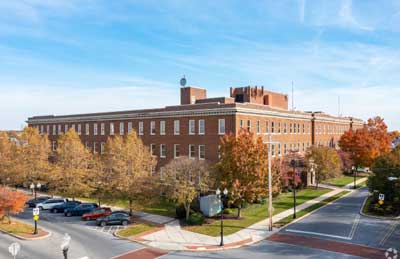
Advanced Counseling and Research Services Office — Lancaster, PA
Office Location & Hours (Lancaster)
313 W Liberty St STE 224, Lancaster, PA 17603
Mon–Thu 9am–7pm | Fri 9am–5pm
Open in Google Maps
Anxiety/PTSD/Trauma Treatment Formats
Anxiety/PTSD/Trauma Therapy Modalities
Professional Accountability
Trauma Educational Services
Trauma Research Support
Clinical
Supervision
Conemaugh Valley and the Allegheny Mountains near Johnstown — Cambria County, PA, home of ACRS telehealth trauma counseling clients
No county in Pennsylvania has rebuilt more times than Cambria County. The floods, the steel collapse, the years that followed — each left a mark that resilience alone cannot fully heal. Specialized trauma care meets that history where it actually lives. Telehealth brings it to your door.

Cambria County — Johnstown, Ebensburg, Windber, and the mountain communities of the Conemaugh Valley — has absorbed more catastrophe per generation than almost any other place in Pennsylvania. Understanding that history is essential to understanding the specific trauma that Cambria County residents carry, often without recognizing it as trauma at all.

The county's industrial identity was built around the Cambria Iron Company, established in the 1850s. By 1860, the Cambria Works was the leading steel producer in the United States. Bethlehem Steel's Cambria Works eventually employed more than 20,000 workers at its peak, shaping the valley's economy, neighborhoods, and community identity across generations. Johnstown's population peaked at more than 60,000 in the mid-twentieth century, and Cambria County's countywide population peaked at 213,459 in 1940.

Then came three floods — each a catastrophe unto itself. The 1889 Johnstown Flood, triggered by the catastrophic failure of the South Fork Dam upstream, killed 2,208 people in minutes as a wall of water and debris estimated at 20 million tons bore down on the Conemaugh Valley. It remains one of the deadliest disasters in American history, and the deadliest dam failure the United States has ever recorded. The community rebuilt. A major flood in 1936 damaged the city again. A solemn promise from President Roosevelt to make the city flood-free did not hold. On July 19–20, 1977, a thunderstorm stalled over the Allegheny Mountains and dropped nearly twelve inches of rain in twenty-four hours. Six dams failed. Tanneryville was overwhelmed. Seventy-seven people were killed. Johnstown was covered in six feet of water. Bethlehem Steel — at that moment still the area's largest employer with approximately 12,000 workers — nearly abandoned the plant entirely. What followed was the steel collapse that took those 12,000 jobs down to roughly 2,000. Johnstown's 1983 unemployment rate reached 25.9 percent — the highest in the country. The city has been adapting to that compounding loss ever since, its population now a fraction of what it once was.

Advanced Counseling and Research Services provides specialized, certified trauma care to Cambria County residents via secure telehealth — so that the 115 miles between Lancaster and Johnstown does not stand between this community and the level of care it has long deserved. Healing starts here.
Mental Health Conditions We Treat

  • Anxiety Disorders & Panic
  • ADHD & ADD
  • Depression
  • Environmental & Community Trauma
  • Grief & Loss — Including Traumatic and Multigenerational Bereavement
  • Moral Injury & Occupational Trauma
  • Obsessive-Compulsive Disorder (OCD)
  • Phobias
  • Post-Traumatic Stress Disorder (PTSD)
  • Substance Use & Co-Occurring Disorders
  • Trauma — Single Event and Complex/Chronic
  • Veteran & First Responder PTSD

Cambria County's Trauma Burden — Deep, Layered, and Multigenerational

Cambria County carries a trauma burden that is genuinely unusual in its depth and historical layering. Our certified clinical trauma professionals are trained specifically to work with this kind of complex, multigenerational, place-rooted experience:

  • Flood trauma across three generations — and the psychological weight of living in the valley: The 1889 Johnstown Flood did not just kill 2,208 people. It swept away 99 entire families. It destroyed 1,600 homes. It left survivors with no legal recourse against the club of wealthy businessmen whose poorly maintained dam had failed — after years of residents raising concerns about its safety. The grief of that event, and the particular injury of its injustice, passed through family lines. The 1977 flood added its own layer: 77 deaths, 41 in a single neighborhood, the entire city inundated, and the simultaneous collapse of the steel industry that had been the community's economic foundation. The psychological legacy of living in a geography that has failed you catastrophically — not once, not twice, but three times within living memory — is a specific, documented form of environmental and place-based trauma. For Cambria County residents whose families have been here across those generations, the flood narrative is not history. It is identity. And for those who are newly here, the weight of what this valley has carried is embedded in the community's culture, its architecture, and its relationship with weather.
  • Post-industrial grief and the collapse of Bethlehem Steel: At peak, Bethlehem Steel employed over 20,000 workers in the Conemaugh Valley. The mill organized community life for generations — it was the reason families stayed, the reason neighborhoods existed, the reason the city's population grew to 60,000 from a few thousand in fifty years. When the 1977 flood and the steel industry's broader national contraction combined to hollow out those employment numbers — dropping from 12,000 workers in 1977 to 2,000 by the early 1980s — the psychological consequence was not merely economic. Johnstown's 1983 unemployment rate of 25.9 percent was the highest in the country. The community's sense of shared identity, purpose, and economic security — organized around the mill for five generations — collapsed alongside the steel. The multigenerational grief of that loss is a recognized form of collective trauma that does not resolve without clinical support, and it has been passed through Cambria County families for four decades without naming or treatment.
  • Sustained population decline and the grief of a shrinking community: Johnstown has been identified as among the fastest-shrinking small cities in the United States. The county as a whole has declined from 213,000 in 1940 to roughly 130,000 today. This is not an abstract demographic statistic for the people who live here. It means abandoned neighbors, closing schools, shuttered businesses, and the particular grief of watching a place you love diminish. It means the youngest generation leaving for opportunities elsewhere, and the older generation staying behind in an environment of thinning resources. That chronic, ambient loss — the grief of a place slowly becoming less of itself — is a recognized psychological burden that accumulates in quiet ways, manifesting as depression, anxiety, reduced sense of purpose, and the numbed hopelessness that underlies many substance use and mental health crises.
  • The opioid and fentanyl crisis — and a county that has been fighting back: At its worst, Cambria County's per-capita overdose death rate ranked second highest among Pennsylvania's 67 counties. In 2023, the county recorded 62 overdose deaths — with xylazine, the dangerous veterinary tranquilizer that does not respond to naloxone, involved in 20 of them. The Cambria County Drug Coalition has been fighting this crisis since 2016, and their work has shown real results: 2024 saw 24 overdose deaths, a 61% decline that outpaced both Pennsylvania's statewide decrease and the national figure. That progress is genuine and it deserves acknowledgment. But 24 families still lost someone in 2024 alone. And behind every person who has struggled with substance use in Cambria County — as in every community shaped by industrial decline and sustained economic hardship — is almost always a history of untreated underlying trauma. ACRS provides the deeper, trauma-focused care that makes lasting recovery more achievable by addressing the roots, not only the symptoms.
  • Veterans in a county with deep military and coal mining traditions: Cambria County's communities have long traditions of military service and of physically demanding, high-risk labor in coal mining. Veterans in the county carry the compounding weight of service-related trauma alongside the economic and social conditions of a post-industrial mountain community. Coal miners and their families carry occupational health trauma — the body-carried weight of years of physical risk and the grief of colleagues lost to mine accidents and black lung disease. ACRS provides gold-standard veteran PTSD treatments — EMDR, Brainspotting, and Prolonged Exposure therapy — via secure telehealth, on your schedule, with complete confidentiality.
  • First responders in a county with an exceptional crisis history: Cambria County's firefighters, EMS crews, and law enforcement have responded not only to the ongoing opioid crisis but to a county whose history of catastrophic events has shaped local emergency services culture. The cumulative occupational trauma of first responder work in a community that has experienced what Cambria County has experienced is substantial. ACRS provides fully confidential telehealth care on your schedule, with no institutional visibility.
  • Rural isolation and specialist provider shortage across the mountain townships: Beyond Johnstown's urban core, Cambria County extends across mountain ridges, isolated valleys, and rural townships where mental health provider access is especially thin. Specialized care — Certified Traumatologists trained in EMDR, Brainspotting, and Prolonged Exposure — is rarely available locally. Telehealth eliminates that geographic barrier without sacrificing any quality of care.

ACRS's certified clinical trauma professionals are trained for complex, multigenerational, place-rooted, and chronic trauma — not only for single-event PTSD. We meet you where you are.

Why Cambria County Residents Choose ACRS

Specialized, Trauma-Informed Care — Delivered Directly to Your Home

We work collaboratively with you to develop a Trauma-Informed Care Plan that addresses your specific needs and goals.

Individual Treatment
Individual Trauma and PTSD Treatment

One-on-one sessions with a certified traumatologist — via secure video on your phone, tablet, or computer, from your own home.

Group Treatment
Group Trauma and PTSD Treatment

Facilitated online sessions where you share your experiences and heal alongside others who understand — without leaving your home.

Online Telehealth
Telehealth Trauma and PTSD Treatment

Secure, HIPAA-compliant video therapy that delivers Pennsylvania's most credentialed trauma specialists directly to Cambria County — no 115-mile drive to Lancaster, no waitlist, no referral required.

Concierge Counseling
Concierge Trauma and PTSD Counseling

A highly personalized, private approach to care — for those who need maximum discretion, scheduling flexibility, and a clinical relationship fully outside their local community.

Veterans PTSD Support
Veteran PTSD Support Program

Specialized PTSD care for Cambria County veterans — via secure telehealth, on your schedule, with no institutional barriers and no long drive to a VA facility. EMDR, Brainspotting, and Prolonged Exposure therapy with complete confidentiality.

First Responders & Coal Mining Families

Cambria County's firefighters, EMS crews, law enforcement, and mining families carry occupational trauma that accumulates across careers and generations. Our trauma specialists understand that culture and provide fully confidential telehealth care — on your schedule, from your home, with no department visibility.

Survivors of Domestic Violence

Individuals With Substance Use Disorders

Why Telehealth Is the Right Choice for Cambria County

Lancaster is approximately 115 miles from Johnstown via US-22 East — roughly an hour and fifty minutes under normal conditions. For most Cambria County residents, that is not a practical option for ongoing trauma therapy appointments. Telehealth removes the barrier entirely while delivering the same quality of certified, specialized care.

Cambria County has demonstrated remarkable willingness to confront its mental health and substance use challenges directly. The Cambria County Drug Coalition has been active since 2016. A new REACH Crisis Walk-in Center opened in downtown Johnstown in November 2023. The county's 61% decline in overdose deaths in 2024 — outpacing both Pennsylvania and the nation — reflects sustained, community-wide work. What this community needs alongside that work is access to Certified Traumatologists trained in the evidence-based modalities most effective for the specific trauma profiles common here: EMDR and Brainspotting for multigenerational and place-rooted trauma; Prolonged Exposure for acute PTSD; DBT for the sustained emotional dysregulation that comes from chronic community-level loss. That level of specialized clinical training is not routinely available in Cambria County's local provider market. Telehealth makes it directly accessible.

You must be physically located in Pennsylvania during your telehealth session. Our Lancaster office is accessible via US-22 East for those who wish or are able to travel in person, though for most Cambria County residents telehealth is the more practical and equally effective option.

Here is what Cambria County clients tell us they value:

  • No 115-mile drive to Lancaster on top of a session that may be emotionally demanding — across mountain roads and through weather that Cambria County residents know well.
  • Certified Traumatologists with advanced credentials in EMDR, Brainspotting, DBT, CBT, and Prolonged Exposure — focused exclusively on trauma and PTSD. That specialization is not consistently available within Cambria County's local provider network.
  • No waitlist, no referral — appointments available now, without the delays common in rural and post-industrial community mental health systems.
  • Complete privacy — in a community that has always prized self-reliance and where asking for help still carries stigma, telehealth means no one in your community needs to know you're in therapy.
  • Evening hours through Thursday — essential for shift workers, anyone in remaining manufacturing or mining industries, and those whose daytime obligations cannot be moved.
  • You are in your own home — the familiar space where most people find it easiest to access what they actually feel, and to put words to what they've carried.
  • It works. Telehealth delivers outcomes fully validated by clinical research for trauma, PTSD, and anxiety — equivalent to in-person care.

ACRS Treatment Modalities for Anxiety, Trauma, and PTSD

Brainspotting Therapy

Brainspotting Therapy

Brainspotting operates on the principle that where you look affects how you feel. A therapist helps you identify "brainspots" — eye positions linked to stored emotional experiences or trauma in the brain. By maintaining focus on the brainspot while fostering mindfulness and connection, the brain processes and releases unresolved emotions at a profound neurobiological level.

Brainspotting is particularly well-suited to the multigenerational, body-carried, and often wordless trauma common in Cambria County — the kind of community grief and place-based anxiety that has never had adequate clinical language, carried forward through families without being named for what it is.

Cognitive Behavioral Therapy (CBT)

CBT Therapy

CBT is a short-term, goal-oriented psychotherapy that helps you identify and challenge unhelpful thought patterns and develop healthier coping mechanisms. Highly effective for Anxiety, Depression, and PTSD — its structured, practical approach resonates with clients who value direct, concrete progress over open-ended process.

Dialectical Behavior Therapy (DBT)

DBT Therapy

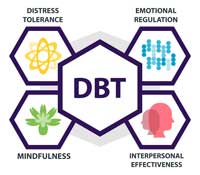
DBT teaches four core skill sets — Mindfulness, Distress Tolerance, Emotion Regulation, and Interpersonal Effectiveness — to help you navigate overwhelming emotions and build healthier relationships. Particularly effective for borderline personality disorder, self-harm, and suicidal ideation, and for anyone managing the sustained emotional burden of chronic community loss, economic hardship, and the multigenerational stress of living in a place that has been repeatedly broken and repeatedly rebuilt.

EMDR Therapy

EMDR Therapy

EMDR (Eye Movement Desensitization and Reprocessing) is a gold-standard treatment for trauma and PTSD. It involves recalling disturbing memories while focusing on bilateral stimulation, helping your brain reprocess traumatic memories and reduce their emotional intensity. Among the most rigorously validated treatments for complex, layered, and multigenerational trauma — exactly the profile most common in Cambria County's communities, where personal trauma sits atop decades of community trauma without always being separable from it.

Exposure and Response Prevention (ERP) Therapy

ERP Therapy

ERP is the gold-standard, evidence-based treatment for OCD and related Anxiety Disorders. It involves gradually exposing you to feared thoughts or situations while helping you resist compulsive responses — breaking the OCD cycle and restoring your sense of control over your own mind.

Prolonged Exposure Therapy (PE)

PE Therapy

PE is a type of CBT used to treat PTSD and Anxiety disorders. It involves gradually confronting feared memories and avoided situations in a safe therapeutic environment. Among the most evidence-supported treatments for veteran PTSD and equally validated for trauma from disaster, sudden loss, and the acute events that punctuate a community's history.

Other Therapy Techniques

  • Narrative Therapy: Encourages you to tell your story and reclaim ownership of your own experience — including the story of what it means to have grown up in a community that has been telling and retelling its flood narratives for generations, and what it means to carry that history as both identity and burden.
  • Somatic Experiencing: Focuses on the body's physical response to trauma and works to release stored nervous system tension — particularly valuable for clients whose chronic community-level stress, occupational health history, or multigenerational grief manifests as persistent physical symptoms: chronic tension, disrupted sleep, and the body's quiet record of what has never been processed.
  • Mindfulness and Relaxation Techniques: Meditation and deep breathing grounded in Cambria County's specific landscape — the ridgelines of the Allegheny Mountains, the rivers at Johnstown's confluence, the Inclined Plane's view of a city that keeps finding its way — as anchors for present-moment awareness in trauma recovery.
  • Psychoeducation: Understanding trauma and its effects — including the specific patterns of flood trauma, industrial grief, multigenerational community loss, veteran and first responder experience, and substance use — in terms accurate and genuinely applicable to life in Cambria County.

Our Experienced Anxiety, Trauma, and PTSD Counselors

Our counselors are trained in Trauma-Informed Care and have extensive experience helping individuals heal from traumatic experiences — including the specific, multigenerational, and deeply place-rooted trauma carried by Cambria County communities whose history of flood, industrial collapse, and sustained economic hardship has rarely found adequate clinical space or language.

Cheryl Wilson-Smith
Chief Executive Officer
Cheryl Wilson-Smith, MA, LPC – Chief Executive Officer and trauma expert
  • Licensed Professional Counselor (LPC)
    • Pa. Lic. PC006514
    • Fl. Lic. TPMC1044
  • Certified Traumatologist (CT)
  • National Certified Counselor (NCC)
  • Certified Clinical Mental Health Counselor (CCMHC)
  • Certified Clinical Trauma Professional (CCTP)
  • Certified in Emergency Crisis Response (CECR)
  • Neuropsychotherapist Certified (NPT-C)
  • Master of Arts (MA)
  • 20+ years of clinical experience.
  • Worked with clients across the lifespan.

Read Cheryl's Profile

Cady R. Monasmith
Chief Clinical Officer
Cady Monasmith, MA, LPC – Licensed trauma and DBT therapist
  • Licensed Professional Counselor (PA-015668)
  • Certified Dialectical Behavioral Therapist (C-DBT)
  • Certified Clinical Trauma Professional (CCTP)
  • Certified Dancing Mindfulness Facilitator (CDMF)
  • Bachelor of Fine Arts (BFA)

Read Cady's Profile

Kim Civitarese
Chief Administrative Officer
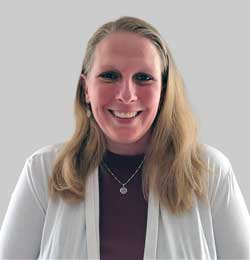
Trauma Therapist Kim Civitarese
  • Licensed Associate Professional Counselor (LAPC)
  • Cognitive Processing Therapist (CPT)
    Pre-licensed Clinician
  • Certified Grief Informed Professional (CGP)

Experience working with adolescents, couples, the elderly population, blended families, and families in the adoption process.

Read Kim's Profile

Jason Houghton
Psychiatric Mental Health Nurse Practitioner
Jason Houghton, CRNP
  • Psych/Mental Health Nurse Practitioner Education — Johns Hopkins University
  • CRNP License: SP025306
  • RN License: RN606119
  • MSN — Duquesne University
  • BSN — Messiah University

Read Jason's Profile

Kailee Morgan
Clinician
Kailee Morgan, MSW, LAPC
  • Master of Social Work (MSW)
  • Licensed Associate Professional Counselor (LAPC)

Specializes in anxiety, ADHD & ADD, and depression.

Read Kailee's Profile

Choose Cambria County's Anxiety, PTSD, and Trauma Experts

  • Specialization That Cambria County's Local Market Cannot Consistently Provide: Certified Traumatologists with advanced credentials in EMDR, Brainspotting, CBT, DBT, and Prolonged Exposure — trained specifically to work with complex, multigenerational, place-rooted, and chronic trauma. That depth of specialization is not routinely available within the local provider market.
  • No Waitlist, No Referral: Available now. Contact us for a free 10-minute consultation and we schedule from there — without the delays common in rural and post-industrial community mental health networks.
  • Telehealth That Works: Secure, HIPAA-compliant video sessions with genuine face-to-face connection — no mountain drive to Lancaster, full clinical equivalence to in-person care.
  • Evening Hours Through Thursday: Essential for shift workers, coal and manufacturing employees, first responders on rotating schedules, and anyone whose daytime hours are committed.

Johnstown rebuilt after 1889, and again after 1936, and again after 1977. Cambria County's communities have shown a specific kind of resilience across generations — the willingness to rebuild even when rebuilding is hard and the outcome uncertain. Reaching out for specialized trauma care is part of that same work: the honest acknowledgment that resilience is not the same as healing, and that the weight of what this valley has carried deserves more than it has received.

Contact us today to set up a free, confidential 10-minute consultation. We'll listen, answer your questions, and help you find the right path forward.

Contact Us Online or

Call Us at 717-394-3994

Cheryl Wilson-Smith
Chief Executive Officer

Cheryl has over 20 years of experience providing the highest-quality trauma and PTSD therapy to clients across Pennsylvania — including those in Cambria County carrying the weight of a community history that spans three catastrophic floods, the collapse of a steel industry that employed generations, and four decades of rebuilding that has never fully included the specialized psychological support the valley's communities have deserved.

Cheryl Wilson-Smith, Chief Executive Officer — Trauma and PTSD Specialist
  • Licensed Professional Counselor (LPC)
    • Pa. Lic. PC006514
    • Fl. Lic. TPMC1044
  • Certified Traumatologist (CT)
  • National Certified Counselor (NCC)
  • Certified Clinical Mental Health Counselor (CCMHC)
  • Certified Clinical Trauma Professional (CCTP)
  • Certified in Emergency Crisis Response (CECR)
  • Neuropsychotherapist Certified (NPT-C)
  • Master of Arts (MA)
  • 20+ years of clinical experience.
  • Worked with clients across the lifespan.

Read Cheryl's Profile

"Cambria County has carried more than most places — three floods, the collapse of steel, and forty years of rebuilding without enough support for the psychological weight of it all. Telehealth puts specialized trauma care directly in your home. The distance to Lancaster does not have to be a barrier to healing."

— Cheryl Wilson-Smith

Take the First Step – Contact Us Today

Secure & Confidential • Free 10-minute consultation