Centre County, PA Online Anxiety, PTSD, and Trauma Therapy

EMDR, CBT, DBT, PE, Brainspotting and More

Secure Telehealth — Specialized Private Care Outside the University System
Mount Nittany and the Nittany Valley seen from State College — Centre County, PA, home of Penn State University and ACRS telehealth trauma counseling clients
Advanced Counseling and Research Services
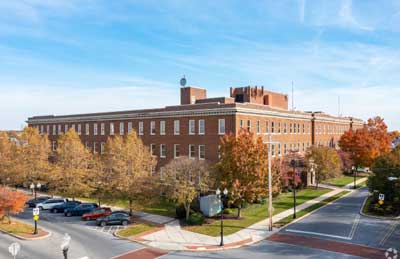
Advanced Counseling and Research Services Office — Lancaster, PA
Office Location & Hours (Lancaster)
313 W Liberty St STE 224, Lancaster, PA 17603
Mon–Thu 9am–7pm | Fri 9am–5pm
Open in Google Maps
Anxiety/PTSD/Trauma Treatment Formats
Anxiety/PTSD/Trauma Therapy Modalities
Professional Accountability
Trauma Educational Services
Trauma Research Support
Clinical
Supervision
Mount Nittany and the Nittany Valley seen from State College — Centre County, PA, home of Penn State University and ACRS telehealth trauma counseling clients
Centre County is home to some of the most important mental health research institutions in the country — and to a community that lived through one of the most documented cases of institutional betrayal in American history. Knowing what good care looks like is not the same as having access to it. ACRS brings specialized, certified trauma care to every zip code in Centre County, via telehealth, from your home.

Centre County, Pennsylvania — State College, Bellefonte, University Park, Philipsburg, Penns Valley, and the wide sweep of the Nittany Valley — occupies a remarkable and unusual position in the Pennsylvania mental health landscape. It is home to Penn State University and its Center for Collegiate Mental Health (CCMH), one of the nation's leading collegiate mental health research institutions, tracking anxiety, trauma, and treatment outcomes across more than 800 colleges and universities nationwide. Penn State's Consortium on Substance Use and Addiction and College of Medicine are internationally recognized for their research on addiction, trauma, and public health.

Yet Centre County is also a community that has lived through an experience that the CCMH's own research language describes with clinical precision: institutional betrayal. The Sandusky scandal — which broke in November 2011 after a grand jury indictment on 52 counts of child sexual abuse spanning fifteen years, and which culminated in a conviction on 45 counts in June 2012 — was not only a legal event. It was a community-wide trauma. Penn State's trial was held at the Centre County Courthouse in Bellefonte. Thousands of Centre County residents woke up to find their community at the center of a national story of child abuse and institutional failure. The community endured months of media saturation, collective shame, fear of economic collapse, profound disillusionment with institutions they had trusted, and the specific grief of a shared identity — "Happy Valley" — being publicly dismantled. Ten years later, community leaders described the wounds as "scars at the back of people's minds." Scars are not healed trauma. They are unprocessed trauma that has been covered over.

Advanced Counseling and Research Services serves Centre County via secure telehealth — bringing certified, specialized trauma care to a community that, despite its extraordinary mental health research infrastructure, still faces real waitlists, real treatment gaps, and the specific challenge of finding private, confidential care outside a university system in which nearly everyone knows nearly everyone else. Lancaster is approximately 95 miles from State College via US-322 East — roughly 90 minutes — and telehealth eliminates that distance entirely. Healing starts here.
Mental Health Conditions We Treat

  • Anxiety Disorders, Generalized Anxiety & Social Anxiety
  • Academic Performance Anxiety & Perfectionism
  • ADHD & ADD
  • Depression
  • Grief & Loss
  • Institutional Betrayal Trauma
  • Moral Injury & Occupational Trauma
  • Obsessive-Compulsive Disorder (OCD)
  • Phobias
  • Post-Traumatic Stress Disorder (PTSD)
  • Substance Use & Co-Occurring Disorders
  • Trauma — Single Event, Complex/Chronic, and Community-Level
  • Veteran & First Responder PTSD

Centre County's Unique Trauma Profile — Research Infrastructure, Community Wounds, and the Access Gap

Centre County presents a genuinely unusual clinical picture: a community with exceptional mental health research institutions that simultaneously carries significant, documented, and underserved trauma needs. Our certified clinical trauma professionals are trained to work with the specific experiences most common in Centre County's diverse population:

  • The 2011 Sandusky scandal and its specific form of community-level institutional betrayal trauma: Institutional betrayal — the documented experience of being harmed by an institution that was trusted to protect — is one of the most potent amplifiers of PTSD severity in the clinical literature. Centre County experienced this at scale in 2011: a child sexual predator operated for fifteen years using a Penn State-connected charity; university officials were charged with covering up what they knew; the community that had organized its identity around "Happy Valley" and Penn State football was exposed to a national reckoning it did not choose. For Centre County residents who lived through that period, the trauma operates at multiple levels simultaneously: grief for the direct victims, whose suffering was real and extended; betrayal by specific officials and institutions; shame for a community identity co-opted by events they did not cause; and the specific wound of discovering that what felt safe was not. Clinical evidence shows that this form of community-level betrayal trauma does not resolve with time alone. It requires specialized treatment — specifically, therapeutic approaches such as EMDR and Brainspotting that can reach the wordless, body-carried emotional residue that cognitive approaches alone cannot always access.
  • Penn State students, faculty, and staff — and the specific mental health pressures of an academic community: Penn State's CCMH annual data shows sustained and increasing demand for mental health services on campus, with specific increases in generalized anxiety, social anxiety, and trauma presentations. Campus Counseling and Psychological Services (CAPS) is well-resourced by university standards but inevitably faces waitlists at peak periods. For students, faculty, and staff managing complex, ongoing, or trauma-rooted concerns — rather than situational distress — the university system's focus on student services creates a gap that private specialized care fills. ACRS offers Certified Traumatologists trained specifically in the evidence-based modalities most effective for PTSD, complex trauma, and severe anxiety: EMDR, Brainspotting, DBT, CBT, and Prolonged Exposure. These credentials are not consistently available within the campus counseling network. Telehealth also provides what campus care cannot always guarantee: complete privacy and full separation from the institutional environment where the stress originates.
  • Graduate students — one of the most clinically vulnerable and systematically underserved populations in the university: Graduate students at Penn State and other research universities carry disproportionate mental health burdens: isolation from established social networks, financial precarity, complete economic and career dependence on individual faculty advisors, the specific anxiety of dissertation and thesis work, and the compounding stress of academic job markets that offer fewer positions than candidates. ACRS provides fully confidential telehealth care for graduate students — completely outside Penn State's administrative structure, with no possibility of records intersecting with advisor-student relationships or department politics.
  • Academic performance anxiety, perfectionism, and the specific pressures of a high-achievement culture: State College is organized around the rhythms and demands of a major research university. For students, the pressure of competitive academic culture, graduate school demands, athletic performance, and the particular stress of being far from home in a community that revolves almost entirely around the university creates specific anxiety profiles distinct from those of other populations. For faculty and researchers, academic culture generates its own chronic stressors: publication pressure, grant cycles, departmental politics, precarious employment for contingent faculty, and the particular grief of careers shaped by institutional hierarchies that can be arbitrary and unjust. ACRS's clinicians treat high-performance anxiety, perfectionism-driven trauma, and the specific burnout patterns of academic life without pathologizing achievement or misunderstanding the pressures that produce it.
  • Rural Centre County — where the county's research infrastructure reaches the least: Beyond State College and University Park, Centre County extends across miles of rural terrain: Philipsburg, Snow Shoe, Penns Valley, Milesburg, Potters Mills. For residents of these communities, Penn State's mental health resources are geographically and institutionally distant. The same rural mental health access gaps that apply across Pennsylvania's non-university counties apply here — limited local providers, limited specialist availability, and the specific stigma of seeking mental health care in a small, close-knit community. ACRS's telehealth service reaches rural Centre County exactly as effectively as it reaches downtown State College, with no additional barriers.
  • First responders, law enforcement, and emergency services covering both an urban campus and rural terrain: Centre County's law enforcement and first responders operate across a county whose character shifts sharply from a large university campus — with its specific challenges of large-event crowd management, alcohol-related incidents, sexual assault response, and student mental health crises — to rural townships where the nearest backup is far away and incidents carry different weight. That dual occupational context accumulates its own distinctive trauma load. ACRS provides fully confidential telehealth care for first responders on your schedule, without your employer's knowledge.
  • Opioid and substance use — visible in the rural county, adjacent to high academic and social pressure: Centre County's rural communities have active substance use concerns, while the university environment creates its own distinct patterns of alcohol and substance use driven by academic and social pressure. Penn State's Consortium on Substance Use and Addiction specifically studies these dynamics. ACRS treats the underlying trauma that drives sustained substance use, not only the presenting symptoms — providing the deeper clinical work that makes lasting recovery achievable.

Why Centre County Residents Choose ACRS

Certified Trauma Specialists — Private, Confidential, and Outside the University System

We work collaboratively with you to develop a Trauma-Informed Care Plan that addresses your specific needs and goals.

Individual Treatment
Individual Trauma and PTSD Treatment

One-on-one sessions with a Certified Traumatologist — via secure video from your home, your office, or anywhere in Pennsylvania. Completely private and outside any institutional system.

Group Treatment
Group Trauma and PTSD Treatment

Facilitated telehealth sessions where you heal alongside others who understand — with no connection to university or institutional systems.

Online Telehealth
Telehealth Trauma and PTSD Treatment

Secure, HIPAA-compliant video therapy delivering Pennsylvania's most credentialed trauma specialists to Centre County — no 95-mile drive to Lancaster, no campus waitlist, no referral required.

Concierge Counseling
Concierge Trauma and PTSD Counseling

For faculty, senior staff, and professionals who need care completely outside the visible reach of their professional community — maximum flexibility, maximum privacy.

Veterans PTSD Support
Veteran PTSD Support Program

Gold-standard veteran PTSD care — EMDR, Brainspotting, and Prolonged Exposure — via telehealth on your schedule, with full confidentiality and no institutional barriers.

First Responders & Law Enforcement

Fully confidential telehealth care for Centre County's first responders — no employer visibility, no campus system involvement, on your schedule.

Survivors of Domestic Violence

Individuals With Substance Use Disorders

Why ACRS Telehealth Is the Right Choice for Centre County

Centre County is home to one of the most sophisticated mental health research ecosystems in the United States. Penn State's CCMH tracks collegiate mental health trends across 800+ institutions. The Consortium on Substance Use and Addiction conducts nationally recognized research on addiction and recovery. And yet Centre County residents — including Penn State students, faculty, staff, and the broader community — still face two very specific gaps that ACRS fills directly.

The first gap is specialization. Penn State CAPS and community mental health resources provide valuable general counseling services. ACRS provides something different: Certified Traumatologists with advanced credentials specifically in evidence-based trauma modalities — EMDR, Brainspotting, DBT, CBT, and Prolonged Exposure. These are not general counseling credentials. They are advanced certifications in the specific treatments most effective for PTSD, complex trauma, severe anxiety, and the institutional betrayal trauma that Centre County's history has generated at community scale. That level of specialization is not consistently available within the campus or local community provider network.

The second gap is privacy. For Penn State students, faculty, and staff, the university community is both their professional environment and their social world. Seeking mental health care within that system — where records, referrals, and appointments can intersect with advisor relationships, departmental awareness, or institutional data — creates a specific barrier to accessing care. ACRS is completely private and completely outside Penn State's administrative structure. What happens in your telehealth session stays between you and your clinician, period.

Here is what Centre County clients tell us they value:

  • Certified Traumatologists with EMDR, Brainspotting, CBT, DBT, and Prolonged Exposure credentials — available without a university waitlist and without a campus referral process.
  • Complete privacy — no connection to Penn State's systems, your department, your advisor, your employer, or your campus community.
  • No waitlist, no referral — a free 10-minute consultation, then we schedule. Available now.
  • Evening hours through Thursday — for graduate students whose 9-to-5 is wherever the dissertation demands it be; for faculty on academic calendars that don't follow business hours; for rural Centre County residents whose commute makes daytime appointments unrealistic.
  • Clinicians who understand the specific mental health culture of an academic community — the perfectionism, the performance pressure, the hierarchical stressors of advisor-advisee relationships, the isolation of graduate school, and the specific wounds of a community shaped by an event like the Sandusky scandal.

Lancaster is approximately 95 miles from State College via US-322 East — about 90 minutes. For Centre County residents who wish to travel in person, our Lancaster office is fully accessible. For most Centre County clients, telehealth is the more practical and equally effective option.

ACRS Treatment Modalities for Anxiety, Trauma, and PTSD

Brainspotting Therapy

Brainspotting Therapy

Brainspotting operates on the principle that where you look affects how you feel. A therapist helps you identify "brainspots" — eye positions linked to stored emotional experiences or trauma in the brain. By maintaining focus on the brainspot while fostering mindfulness and connection, the brain processes and releases unresolved emotions at a profound neurobiological level.

For Centre County clients carrying the body-held residue of the 2011 community trauma — the shame, the disillusionment, the wordless grief of a shared identity fractured by what was revealed — Brainspotting reaches exactly the subcortical material that cognitive approaches alone cannot reliably access. It is also highly effective for the performance anxiety and perfectionism-driven stress common in academic communities, where the body has been trained to operate in chronic low-grade threat mode.

Cognitive Behavioral Therapy (CBT)

CBT Therapy

CBT is a short-term, goal-oriented psychotherapy that helps you identify and challenge unhelpful thought patterns and develop healthier coping mechanisms. Its structured, evidence-based approach suits the analytical orientation of many academic community members — and it is among the most rigorously validated treatments available for Anxiety, Depression, and PTSD.

Dialectical Behavior Therapy (DBT)

DBT Therapy

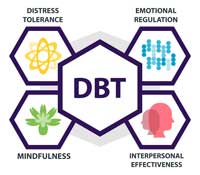
DBT teaches four core skill sets — Mindfulness, Distress Tolerance, Emotion Regulation, and Interpersonal Effectiveness — for navigating overwhelming emotions and building healthier relationships. Particularly effective for borderline personality disorder, self-harm, and suicidal ideation; and for anyone managing the sustained emotional pressure of academic perfectionism, chronic institutional stress, or the long-carried residue of community-level trauma.

EMDR Therapy

EMDR Therapy

EMDR (Eye Movement Desensitization and Reprocessing) is a gold-standard treatment for trauma and PTSD. It involves recalling disturbing memories while focusing on bilateral stimulation, helping your brain reprocess traumatic memories and reduce their emotional intensity. Among the most rigorously validated treatments for institutional betrayal trauma, complex PTSD, sexual trauma, and the specific presentations most common in Centre County's population.

Exposure and Response Prevention (ERP) Therapy

ERP Therapy

ERP is the gold-standard evidence-based treatment for OCD and related Anxiety Disorders. It involves gradually exposing you to feared thoughts or situations while helping you resist compulsive responses — breaking the OCD cycle and restoring control over your own mind.

Prolonged Exposure Therapy (PE)

PE Therapy

PE is a type of CBT used to treat PTSD and Anxiety disorders, involving gradual confrontation of feared memories and avoided situations in a safe therapeutic environment. Proven for veteran PTSD and equally validated for civilian trauma — including the specific forms of sexual trauma, community trauma, and institutional betrayal that Centre County's documented history has produced.

Other Therapy Techniques

  • Narrative Therapy: Encourages you to tell your story and reclaim ownership of your own experience — including the story of living in Happy Valley when the world changed in November 2011, or the story of years in a graduate program that felt more like survival than education, or the story of carrying something you haven't yet found words adequate to hold.
  • Somatic Experiencing: Focuses on the body's physical response to trauma and works to release stored nervous system tension — particularly relevant for clients whose academic or professional culture has trained them to intellectualize rather than feel, and whose chronic stress has accumulated in physical symptoms that cognitive approaches alone cannot reach.
  • Mindfulness and Relaxation Techniques: Present-moment anchoring practices grounded in Centre County's specific landscape — Mount Nittany, the Nittany Valley, Beaver Stadium's quiet on an off week, the Bellefonte courthouse square — as concrete anchors for awareness during trauma recovery.
  • Psychoeducation: Understanding trauma and its effects in terms directly applicable to Centre County's specific experiences — institutional betrayal, community trauma, academic pressure, graduate isolation, first responder occupational stress, and the specific way that living in an institution-centered community shapes the experience of psychological injury and recovery.

Our Experienced Anxiety, Trauma, and PTSD Counselors

Our counselors are trained in Trauma-Informed Care and have extensive experience helping individuals heal from traumatic experiences. Centre County's clients come to ACRS for specialized care that the campus system cannot consistently provide: Certified Traumatologists focused exclusively on trauma and PTSD, with complete privacy, no institutional affiliations, and the specific clinical depth that the county's documented trauma history — and its unique academic culture — demands.

Cheryl Wilson-Smith
Chief Executive Officer
Cheryl Wilson-Smith, MA, LPC – Chief Executive Officer and trauma expert
  • Licensed Professional Counselor (LPC)
    • Pa. Lic. PC006514
    • Fl. Lic. TPMC1044
  • Certified Traumatologist (CT)
  • National Certified Counselor (NCC)
  • Certified Clinical Mental Health Counselor (CCMHC)
  • Certified Clinical Trauma Professional (CCTP)
  • Certified in Emergency Crisis Response (CECR)
  • Neuropsychotherapist Certified (NPT-C)
  • Master of Arts (MA)
  • 20+ years of clinical experience.
  • Worked with clients across the lifespan.

Read Cheryl's Profile

Cady R. Monasmith
Chief Clinical Officer
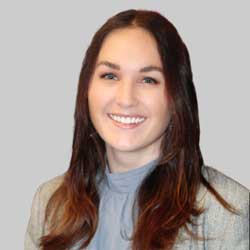
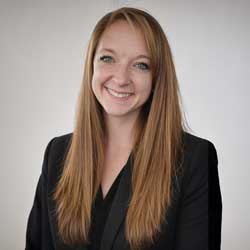
Cady Monasmith, MA, LPC – Licensed trauma and DBT therapist
  • Licensed Professional Counselor (PA-015668)
  • Certified Dialectical Behavioral Therapist (C-DBT)
  • Certified Clinical Trauma Professional (CCTP)
  • Certified Dancing Mindfulness Facilitator (CDMF)
  • Bachelor of Fine Arts (BFA)

Read Cady's Profile

Kim Civitarese
Chief Administrative Officer
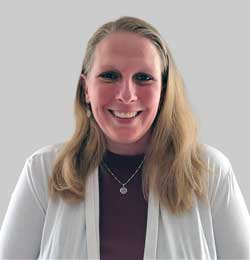
Trauma Therapist Kim Civitarese
  • Licensed Associate Professional Counselor (LAPC)
  • Cognitive Processing Therapist (CPT)
    Pre-licensed Clinician
  • Certified Grief Informed Professional (CGP)

Experience working with adolescents, couples, the elderly population, blended families, and families in the adoption process.

Read Kim's Profile

Jason Houghton
Psychiatric Mental Health Nurse Practitioner
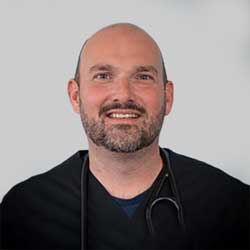
Jason Houghton, CRNP
  • Psych/Mental Health Nurse Practitioner Education — Johns Hopkins University
  • CRNP License: SP025306
  • RN License: RN606119
  • MSN — Duquesne University
  • BSN — Messiah University

Read Jason's Profile

Kailee Morgan
Clinician
Kailee Morgan, MSW, LAPC
  • Master of Social Work (MSW)
  • Licensed Associate Professional Counselor (LAPC)

Specializes in anxiety, ADHD & ADD, and depression.

Read Kailee's Profile

Choose Centre County's Anxiety, PTSD, and Trauma Experts

  • Specialization Beyond What Campus Can Provide: Certified Traumatologists with advanced credentials in EMDR, Brainspotting, CBT, DBT, and Prolonged Exposure. Not general counseling. Specialized trauma and PTSD treatment at the clinical depth that Centre County's documented trauma history demands.
  • Complete Privacy Outside the University System: No connection to Penn State's administrative structures, departments, or campus community. What happens in your sessions stays between you and your clinician.
  • No Waitlist, No Referral: A free 10-minute consultation, then we schedule. Available now — not at the start of next semester.
  • Evening Hours Through Thursday: For graduate students, faculty, staff, and all the people whose days don't stop at 5 pm.

Centre County knows more about mental health than almost anywhere in Pennsylvania. Penn State's CCMH generates the national data on which hundreds of campus counseling centers base their practices. That knowledge base is real and valuable. But knowing what the research says is not the same as having access to the care the research recommends — especially when that care needs to be private, specialized, and completely outside the institutional environment where the stress originates. ACRS fills that gap, directly and confidentially, from your home.

Contact us for a free, confidential 10-minute consultation. We'll listen, answer your questions, and help you find the right path forward.

Contact Us Online or

Call Us at 717-394-3994

Cheryl Wilson-Smith
Chief Executive Officer

Cheryl has over 20 years of experience providing the highest-quality trauma and PTSD therapy to clients across Pennsylvania. Centre County is home to extraordinary mental health research — and to a community that experienced one of the most documented institutional betrayals in American collegiate history. Specialized, private care completely outside the university system is what ACRS provides to Penn State students, faculty, and all Centre County residents via telehealth.

Cheryl Wilson-Smith, Chief Executive Officer — Trauma and PTSD Specialist
  • Licensed Professional Counselor (LPC)
    • Pa. Lic. PC006514
    • Fl. Lic. TPMC1044
  • Certified Traumatologist (CT)
  • National Certified Counselor (NCC)
  • Certified Clinical Mental Health Counselor (CCMHC)
  • Certified Clinical Trauma Professional (CCTP)
  • Certified in Emergency Crisis Response (CECR)
  • Neuropsychotherapist Certified (NPT-C)
  • Master of Arts (MA)
  • 20+ years of clinical experience.
  • Worked with clients across the lifespan.

Read Cheryl's Profile

"Centre County lives within walking distance of some of the best mental health research in the country — and still deserves specialized, private, trauma-focused care that doesn't require navigating a campus system or waiting for the semester to begin. Telehealth from Lancaster puts that care in your home, on your schedule. Call us."

— Cheryl Wilson-Smith

Take the First Step – Contact Us Today

Secure & Confidential • Free 10-minute consultation