The Clarion River ran so clean again it was federally designated a Wild and Scenic River — fifty years after coal-era acid drainage had threatened everything in it. The people of Clarion County have always known how to come back. Specialized trauma care, delivered by telehealth to your home in the Allegheny Plateau, is part of what coming back fully looks like. Healing starts here.
Clarion County, Pennsylvania — the borough of Clarion, New Bethlehem, Strattanville, Callensburg, and the scattered townships of the Allegheny Plateau — sits at the confluence of the Clarion River and the Allegheny River's drainage basin, shaped by centuries of resource extraction and the particular character of a place that has rebuilt its identity across multiple cycles of boom and exhaustion. The county was formed in 1839, carved from parts of Venango and Armstrong counties, and named for the Clarion River that cuts its valley through 600 square miles of plateau terrain. Eighty-four percent of its approximately 37,000 residents live in rural areas — one of the most rural counties in western Pennsylvania.
Clarion County's economic history was built across three successive industries, each of which peaked, exhausted its resource base, and collapsed within decades of one another. First came lumber: the first sawmill was established in 1802 along Piney Creek; at peak operations in the nineteenth century, Clarion County mills processed tens of millions of board feet annually and floated timber rafts down the Clarion River to Pittsburgh markets; the last raft ran in 1915. Then oil: after Colonel Edwin Drake struck oil near Titusville in 1859, Clarion County "was at one time a leading oil producer" within the Pennsylvania Oil Region; that boom, too, shifted west and wound down. Then coal: bituminous coal mining commenced in 1877 in seams across the county's townships; original county coal reserves exceeded 2 billion tons; the most accessible reserves were largely depleted by mid-century. When coal-era acid drainage had run its course along the Clarion River — acidifying the water, destroying aquatic life — Pennsylvania's environmental agencies undertook a decades-long restoration effort that eventually returned the river to health and earned it federal Wild and Scenic River designation.
Advanced Counseling and Research Services brings specialized, certified trauma and PTSD care to Clarion County residents via secure telehealth. Lancaster is approximately 170 miles from Clarion — about two and a half hours — making telehealth not merely convenient but the only sustainable option for ongoing trauma therapy. Healing starts here.
Clarion County's Trauma Profile — Post-Industrial Grief, Rural Isolation, and the Appalachian Access Gap
Clarion County's trauma needs are specific, documented, and largely unmet by the local mental health provider landscape. Our certified clinical trauma professionals are trained to work with exactly the experiences most prevalent in Clarion County's communities:
Three-industry exhaustion and the multigenerational grief of a county built on resources that are gone: Clarion County's economy was organized around lumber, then oil, then coal — each industry generating community identity, employment, and social structure, and each depleting its resource base and collapsing within a generation of the others. The psychological consequence of this triple exhaustion is not merely economic hardship. It is a specific form of multigenerational grief — the accumulating weight of a place whose industries have each in turn provided a generation's worth of purpose and then removed it. Families in Clarion County whose grandparents worked the lumber mills, whose parents worked the coal seams, and who have themselves watched manufacturing and retail thin further with each decade carry a grief that is rarely named as grief and almost never treated as trauma. The post-industrial grief of rural Appalachian communities — the loss of shared economic purpose, community identity, and the particular dignity of meaningful physical work — is a recognized clinical category. ACRS's certified traumatologists are trained to work with exactly this kind of complex, place-rooted, and multigenerational experience.
Sustained population decline and the grief of a place becoming less of itself: Clarion County's population has declined from 41,765 in 2000 to 37,241 in 2020 — a loss of over 4,500 people in twenty years. For the families who remain, that ongoing decline is experienced not as a demographic abstraction but as a lived reality: schools consolidating, businesses closing, familiar faces leaving, the social infrastructure of a community slowly thinning. The chronic, ambient grief of watching a place you love diminish is a recognized psychological burden — producing depression, anxiety, reduced sense of purpose, and the quiet hopelessness that often underlies substance use and other coping behaviors. It is a form of ongoing loss that rarely presents to clinical attention because there is no single traumatic event to point to, and because in communities like Clarion County, stoic self-reliance has long been both the cultural norm and the primary coping strategy.
Rural Appalachian poverty and the chronic stress of economic precarity: Clarion County's poverty rate of 13.9% exceeds the national average, and Clarion borough itself has a poverty rate of nearly 24% — elevated by the student population at PennWest Clarion but also reflective of genuine economic fragility in surrounding rural townships. Thirteen percent of the county's population is living with severe housing problems. Chronic economic stress — the sustained, low-grade pressure of financial insecurity, limited employment options, inadequate housing, and the awareness that the jobs that might once have supported a family no longer exist in the county — is a form of chronic trauma in its own right. It produces the same nervous system dysregulation, relational strain, and compounding hopelessness that acute traumatic events produce, just across a longer timeline and without a specific incident that clinical systems are designed to address.
The opioid and substance use crisis in rural western Pennsylvania: Clarion County is a federally designated Appalachian Regional Commission county — a designation that reflects persistent economic distress across an extended period. ARC counties in Pennsylvania have carried elevated substance use rates driven by post-industrial economic decline, chronic underemployment, and the erosion of community social structures that once provided protective buffering. ACRS treats the underlying trauma that drives sustained substance use, not only the symptoms — providing the deeper clinical work that makes lasting recovery more achievable for Clarion County residents.
Rural isolation and the specific mental health consequences of geographic remoteness: At 84.8% rural, Clarion County has essentially no urban center that functions as a hub of mental health services. With a population density of approximately 62 people per square mile spread across 600 square miles of Allegheny Plateau terrain, the distances between communities are real — and the nearest specialized trauma care has historically required travel that most people with demanding work schedules and limited transportation simply cannot sustain. Two-thirds of federally designated Mental Health Care Professional Shortage areas in the United States are in rural or partially rural regions; Clarion County is squarely within that profile. Geographic isolation itself is independently associated with elevated depression, anxiety, and substance use — driven not only by limited service access but by the specific psychological weight of physical distance from support systems, limited social infrastructure, and the particular experience of carrying difficult things alone.
Veterans and active-duty military families in a county with deep service traditions: Clarion County has a Clarion County Veterans Memorial Park directly across from the county courthouse — a community that honors its military heritage visibly and consistently. Rural Appalachian communities have historically sent high proportions of their young people into military service, and veterans returning to Clarion County face the compound challenges of service-related PTSD alongside the economic and social conditions of a post-industrial rural community with limited VA access. ACRS provides gold-standard veteran PTSD treatment — EMDR, Brainspotting, and Prolonged Exposure — via telehealth on your schedule, with complete confidentiality and no institutional barriers.
First responders covering vast rural terrain with minimal backup: Clarion County's emergency responders cover 600 square miles of rural terrain at low population density — responding to incidents that can be miles from the nearest backup, in communities where every face is familiar and the separation between professional role and personal relationship is narrow. The occupational trauma of first responder work in this context accumulates in specific ways: the weight of responding to neighbors, the isolation of carrying difficult calls without adequate peer support, and the particular burden of being the only resource in a community whose mental health and social support infrastructure has been thinning for decades. ACRS provides fully confidential telehealth care for Clarion County's first responders — on your schedule, at distance from your community, with no employer visibility.
PennWest Clarion students and young adults navigating limited local opportunity: PennWest Clarion (formerly Clarion University of Pennsylvania) draws young people to a county whose local economy offers limited post-graduation employment. The specific stressors of students who chose a rural university — often for financial reasons — and who face the choice between leaving the region they grew up in or staying in a community with diminishing economic options create a distinct anxiety profile. The Clarion borough poverty rate of nearly 24% reflects real financial precarity for many students and young adults, compounding academic pressure with housing instability, food insecurity, and the particular grief of leaving a place because staying feels impossible.
Why Clarion County Residents Choose ACRS
Certified Trauma Specialists — Delivered by Telehealth Across the Allegheny Plateau
We work collaboratively with you to develop a Trauma-Informed Care Plan that addresses your specific needs and goals.
Secure, HIPAA-compliant video therapy bringing Pennsylvania's most credentialed trauma specialists directly to Clarion County — no waitlist, no referral, no 5-hour round trip.
Maximum privacy, maximum flexibility — for those in Clarion County's close-knit communities who need their care completely outside the local visibility field.
Gold-standard veteran PTSD care — EMDR, Brainspotting, and Prolonged Exposure — via secure telehealth on your schedule, with no institutional barriers and no 170-mile drive.
First Responders
Confidential telehealth care for Clarion County's firefighters, EMS, and law enforcement — on your schedule, off the local radar, with no employer visibility in a county where anonymity is nearly impossible otherwise.
Survivors of Domestic Violence
Individuals With Substance Use Disorders
Why Telehealth Is the Right — and Only Realistic — Choice for Clarion County
Lancaster is approximately 170 miles from Clarion borough — about two and a half hours each way, entirely on state routes and interstates through central Pennsylvania terrain. A round trip to Lancaster for a single therapy appointment is a five-hour commitment before the session even begins. For ongoing trauma therapy, which typically requires weekly or biweekly sessions, that is simply not a sustainable model for the vast majority of Clarion County residents, regardless of how much they might want care.
Telehealth eliminates that barrier without eliminating any clinical quality. The evidence base for telehealth delivery of trauma therapy is robust: EMDR, Brainspotting, CBT, DBT, and Prolonged Exposure all deliver outcomes via secure video that are clinically equivalent to in-person care. What changes is the geography. What doesn't change is the quality of the clinician, the rigor of the treatment protocol, or the genuine face-to-face therapeutic relationship that makes trauma work effective.
There is a second barrier beyond distance that telehealth addresses for Clarion County specifically: privacy. In a county with a population density of roughly 62 people per square mile, and communities where generations of the same families have lived side by side through the lumber years, the oil years, and the coal years, everyone knows everyone. Seeking mental health care locally — if it were even available locally at the specialized level ACRS provides — carries a visibility that many people find prohibitive. Telehealth means your care stays between you and your clinician, period. No local provider who knows your family. No waiting room where you might encounter a neighbor. No local records that intersect with local social networks.
Here is what Clarion County clients tell us they value:
Certified Traumatologists with advanced credentials in EMDR, Brainspotting, DBT, CBT, and Prolonged Exposure — focused exclusively on trauma and PTSD. That specialization is not available within Clarion County's local provider network.
No 170-mile drive. No five-hour round trip. Your session happens from the Clarion River valley, from the Cook Forest country, from wherever home is.
Complete privacy — no local community visibility in a county where everyone knows everyone.
No waitlist, no referral — a free 10-minute consultation, then we schedule. Available now.
Evening hours through Thursday — for the shift workers, construction trades, agricultural workers, and anyone whose schedule doesn't accommodate daytime appointments during a 9-to-5 workday.
Clinicians who understand post-industrial Appalachian grief, rural isolation, and the specific psychology of communities that have rebuilt themselves multiple times and are being asked to do it again — without adequate support for what that cycle actually costs.
You must be physically located in Pennsylvania during your telehealth session.
ACRS Treatment Modalities for Anxiety, Trauma, and PTSD
Brainspotting operates on the principle that where you look affects how you feel. A therapist helps you identify "brainspots" — eye positions linked to stored emotional experiences or trauma in the brain. By maintaining focus on the brainspot while fostering mindfulness and connection, the brain processes and releases unresolved emotions at a profound neurobiological level.
Brainspotting is particularly well-suited to the quiet, body-carried, and often wordless trauma common in Clarion County's communities — the accumulated weight of post-industrial grief, rural isolation, and chronic economic stress that has never found adequate clinical language or space, and that manifests as persistent depression, anxiety, and the particular numbness that settles into communities that have been rebuilding for so long they've forgotten what it was they were building toward.
CBT is a short-term, goal-oriented psychotherapy that helps you identify and challenge unhelpful thought patterns and develop healthier coping mechanisms. Highly effective for Anxiety, Depression, and PTSD — its structured, practical approach suits clients who value direct, concrete progress and are skeptical of open-ended process without clear direction.
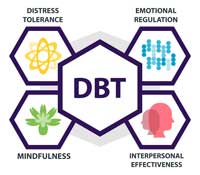
DBT teaches four core skill sets — Mindfulness, Distress Tolerance, Emotion Regulation, and Interpersonal Effectiveness — to help you navigate overwhelming emotions and build healthier relationships. Particularly effective for borderline personality disorder, self-harm, and suicidal ideation, and for anyone managing the sustained emotional weight of chronic economic stress, rural isolation, and the compounding grief of a community identity that has been through the cycle of boom and exhaustion multiple times.
EMDR (Eye Movement Desensitization and Reprocessing) is a gold-standard treatment for trauma and PTSD. It involves recalling disturbing memories while focusing on bilateral stimulation, helping your brain reprocess traumatic memories and reduce their emotional intensity. Among the most rigorously validated treatments for veteran PTSD and equally effective for complex, chronic, and multigenerational trauma — exactly the profiles most common in Clarion County.
Exposure and Response Prevention (ERP) Therapy
ERP is the gold-standard evidence-based treatment for OCD and related Anxiety Disorders. It involves gradually exposing you to feared thoughts or situations while helping you resist compulsive responses — breaking the OCD cycle and restoring your sense of control over your own mind.
PE is a type of CBT used to treat PTSD and Anxiety disorders — gradually confronting feared memories and avoided situations in a safe therapeutic environment. Proven for veteran PTSD and equally validated for civilian trauma from accidents, loss, and the kind of acute events that punctuate any community's history.
Other Therapy Techniques
Narrative Therapy: Encourages you to tell your story and reclaim ownership of your own experience — including the story of growing up in a county whose industries shaped your family's life across generations, and the story of staying in a place that many others have left, and what that means about who you are and what you're holding.
Somatic Experiencing: Focuses on the body's physical response to trauma and works to release stored nervous system tension — particularly relevant for clients from physically demanding occupational backgrounds, and for those whose chronic stress has settled into physical symptoms that cognitive approaches alone cannot reach.
Mindfulness and Relaxation Techniques: Present-moment anchoring grounded in Clarion County's specific landscape — the Clarion River's current, the old-growth white pine and hemlock of Cook Forest, the Allegheny Plateau's particular quality of light and silence — as concrete, available anchors for awareness during trauma recovery.
Psychoeducation: Understanding trauma and its effects in terms directly applicable to Clarion County's specific experience — post-industrial grief, rural isolation, chronic economic stress, veteran and first responder occupational trauma, and the specific psychology of communities that have endured multiple cycles of boom and exhaustion without adequate clinical support for what that cycle costs.
Our Experienced Anxiety, Trauma, and PTSD Counselors
Our counselors are trained in Trauma-Informed Care and have extensive experience helping individuals heal from traumatic experiences. Clarion County's clinically underserved communities — spread across 600 square miles of rural Allegheny Plateau terrain, carrying the weight of three-industry exhaustion and the chronic stress of sustained population decline — deserve the same depth of specialized care that is available in metropolitan areas. Telehealth delivers it.
Choose Clarion County's Anxiety, PTSD, and Trauma Experts
Specialization Not Available Locally: Certified Traumatologists with advanced credentials in EMDR, Brainspotting, CBT, DBT, and Prolonged Exposure. Focused exclusively on trauma and PTSD. Clarion County's local provider network does not offer this depth of specialization. Telehealth is how you access it.
No Waitlist, No Referral: A free 10-minute consultation, then we schedule. Available now — no months-long delays in a county with the fewest local options in western Pennsylvania.
No 170-Mile Drive: Your session happens from the Clarion River valley, from the Cook Forest country, from wherever home is on the Allegheny Plateau.
Evening Hours Through Thursday: For shift workers, agricultural workers, and all the people in Clarion County whose days don't fit a 9-to-5 appointment window.
The Clarion River was once acidified by decades of coal drainage — and then it came back, clean and wild enough to earn federal Wild and Scenic designation. The people of Clarion County have seen this kind of recovery before. The lumber came back as forest. The river came back as a resource. Healing from what the years have accumulated — the grief, the pressure, the isolation — is the next version of the same work. ACRS is here to support it.
Contact us for a free, confidential 10-minute consultation. We'll listen, answer your questions, and help you find the right path forward.
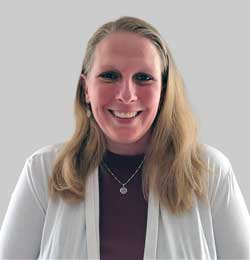
Cheryl has over 20 years of experience providing the highest-quality trauma and PTSD therapy to clients across Pennsylvania — including those in Clarion County carrying the accumulated weight of post-industrial grief, rural isolation, and the specific exhaustion of communities that have rebuilt themselves repeatedly without adequate support for what the rebuilding actually costs.
"The Clarion River came back. The forest came back. People can come back too — from grief, from isolation, from the weight of what rural Appalachian communities have carried without adequate support. The 170 miles to Lancaster doesn't have to matter. Telehealth brings specialized care to your door on the Allegheny Plateau. Call us."