Columbia County, PA Online Anxiety, PTSD, and Trauma Therapy

EMDR, CBT, DBT, PE, Brainspotting and More

Secure Telehealth — Specialized Care Along the Susquehanna River Corridor
The Susquehanna River flowing through Bloomsburg and the rolling farmland and forested ridges of Columbia County, PA
Advanced Counseling and Research Services
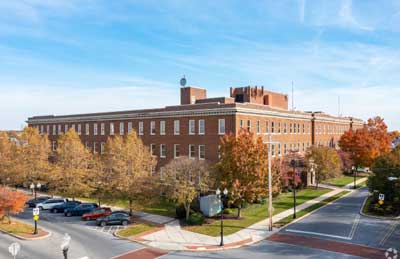
Advanced Counseling and Research Services Office — Lancaster, PA
Office Location & Hours (Lancaster)
313 W Liberty St STE 224, Lancaster, PA 17603
Mon–Thu 9am–7pm | Fri 9am–5pm
Open in Google Maps
Anxiety/PTSD/Trauma Treatment Formats
Anxiety/PTSD/Trauma Therapy Modalities
Professional Accountability
Trauma Educational Services
Trauma Research Support
Clinical
Supervision
The Susquehanna River flowing through Bloomsburg and the rolling farmland and forested ridges of Columbia County, PA
Columbia County has rebuilt after floods that have exceeded 30 feet in Bloomsburg more than once — floods that have closed factories, reshaped the Susquehanna's bank, and marked every generation of families along the river. The county deserves the same quality of specialized trauma care that every rebuild has demanded skilled hands and time. ACRS brings it by telehealth, without a two-hour drive to Lancaster. Healing starts here.

Columbia County, Pennsylvania — Bloomsburg, Berwick, Catawissa, Benton, and the farms and townships spread across the 490 square miles of Susquehanna River valley and forested ridge terrain of Pennsylvania's north-central region — is a county whose identity has been defined as much by water as by work. Bloomsburg, the county seat, holds a distinction shared by no other municipality in Pennsylvania: it is the only incorporated town in the Commonwealth — not a borough, not a city, but a town, a status it has held for over a century. The Susquehanna River runs along its southern edge, and Fishing Creek borders it to the north and west. That geography has made Bloomsburg one of the most repeatedly flooded communities in Pennsylvania.

Columbia County's economic history is layered: timber and tanning in the Fishing Creek Valley communities in the 1800s; anthracite coal in the southern tip of the county; textile manufacturing in Bloomsburg, where Bloomsburg Mills wove and finished fabrics for 120 years before closing in May 2009; and Berwick's remarkable industrial history — the American Car and Foundry Company plant there built over 15,000 M3 Stuart tanks during World War II, one of the most significant manufacturing contributions of any single community in the war effort, and Wise Potato Chips, a snack brand known nationally, was founded in Berwick by Earl Wise and remains headquartered there today. The post-war decades brought industrial contraction, and when Tropical Storm Lee flooded Bloomsburg in September 2011, Windsor Foods (formerly Del Monte Foods) cited that flooding as a reason for closing its local plant in 2014 — directly connecting the river's recurring floods to the county's ongoing economic fragility.

Advanced Counseling and Research Services provides specialized, certified trauma and PTSD care to Columbia County residents via secure telehealth. Lancaster is approximately 85 to 90 miles south of Bloomsburg — about two hours by car — making telehealth the most practical choice for ongoing weekly or biweekly care. Healing starts here.
Mental Health Conditions We Treat

  • Anxiety Disorders, Panic & Chronic Environmental Anxiety
  • ADHD & ADD
  • Depression
  • Flood Trauma & Disaster-Related PTSD
  • Grief & Loss — Including Post-Industrial and Community-Level
  • Moral Injury & Occupational Trauma
  • Obsessive-Compulsive Disorder (OCD)
  • Phobias
  • Post-Traumatic Stress Disorder (PTSD)
  • Substance Use & Co-Occurring Disorders
  • Trauma — Single Event, Recurring, and Complex/Chronic
  • Veteran & First Responder PTSD

Columbia County's Specific Trauma Profile — Chronic Flood Trauma, Post-Industrial Loss, and the Susquehanna River's Long Shadow

Columbia County carries a specific, documented, and largely unaddressed trauma profile rooted in its geography, its economic history, and the recurring convergence of the two. Our certified clinical trauma professionals are trained to work with exactly these experiences:

  • Chronic, recurring flood trauma from the Susquehanna River and Fishing Creek: Bloomsburg has experienced four documented floods that exceeded the base flood stage of 28 feet at the gauge — and many more that caused significant damage at lower levels. Tropical Storm Lee in September 2011 drove the Susquehanna to 32.75 feet, the highest on record. Hurricane Agnes in 1972 reached 31 feet. Flooding in 1904 reached 32.7 feet. Further major floods occurred in 2006, 2004, 1996, 1993, 1986, 1984, 1983, and 1979. During major floods, up to one-third of Bloomsburg's entire landmass can be underwater. Fishing Creek, which borders the town on the north and west, can flood with little or no warning. The psychological weight of living in a community that has flooded this frequently — where flooding is not a once-in-a-generation event but a recurring feature of life measured in years — is a recognized form of place-based and chronic trauma. It accumulates. It teaches the nervous system to stay alert. It creates a persistent background anxiety that many residents normalize because everyone around them is carrying the same thing, and because there is no adequate name for what it costs to watch water take things that cannot be replaced over and over again.
  • Flooding that directly cost jobs — the compounded loss of Tropical Storm Lee and the Windsor Foods closure: When Windsor Foods (formerly Del Monte Foods) closed its Bloomsburg plant in early 2014 — directly citing flooding from Tropical Storm Lee as a contributing reason — it was not merely an economic loss. It was a demonstration of what Columbia County's residents already understood: that the Susquehanna's recurring floods don't just damage property and strain nerves; they make economic investment in the county precarious. The closure affected more than 160 employees. That specific connection — between flood trauma and job loss — is a compounding grief that ordinary mental health care rarely has the framework to address. ACRS does.
  • Post-industrial grief from 120 years of Bloomsburg Mills and the manufacturing decline of Berwick: Bloomsburg Mills wove and finished fabrics in Bloomsburg for 120 years before closing May 31, 2009, affecting more than 200 employees. For families whose parents and grandparents had worked there, the closure was not just an economic disruption — it was the end of a multigenerational occupational identity. The American Car and Foundry plant in Berwick, which built over 15,000 tanks for the WWII effort and defined Berwick as an industrial center, has also been part of the broader contraction of manufacturing employment that has marked Columbia County's economic arc across the second half of the twentieth century. Multigenerational post-industrial grief — the loss of shared economic purpose, the dignity of skilled work, and the community structures that industrial employment organized — is a recognized form of community-level trauma that rarely receives adequate clinical attention.
  • Anthracite coal legacy and the southern tip's Coal Region heritage: The southern tip of Columbia County is part of Pennsylvania's anthracite Coal Region. The coal industry that organized communities in this area — and that collapsed so dramatically after its 1917 production peak — left behind a specific multigenerational grief common to all of Pennsylvania's Coal Region communities: the loss of an industry that built family identity across generations, the chronic economic underperformance that followed, and the environmental legacy of extraction that continues to shape the landscape and its people.
  • Economic underperformance and persistent financial stress: Columbia County's median household income of $61,992 sits below Pennsylvania's $73,170. The county's 20.4% of residents aged 65 or older — an aging population with fixed incomes in a county that has seen repeated industrial contractions — faces specific economic vulnerability. Chronic financial stress, without a discrete traumatic event to anchor it and without the clinical attention acute trauma generates, accumulates in the nervous system with the same effect as acute trauma over time.
  • Veterans in a county with sustained military service traditions: Columbia County's working-class communities — from Berwick's industrial workforce to the farms and townships of the Fishing Creek Valley — have sustained traditions of military service across generations. Veterans returning to Columbia County carry the compound weight of service-related trauma alongside the economic and community conditions of a post-industrial river county with limited access to specialized VA care and veteran mental health services. ACRS provides gold-standard veteran PTSD treatment — EMDR, Brainspotting, and Prolonged Exposure — via telehealth on your schedule, with complete confidentiality.
  • Rural isolation in Columbia County's townships and the mental health access gap: While Bloomsburg and Berwick anchor the county, the 490 square miles of Columbia County include many townships — the Fishing Creek Valley communities, the northern state game lands territories, the farms of the county's rural interior — where specialized mental health access has historically required substantial travel. Telehealth closes that access gap without compromising any clinical quality.
  • Opioid and substance use in a county shaped by post-industrial stress: Columbia County's combination of post-industrial economic contraction, chronic underemployment, and the sustained stress of repeated flood losses contributes to the conditions that drive elevated substance use across Pennsylvania's rural counties. ACRS treats the underlying trauma that drives sustained substance use — providing the deeper clinical work that makes lasting recovery more achievable.

Why Columbia County Residents Choose ACRS

Certified Trauma Specialists — Delivered by Telehealth to the Susquehanna River Corridor

We work collaboratively with you to develop a Trauma-Informed Care Plan that addresses your specific needs and goals.

Individual Treatment
Individual Trauma and PTSD Treatment

One-on-one sessions with a Certified Traumatologist via secure video — from your home in the Susquehanna River valley, without a two-hour drive to Lancaster.

Group Treatment
Group Trauma and PTSD Treatment

Facilitated telehealth sessions where you heal alongside others — from home, with full privacy, from anywhere across Columbia County's 490 square miles.

Online Telehealth
Telehealth Trauma and PTSD Treatment

Secure, HIPAA-compliant video therapy bringing Pennsylvania's most credentialed trauma specialists directly to Columbia County — no waitlist, no referral, no two-hour round trip to Lancaster.

Concierge Counseling
Concierge Trauma and PTSD Counseling

Maximum privacy, maximum flexibility — for Columbia County residents who need care completely outside their local community's visibility.

Veterans PTSD Support
Veteran PTSD Support Program

Gold-standard veteran PTSD care — EMDR, Brainspotting, and Prolonged Exposure — via telehealth on your schedule, with full confidentiality and no long drives to VA facilities.

First Responders

Confidential telehealth care for Columbia County's firefighters, EMS crews, and law enforcement — whose service in a county with chronic flooding history gives them a specific, recurring, and often unprocessed occupational trauma load. On your schedule, no community visibility.

Survivors of Domestic Violence

Individuals With Substance Use Disorders

Why Telehealth Is the Right Choice for Columbia County

Lancaster is approximately 85 to 90 miles south of Bloomsburg — roughly two hours each way on I-81 North. For ongoing trauma therapy, which typically requires weekly or biweekly sessions, that round trip represents a four-hour commitment layered into every appointment. For residents of Berwick, Catawissa, Benton, and the township communities of the Fishing Creek Valley and the county's rural interior, local travel to Bloomsburg may add additional distance before the journey toward Lancaster even begins. Telehealth removes every mile of that barrier.

Columbia County also presents a specific clinical context that telehealth is well-suited to address. Bloomsburg is Pennsylvania's only incorporated town — a close-knit community where familiarity runs deep. For residents navigating trauma treatment, particularly for experiences as community-shared as the county's recurring floods, seeking care locally carries a visibility that makes many people reluctant to pursue it. ACRS is nearly 90 miles away and completely invisible to your local community. What happens in your session stays between you and your clinician.

You must be physically located in Pennsylvania during your telehealth session. Our Lancaster office is accessible via I-81 South for those able and wishing to travel; telehealth is the more practical option for the majority of Columbia County residents seeking ongoing specialized care.

Here is what Columbia County clients tell us they value:

  • Certified Traumatologists with advanced credentials in EMDR, Brainspotting, DBT, CBT, and Prolonged Exposure — including specific training in disaster-related and recurring flood trauma. That depth of specialization is not consistently available within Columbia County's local provider network.
  • No two-hour drive on I-81. Your session happens from home in the Susquehanna River valley, wherever that is across Columbia County's 490 square miles.
  • Complete privacy — no local visibility in the county's close-knit communities, where flood trauma and post-industrial grief are shared history and seeking care for them can feel exposed.
  • No waitlist, no referral — a free 10-minute consultation, then we schedule. Available now.
  • Evening hours through Thursday — for working families, shift workers, and anyone whose schedule doesn't accommodate daytime appointments requiring a two-hour commute.
  • Clinicians who understand the specific psychological weight of recurring flood trauma — not merely as a discrete disaster event but as a chronic, place-based, and multigenerational condition that lives in the body and shapes how entire communities understand safety, loss, and what can be counted on to stay.

ACRS Treatment Modalities for Anxiety, Trauma, and PTSD

Brainspotting Therapy

Brainspotting Therapy

Brainspotting operates on the principle that where you look affects how you feel. A therapist helps you identify "brainspots" — eye positions linked to stored emotional experiences or trauma in the brain. By maintaining focus on the brainspot while fostering mindfulness and connection, the brain processes and releases unresolved emotions at a profound neurobiological level.

Brainspotting is particularly well-suited to the body-carried, sensory, and often wordless trauma most common in Columbia County — the physical memory of watching water rise, the nervous system that has learned to stay alert for the next flood, the particular numbness of multigenerational post-industrial loss that cannot easily be put into words because it is not a single event but a decades-long erosion of what a community was built to be. These are exactly the experiences that Brainspotting reaches most effectively.

Cognitive Behavioral Therapy (CBT)

CBT Therapy

CBT is a short-term, goal-oriented psychotherapy that helps you identify and challenge unhelpful thought patterns and develop healthier coping mechanisms. Highly effective for Anxiety, Depression, and PTSD — its practical, structured approach is well-suited to clients who want concrete progress and clear tools for managing the chronic anxiety of living on a documented floodplain.

Dialectical Behavior Therapy (DBT)

DBT Therapy

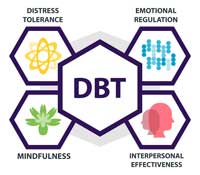
DBT teaches four core skill sets — Mindfulness, Distress Tolerance, Emotion Regulation, and Interpersonal Effectiveness — to help you navigate overwhelming emotions and build healthier relationships. Particularly effective for borderline personality disorder, self-harm, and suicidal ideation, and for managing the sustained pressure of chronic environmental anxiety, recurring loss, and the compound weight of communities that have absorbed more than they have been helped to process.

EMDR Therapy

EMDR Therapy

EMDR (Eye Movement Desensitization and Reprocessing) is a gold-standard treatment for trauma and PTSD. It involves recalling disturbing memories while focusing on bilateral stimulation, helping your brain reprocess traumatic memories and reduce their emotional intensity. Among the most rigorously validated treatments for disaster-related PTSD, recurring flood trauma, and the complex grief of community-level loss — all of which are central to Columbia County's documented experience.

Exposure and Response Prevention (ERP) Therapy

ERP Therapy

ERP is the gold-standard evidence-based treatment for OCD and related Anxiety Disorders. It involves gradually exposing you to feared thoughts or situations while helping you resist compulsive responses — breaking the OCD cycle and restoring your sense of control over your own mind.

Prolonged Exposure Therapy (PE)

PE Therapy

PE is a type of CBT used to treat PTSD and Anxiety disorders — gradually confronting feared memories and avoided situations in a safe therapeutic environment. Proven for veteran PTSD and equally validated for disaster trauma, recurring flood-related PTSD, and the acute events that punctuate any community's longer history of loss.

Other Therapy Techniques

  • Narrative Therapy: Encourages you to tell your story and reclaim ownership of your own experience — including what it meant when the Susquehanna reached 32.75 feet in 2011, what the closure of Bloomsburg Mills in 2009 meant for families who had worked there for generations, and what it means to belong to a place that keeps being tested in ways no single generation should have to absorb alone.
  • Somatic Experiencing: Focuses on the body's physical response to trauma and works to release stored nervous system tension — particularly valuable for flood survivors whose bodies still carry the sensory memory of rising water, and for those whose chronic environmental anxiety and sustained economic stress have settled into physical symptoms that cognitive approaches alone cannot reach.
  • Mindfulness and Relaxation Techniques: Present-moment anchoring grounded in Columbia County's specific landscape — the Susquehanna River's calmer reaches, the covered bridges of the Fishing Creek Valley, the Bloomsburg Fairgrounds, the open farmland of the county's rural townships, Knoebels' forested groves in Elysburg — as concrete, available anchors for awareness during trauma recovery.
  • Psychoeducation: Understanding trauma and its effects in terms directly applicable to Columbia County's experience — the specific neurological mechanism of chronic flood anxiety; why recurring disasters create different and more durable nervous system impacts than single events; what multigenerational post-industrial grief looks like clinically; and why the stoicism that has always characterized how Columbia County communities respond to hard things can be a barrier to recognizing what the hard things have actually cost.

Our Experienced Anxiety, Trauma, and PTSD Counselors

Our counselors are trained in Trauma-Informed Care and have extensive experience helping individuals heal from traumatic experiences — including the specific, deeply rooted, and chronically underserved trauma carried by Columbia County communities whose lives have been shaped by the Susquehanna River's recurring floods, the contraction of the industries that defined their parents' and grandparents' working lives, and the particular resilience that keeps people in a place they love despite what the place has repeatedly asked of them.

Cheryl Wilson-Smith
Chief Executive Officer
Cheryl Wilson-Smith, MA, LPC – Chief Executive Officer and trauma expert
  • Licensed Professional Counselor (LPC)
    • Pa. Lic. PC006514
    • Fl. Lic. TPMC1044
  • Certified Traumatologist (CT)
  • National Certified Counselor (NCC)
  • Certified Clinical Mental Health Counselor (CCMHC)
  • Certified Clinical Trauma Professional (CCTP)
  • Certified in Emergency Crisis Response (CECR)
  • Neuropsychotherapist Certified (NPT-C)
  • Master of Arts (MA)
  • 20+ years of clinical experience.
  • Worked with clients across the lifespan.

Read Cheryl's Profile

Cady R. Monasmith
Chief Clinical Officer
Cady Monasmith, MA, LPC – Licensed trauma and DBT therapist
  • Licensed Professional Counselor (PA-015668)
  • Certified Dialectical Behavioral Therapist (C-DBT)
  • Certified Clinical Trauma Professional (CCTP)
  • Certified Dancing Mindfulness Facilitator (CDMF)
  • Bachelor of Fine Arts (BFA)

Read Cady's Profile

Kim Civitarese
Chief Administrative Officer
Trauma Therapist Kim Civitarese
  • Licensed Associate Professional Counselor (LAPC)
  • Cognitive Processing Therapist (CPT)
    Pre-licensed Clinician
  • Certified Grief Informed Professional (CGP)

Experience working with adolescents, couples, the elderly population, blended families, and families in the adoption process.

Read Kim's Profile

Jason Houghton
Psychiatric Mental Health Nurse Practitioner
Jason Houghton, CRNP
  • Psych/Mental Health Nurse Practitioner Education — Johns Hopkins University
  • CRNP License: SP025306
  • RN License: RN606119
  • MSN — Duquesne University
  • BSN — Messiah University

Read Jason's Profile

Kailee Morgan
Clinician
Kailee Morgan, MSW, LAPC
  • Master of Social Work (MSW)
  • Licensed Associate Professional Counselor (LAPC)

Specializes in anxiety, ADHD & ADD, and depression.

Read Kailee's Profile

Choose Columbia County's Anxiety, PTSD, and Trauma Experts

  • Specialization Not Consistently Available Locally: Certified Traumatologists with advanced credentials in EMDR, Brainspotting, CBT, DBT, and Prolonged Exposure — trained specifically for disaster-related PTSD, recurring flood trauma, post-industrial grief, and veteran PTSD. That clinical depth is not consistently available within Columbia County's local provider network.
  • No Waitlist, No Referral: A free 10-minute consultation, then we schedule. Available now.
  • No Two-Hour Round Trip: Your session happens from home in the Susquehanna River valley — Bloomsburg, Berwick, Catawissa, Benton, or anywhere else in the county.
  • Evening Hours Through Thursday: For working families, shift workers, and everyone whose day doesn't end at 5 pm.

Bloomsburg has been rebuilt after every flood — not metaphorically, but literally, street by street, room by room, with hands that knew the previous version of what the water took. Berwick built tanks that helped win a war. The people of Columbia County know how to keep going through things that would stop other communities entirely. What has been consistently missing is the specialized clinical support to process what all of that keeping-going has cost — what the floods cost, what the mills closing cost, and what it means to carry those losses forward without adequate acknowledgment of what they were. ACRS provides exactly that support, by telehealth, directly to the Susquehanna corridor.

Contact us for a free, confidential 10-minute consultation. We'll listen, answer your questions, and help you find the right path forward.

Contact Us Online or

Call Us at 717-394-3994

Cheryl Wilson-Smith
Chief Executive Officer

Cheryl has over 20 years of experience providing the highest-quality trauma and PTSD therapy to clients across Pennsylvania — including those in Columbia County who carry the specific weight of a community that has been flooded more times than should be asked of any place, that has watched industries close that defined what their families did for generations, and that has kept rebuilding with the same resilience and the same unaddressed grief every single time.

Cheryl Wilson-Smith, Chief Executive Officer — Trauma and PTSD Specialist
  • Licensed Professional Counselor (LPC)
    • Pa. Lic. PC006514
    • Fl. Lic. TPMC1044
  • Certified Traumatologist (CT)
  • National Certified Counselor (NCC)
  • Certified Clinical Mental Health Counselor (CCMHC)
  • Certified Clinical Trauma Professional (CCTP)
  • Certified in Emergency Crisis Response (CECR)
  • Neuropsychotherapist Certified (NPT-C)
  • Master of Arts (MA)
  • 20+ years of clinical experience.
  • Worked with clients across the lifespan.

Read Cheryl's Profile

"Columbia County's communities have been tested by the Susquehanna more times than any generation should have to face, and they have rebuilt every time. That resilience is real. So is what it costs to carry the weight of repeated floods and industrial loss without specialized clinical support. The nearly 90 miles to Lancaster doesn't have to be a barrier. Telehealth brings the care to the Susquehanna corridor — call us."

— Cheryl Wilson-Smith

Take the First Step – Contact Us Today

Secure & Confidential • Free 10-minute consultation