Adams County carries a weight of history unlike almost anywhere else in America. The people who live and work here — farmers, veterans, first responders, families — deserve specialized trauma care that honors that weight. Our Lancaster office is 25 miles away. We are ready.
Adams County is one of Pennsylvania's most distinctive communities — a county defined equally by its working agricultural landscape and by the memory of one of the bloodiest three days in American history. The orchards and family farms that spread across the South Mountain slopes and the Cumberland Valley floor have sustained communities here for generations. And the Gettysburg battlefield, where 50,000 soldiers became casualties in July 1863, has shaped the psychology and identity of this region in ways that are still felt today — by the descendants of families who lived through it, by the veterans who find themselves drawn here, and by anyone who has spent time walking those grounds.
Adams County's mental health infrastructure has struggled to keep pace with its community's needs. Adams County commissioners formally passed a resolution in 2022 calling the county's mental health funding situation a "crumbling" system, requesting emergency state aid to prevent the collapse of crisis intervention, residential, and outpatient programs. The York/Adams Mental Health system — which serves both counties together — operates under chronic resource constraints. Specialized trauma care is not readily available within the county.
At Advanced Counseling and Research Services, we are Adams County's nearest certified traumatologist-level provider. Our Lancaster office is just 25 miles east — approximately 30 minutes on Route 30. For those who prefer in-person care, that drive puts you face-to-face with Pennsylvania's most credentialed trauma specialists in a private clinical setting. For those who prefer to stay home, secure telehealth delivers the same quality of care without leaving your living room. You don't have to leave Adams County to find a certified clinical trauma professional. Healing starts here.
Adams County's Trauma Burden — Specific, Quiet, and Long Underserved
Adams County's communities carry real and specific burdens that general counseling approaches rarely reach. Our certified clinical trauma professionals are trained to work with each of these realities:
A county whose mental health system is officially acknowledged to be failing: In 2022, the Adams County Board of Commissioners adopted a formal resolution declaring the community mental health system underfunded and requesting emergency state intervention. County officials and community mental health providers testified that a decade of state funding cuts had forced programs to close and left the county's most vulnerable residents without access to care. That documented gap is not a matter of dispute — it is on the record in a county government resolution. ACRS exists precisely to provide the specialized, certified clinical trauma care that a strained county system cannot consistently deliver.
Agricultural stress and farm family trauma: Adams County is one of Pennsylvania's most productive agricultural counties, known particularly for its fruit orchards — the apple and peach farms that fill the hillsides between Biglerville and Arendtsville. Farm families carry a form of chronic, sustained stress that rarely gets named as the trauma it is: the financial pressure of land debt and operating costs, the vulnerability to weather and commodity markets entirely outside anyone's control, the near-impossibility of separating work from home, and the deeply internalized expectation of self-reliance that makes asking for help feel like failure. Penn State Extension's Farm Stress Team has documented provider shortages and broadband barriers that make farm family mental health care harder to access statewide. Telehealth eliminates those barriers, and our in-person Lancaster office is close enough that farm families willing to make the 30-minute drive have access to Pennsylvania's most credentialed trauma specialists.
Veterans — in a county defined by military sacrifice: Adams County has a meaningful and proud veteran population. The Gettysburg battlefield draws veterans from across the country who find the landscape itself resonant with their own experience in ways that are not always easy to articulate. Adams County's own veterans — those who live and work here, who grew up farming the same hills that soldiers crossed in 1863 — carry their service home into a community that honors sacrifice while providing few specialized resources to help heal its cost. ACRS provides EMDR, Brainspotting, and Prolonged Exposure therapy — gold-standard, evidence-based treatments for veteran PTSD — via in-person sessions in Lancaster or secure telehealth, with complete scheduling flexibility and confidentiality that is yours to control.
The opioid and fentanyl crisis: Adams County participates in Pennsylvania's opioid abatement settlement funding program and jointly funds the York/Adams Drug & Alcohol Commission (YADAC), which has received millions in settlement funding to expand treatment capacity. That investment reflects the scale of the crisis — and the gap between what community-level services can provide and what specialized, trauma-focused clinical care actually looks like. Recovery without addressing the underlying trauma that precedes most addiction is clinically proven to be harder to sustain. ACRS provides exactly that deeper level of care.
First responders: Adams County's firefighters, EMS crews, and law enforcement officers serve a community where overdose calls, domestic violence incidents, and farm accident responses are daily realities — alongside the particular weight of working in and around a battlefield that receives more than a million visitors a year. Our trauma specialists understand the cumulative psychological toll of first responder work and provide confidential, effective telehealth care or in-person sessions on your schedule.
Survivors of domestic violence: Adams County has documented domestic violence resources including Thrive Ministries, which serves survivors in Gettysburg. For survivors who are not ready or not able to travel, telehealth provides access to specialized, trauma-informed care from the privacy of home — with the anonymity that in-person care in a close-knit rural county cannot always match. For those who can make the trip, Lancaster is 25 miles and 30 minutes away.
The psychological weight of living beside history: Adams County is home to one of the most significant trauma sites in American history. Whether you have a family connection to those three days in July 1863, whether you have stood on that ground and felt something shift, or whether you simply live with the awareness that your community was shaped by an almost incomprehensible human catastrophe — that proximity to historical trauma is real, and it shapes the psychology of place in ways that do not dissolve with time. ACRS's certified trauma professionals understand that trauma is not only personal; it is also historical, communal, and inherited.
ACRS's certified clinical trauma professionals are trained specifically to work with complex, layered, and chronic trauma — not only with acute single-event PTSD. We meet you where you are.
Why Adams County Residents Choose ACRS
Specialized, Trauma-Informed Care — 25 Miles Away or From Your Own Home
We work collaboratively with you to develop a Trauma-Informed Care Plan that addresses your specific needs and goals.
One-on-one sessions with a certified traumatologist — in-person at our Lancaster office (25 miles on Route 30) or via secure video on your phone, tablet, or computer.
A highly personalized, private approach to care with maximum flexibility and attention — for those who want their treatment to fit precisely around their life, not the other way around.
Specialized, evidence-based PTSD care for Adams County veterans and active military families — via telehealth or in-person at our Lancaster office, just 25 miles from Gettysburg on Route 30. EMDR, Brainspotting, and Prolonged Exposure therapy for those who have served, delivered with complete confidentiality and scheduling flexibility.
First Responders
Adams County's firefighters, EMS crews, and law enforcement officers serve a community where overdose calls, domestic violence incidents, and farm accident responses are daily realities — compounded by the unique psychological weight of working in and around one of America's most visited military history sites. Our trauma specialists understand the cumulative toll of first responder work and provide fully confidential care, from your home via telehealth or in-person in Lancaster.
Survivors of Domestic Violence
Individuals With Substance Use Disorders
In-Person in Lancaster or Telehealth at Home — Both Work for Adams County
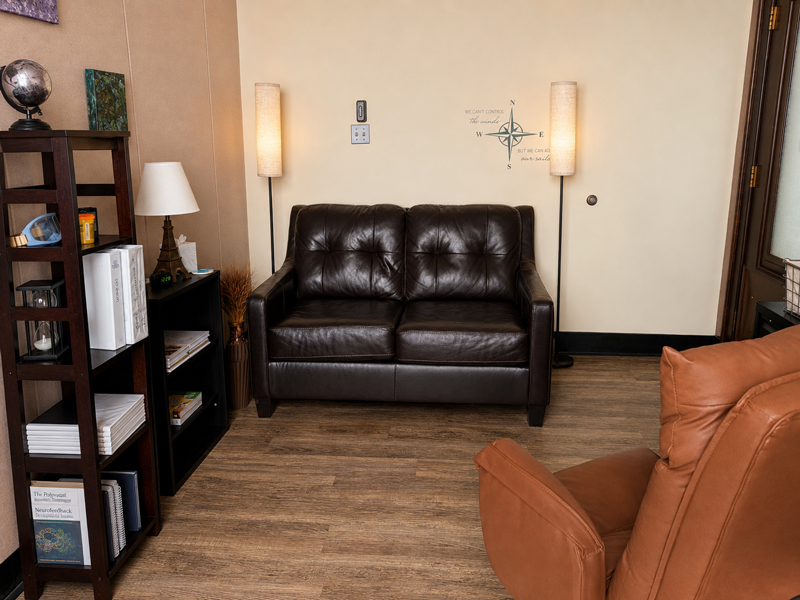
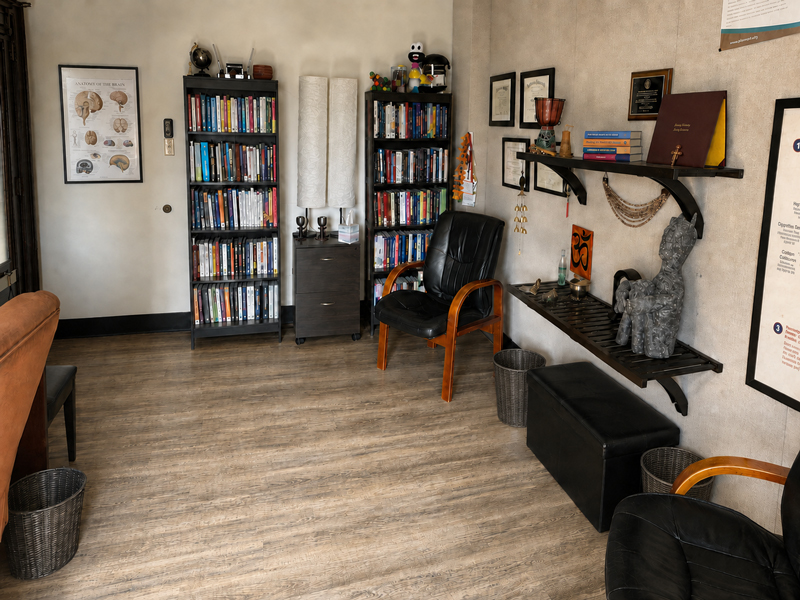
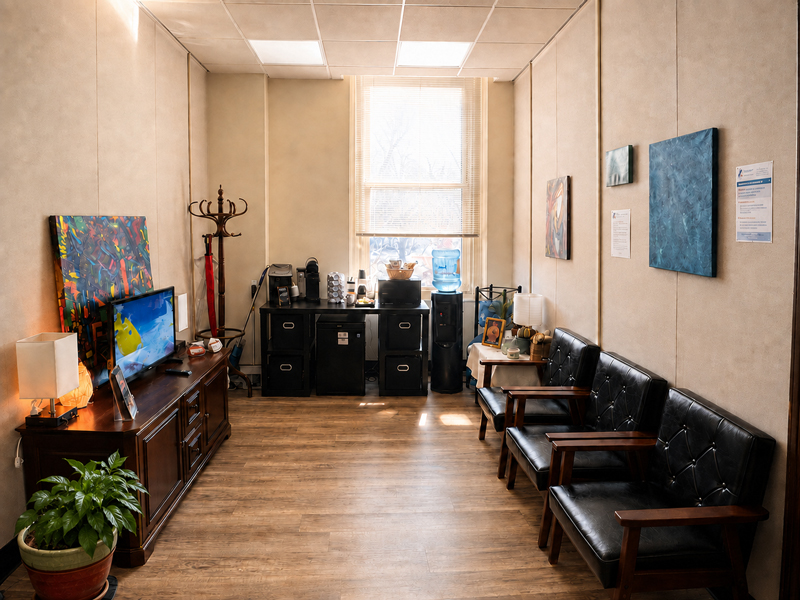
At 25 miles from Gettysburg — approximately 30 minutes east on Route 30 — Lancaster is genuinely close to Adams County. That proximity matters. For many clients, an in-person session at our Lancaster office is a realistic and worthwhile choice: a straightforward drive that brings you to a private, professionally designed clinical space where a certified traumatologist is focused entirely on your care. For clients who find it valuable to have a clear physical separation between their therapy session and the rest of their day — to arrive somewhere dedicated to healing, and then return home — in-person is worth that 30-minute drive.
For those who prefer to stay home, telehealth delivers the same specialized, certified care without the commute. For farm families whose schedules are governed by seasons and daylight rather than a nine-to-five, telehealth with evening hours through Thursday may be the only realistic option. For domestic violence survivors who need the privacy of their own space. For veterans who find the familiarity of home easier to open up in. Telehealth is not a lesser version of care — it is equally validated by clinical research for trauma, PTSD, and anxiety, and for many people it is simply the better fit.
Here is what Adams County clients tell us they value about ACRS:
Certified Traumatologists — not generalist counselors with long waitlists. The level of specialization ACRS brings is not available within Adams County's local provider market, which its own county commissioners have put on the record as underfunded.
No waitlist, no referral — available now, without the delays that characterize the county-funded system.
Two access options — in-person at Lancaster (25 miles, Route 30 East) or telehealth from anywhere in Pennsylvania. Both paths lead to the same quality of care.
Evening hours through Thursday — essential for farm families, shift workers, and anyone whose daytime hours are already fully committed.
Complete privacy — whether you come to Lancaster or connect from home, no waiting room in your community and no institutional record visible to employers, neighbors, or anyone else.
It works. Evidence-based therapy, in-person or via telehealth, delivers fully validated outcomes for trauma, PTSD, and anxiety.
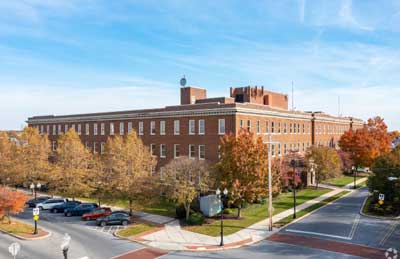
You must be physically located in Pennsylvania during telehealth sessions. For in-person visits, our office at 313 W Liberty Street, Suite 224, Lancaster, PA 17603 is easily reached from Gettysburg via Route 30 East through Abbottstown and Ronks.
ACRS Treatment Modalities for Anxiety, Trauma, and PTSD
Brainspotting operates on the principle that where you look affects how you feel. A therapist helps you identify "brainspots" — eye positions linked to stored emotional experiences or trauma in the brain. By maintaining focus on the brainspot while fostering mindfulness and connection, the brain processes and releases unresolved emotions at a profound neurobiological level.
Brainspotting is effective for PTSD, Anxiety, Depression, chronic pain, and performance issues, and is particularly well-suited to the complex, body-carried trauma common in Adams County communities — the multigenerational stress of farm families, the somatic weight of veteran PTSD, and the layered grief of first responders who have absorbed far more than they have ever been given space to process.
CBT is a short-term, goal-oriented psychotherapy that helps you identify and challenge unhelpful thought patterns and develop healthier coping mechanisms. Highly effective for Anxiety, Depression, and PTSD — and its structured, practical approach resonates well with clients who value concrete progress, measurable results, and a clear roadmap for getting better.
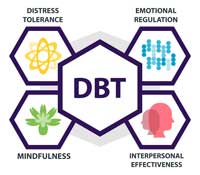
DBT teaches four core skill sets — Mindfulness, Distress Tolerance, Emotion Regulation, and Interpersonal Effectiveness — to help you navigate overwhelming emotions and build healthier relationships. Especially effective for borderline personality disorder, self-harm, and suicidal ideation, and for anyone managing the chronic, high-stakes stress of agricultural life, caregiving, or sustained exposure to community hardship.
EMDR (Eye Movement Desensitization and Reprocessing) is a gold-standard treatment for trauma and PTSD. It involves recalling disturbing memories while focusing on bilateral stimulation, helping your brain reprocess traumatic memories and reduce their emotional intensity. One of the most rigorously validated treatments for veteran PTSD, and equally effective for civilian trauma from accidents, violence, loss, and chronic stress.
Exposure and Response Prevention (ERP) Therapy
ERP is the gold-standard, evidence-based treatment for OCD and related Anxiety Disorders. It involves gradually exposing you to feared thoughts or situations while helping you resist compulsive responses — breaking the OCD cycle and restoring your sense of control over your own mind.
PE is a type of CBT used to treat PTSD and Anxiety disorders. It involves gradually confronting feared memories and avoided situations in a safe therapeutic environment. Through repeated exposure, anxiety associated with trauma triggers diminishes over time. PE is among the most evidence-supported treatments for veteran PTSD and is equally validated for trauma from accidents, loss, violence, and chronic community stress.
Other Therapy Techniques
Narrative Therapy: Encourages you to tell your story and reclaim ownership of your own experience — including the inherited and historical dimensions of living in a place shaped by one of America's defining catastrophes, and the multigenerational stories of farm families and veterans whose experiences have rarely found adequate clinical space.
Somatic Experiencing: Focuses on the body's physical response to trauma and works to release stored nervous system tension — particularly valuable for clients whose chronic stress or long-carried trauma manifests as persistent physical symptoms.
Mindfulness and Relaxation Techniques: Meditation and deep breathing to help manage trauma-related stress and Anxiety — practices well-suited to the natural rhythms and landscape of Adams County's orchards, farmlands, and quiet mountain trails.
Psychoeducation: Understanding trauma and its effects — including the specific patterns common in agricultural communities, veterans, first responders, and individuals shaped by generations of self-reliance — in terms that are accurate and genuinely applicable to life in Adams County.
Our Experienced Anxiety, Trauma, and PTSD Counselors
Our counselors are trained in Trauma-Informed Care and have extensive experience helping individuals heal from traumatic experiences — including the complex, quiet trauma common in Adams County's farming communities, the PTSD carried home by veterans in a county defined by military sacrifice, and the occupational burden of first responders working in a community with documented gaps in the mental health safety net.
Choose Adams County's Anxiety, PTSD, and Trauma Experts
The Nearest Certified Traumatologists to Adams County: ACRS is 25 miles from Gettysburg on Route 30 — approximately 30 minutes. Certified Traumatologists with advanced credentials in EMDR, Brainspotting, CBT, DBT, and Prolonged Exposure. The depth of specialization we bring is not available in Adams County's own provider market — a gap that county officials have formally documented and placed on the public record.
No Waitlist, No Referral: Available now. Contact us for a free 10-minute consultation and we will schedule from there.
Two Ways to Access Care: In-person at Lancaster (25 miles, Route 30 East) or secure telehealth from anywhere in Pennsylvania. Both options deliver the same certified trauma care.
Evening Hours: Available through Thursday — essential for farm families, first responders, and anyone whose daytime hours cannot be rearranged for a therapy appointment.
Adams County has always valued self-reliance. That quality has served the people here across generations of hard seasons, hard losses, and hard history. But self-reliance has limits — and one of them is that it cannot heal trauma on its own. The decision to reach out for specialized help is not the abandonment of that toughness. It is an extension of it: doing what is necessary to keep going, to be present for your family, to carry your history without being crushed by it.
Contact us today to set up a free, confidential 10-minute consultation. We'll listen, answer your questions, and help you find the right path forward.
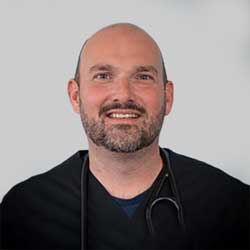
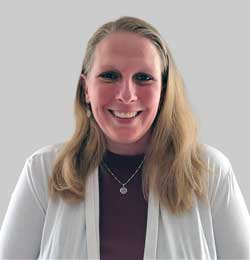
Cheryl has over 20 years of experience providing the highest-quality trauma and PTSD therapy to clients across Pennsylvania — including those in Adams County communities where the combination of agricultural self-reliance, documented mental health system underfunding, and the specific psychological weight of living alongside one of America's most significant historical trauma sites has left real needs unmet for too long.
"Adams County people carry a deep sense of place and a deep sense of responsibility — to their land, their families, and the history that surrounds them. That weight deserves specialized care that meets it honestly. We are 25 miles away, and we are ready."