Delaware County (Delco), PA Anxiety, PTSD, and Trauma Therapy
EMDR, CBT, DBT, PE, Brainspotting and More
In-Person in Lancaster (~75 Miles) or Secure Telehealth — Specialized Care Across Delco's Entire Spectrum
Advanced Counseling and Research Services
Office Location & Hours (Lancaster)
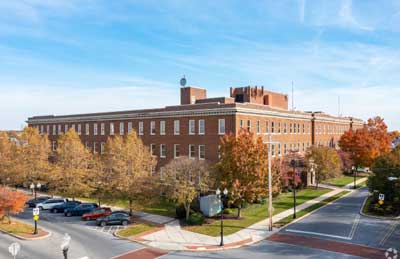
313 W Liberty St STE 224, Lancaster, PA 17603
Mon–Thu 9am–7pm | Fri 9am–5pm
~75 miles from Media via PA Turnpike West (~90 minutes) Open in Google Maps
Delaware County carries two very different Pennsylvania stories in one 184-square-mile boundary: one of some of the wealthiest suburbs in the state, and one of Chester — a city that powered two World Wars with its waterfront industries and then watched them leave, filed for municipal bankruptcy in 2022, and now faces the loss of its major hospital system on top of everything else. Every part of Delco deserves the same quality of specialized trauma care. ACRS brings it — in person or by telehealth, on your terms. Healing starts here.
Delaware County — colloquially and affectionately known as Delco — is one of the most historically significant and geographically compact counties in Pennsylvania. At only 184 square miles, it is the third-smallest county in the state by area, yet it is the fifth-most populous, with approximately 576,720 residents. It borders Philadelphia directly to its northeast, and the proximity to the nation's sixth-largest city shapes nearly every aspect of the county's character, economy, and mental health landscape.
The county's history runs deep: the first major European settlement in Pennsylvania was established on Tinicum Island in Delaware County in 1643. William Penn first landed in Delaware County in 1682, and the first General Assembly under Penn's governance met in Chester, where the oldest public building in the United States still stands. The Battle of Brandywine — the largest land battle of the American Revolution, where nearly 30,000 British and American troops clashed along the Brandywine River on September 11, 1777 — was fought in Delaware County. The young Marquis de Lafayette began his service to the American cause there.
But Delaware County's most defining economic chapter is the industrial rise and fall of Chester. At the turn of the twentieth century, a third of the county's entire population lived in Chester, whose Delaware River waterfront had become a major industrial complex — shipbuilding, steel, automobile assembly (Ford opened a major plant there in 1926), textiles, and paper production — that powered American manufacturing through two world wars. Chester's population peaked at 66,039 in 1950. Then the same forces that hollowed out industrial cities across the northeastern United States came to Chester: management decentralization after WWII, suburban flight, factory closures, disinvestment. By 2010 the population had fallen to 33,972. In 2022, Chester became the first Pennsylvania municipality to file for bankruptcy. In 2024 and 2025, the Crozer Health hospital system — including Crozer-Chester Medical Center, the county's major hospital for the riverfront communities — began closing, compounding a healthcare access crisis for the communities that can least afford to lose it.
Lancaster is approximately 75 miles from Media via the Pennsylvania Turnpike — about 90 minutes. ACRS offers both in-person care at our Lancaster office and fully secure telehealth for Delaware County residents who prefer the privacy or schedule flexibility of remote sessions. Healing starts here.
Delaware County's Specific Trauma Profile — Post-Industrial Loss, the Crozer Crisis, Opioids, and the Hidden Anxiety of Suburban Proximity
Delaware County's trauma profile spans its full geographic range — from Chester's post-industrial poverty and healthcare collapse to the hidden anxieties of the county's wealthy suburbs. Our certified clinical trauma professionals are trained to work with all of it:
Chester's post-industrial trauma — the specific grief of a city that has been asked to absorb too much: Chester's history is one of repeated abandonment by the forces that once defined it. The industries that made the city's waterfront one of the most productive stretches of Delaware River shoreline in the mid-twentieth century departed in the decades after WWII, taking with them the employment, civic infrastructure, and community organization that industrial work had supported. The population fell from 66,039 in 1950 to roughly half that over the following seven decades. Municipal bankruptcy in 2022 meant the city formally acknowledged what its residents had known for years: the structural weight of disinvestment had become unbearable. The multigenerational grief of Chester — the loss of an industrial identity that organized community life for a century, the sustained disinvestment, and the particular indignity of bankruptcy amid one of the wealthiest counties in Pennsylvania — is a documented, compounding trauma that the mental health system has never adequately named or treated.
The Crozer Health collapse — a mental health and healthcare access crisis hitting Delaware County's most vulnerable communities: Crozer-Chester Medical Center and Taylor Hospital in Ridley Park were the primary healthcare infrastructure for Delaware County's working-class riverfront communities. The closure of the Crozer Health system — following the bankruptcy of parent company Prospect Medical Holdings — is not merely a healthcare inconvenience for these communities. It is the removal of the last major institutional anchor for communities already navigating post-industrial poverty, opioid crisis, and the sustained stress of disinvestment. Delaware County is actively working to replace Crozer's mental health and crisis services. ACRS provides specialized, immediately available telehealth care for Delaware County residents who have lost access to local providers in this transition — no waitlist, no referral, available now.
The opioid crisis — 11,700 people with drug use disorders and four deaths per week in a county that was first to fight back: Delaware County was the first county in Pennsylvania to file suit against pharmaceutical distributors in 2017, and it received its first opioid settlement funds in 2022 from the $63 million it is slated to receive over 18 years. The county estimates more than 11,700 residents are living with drug use disorders, and an estimated four people per week die from opioid overdoses in Delaware County alone. ACRS treats the underlying trauma that drives sustained substance use — the post-industrial grief, the community fragmentation, the persistent economic stress, the specific losses of Chester and the riverfront communities — providing the deeper clinical work that makes lasting recovery more achievable than crisis intervention alone.
The hidden anxiety of Philadelphia-adjacent suburban life: Delaware County's wealthy suburbs — Radnor Township, Newtown Township, Haverford Township, and the communities along the Main Line corridor — carry a form of anxiety that is rarely discussed clinically because it is invisible against the backdrop of material prosperity. The high-achieving, high-performing suburban culture of Delco's Main Line communities generates specific and often unacknowledged stress: academic performance pressure from the region's competitive school districts (many of which consistently rank among the highest in Pennsylvania); career advancement anxiety among Philadelphia commuters; the daily psychological cost of navigating Philadelphia's crime statistics and urban instability in close proximity while maintaining the appearance of security and normalcy; and the particular difficulty of seeking mental health care in communities where professional reputation is always proximate and visible.
Philadelphia commuter stress and the psychological cost of daily urban exposure: Thousands of Delaware County residents commute into Philadelphia daily. That commute — through one of America's most congested urban corridors — exposes suburban residents to the chronic stress of daily traffic, the ambient anxiety of urban crime proximity, and the cognitive cost of managing two very different environments every weekday. For commuters whose Philadelphia workdays involve public-sector, healthcare, or social service work in high-stress urban environments, the psychological accumulation of that exposure is a recognized occupational stress burden that rarely receives clinical attention because it is not a discrete traumatic event.
Veterans across the county's full economic range: Delaware County's veteran population reflects the county's full economic diversity — from Chester's working-class military service traditions to the veterans in the county's affluent suburbs who may be managing combat trauma in the context of high-performing professional careers where seeking help carries specific visibility concerns. ACRS provides gold-standard veteran PTSD care — EMDR, Brainspotting, and Prolonged Exposure — via in-person or telehealth sessions, with complete confidentiality.
First responders in a high-demand, high-stress urban-adjacent county: Delaware County's first responders — police, firefighters, EMS — serve a county that spans from affluent suburbs to one of Pennsylvania's most economically stressed cities, with all of the call volume, community violence exposure, and operational stress that combination implies. The Crozer Health collapse has added direct stress to the EMS system as hospital diversion protocols change and emergency routing becomes more complex. ACRS provides fully confidential care for first responders on your schedule, via telehealth or in person in Lancaster.
The psychological weight of living in the most historically significant county in Pennsylvania: Delaware County's residents live surrounded by documented historical significance — the oldest continuously settled area in Pennsylvania, the site of the Battle of Brandywine, the location of William Penn's first General Assembly. That history is part of the county's pride and identity. It is also a reminder that the same waterfront that hosted the Declaration-era General Assembly later built a century of industrial prosperity and then watched it systematically depart. The specific grief of communities that have outlasted what made them important to the broader economy is not always named — but it accumulates, and it is clinically addressable.
Why Delaware County Residents Choose ACRS
Certified Trauma Specialists — In Person in Lancaster or Secure Telehealth
We work collaboratively with you to develop a Trauma-Informed Care Plan that addresses your specific needs and goals.
One-on-one sessions with a Certified Traumatologist — in person at our Lancaster office (~75 miles via PA Turnpike) or via secure video from home anywhere in Delco.
Facilitated telehealth sessions where you heal alongside others — full privacy, no travel required, from Media, Chester, Upper Darby, or anywhere across Delaware County's 184 square miles.
Secure, HIPAA-compliant video therapy — particularly important for Delaware County residents affected by the Crozer Health system closure who need specialized care now, without waiting for new local providers to be established.
Maximum privacy, maximum flexibility — for Delaware County's professional and executive community where seeking mental health care locally carries visibility concerns in tight-knit communities.
Gold-standard veteran PTSD care — EMDR, Brainspotting, and Prolonged Exposure — for Delaware County's veterans, from Chester's working-class military service traditions to the county's suburban veteran community, via in-person or telehealth with complete confidentiality.
First Responders
Fully confidential care for Delaware County police, firefighters, and EMS crews — whose service in a county spanning affluent suburbs and one of Pennsylvania's most economically stressed cities generates a specific occupational trauma load. On your schedule, with no community or institutional visibility.
Survivors of Domestic Violence
Individuals With Substance Use Disorders
In-Person in Lancaster or Telehealth — Both Available for Delaware County
Lancaster is approximately 75 miles from Media via the Pennsylvania Turnpike West — about 90 minutes each way. That is manageable for a weekly session, though telehealth offers the full quality of care without the drive. For many Delaware County residents, telehealth carries an additional advantage: distance from the local community's visibility. In the county's close-knit suburban communities, seeking specialized mental health care from a practice 75 miles away removes the social proximity that can make local care feel exposed.
For Delaware County residents affected by the Crozer Health system closure — who may have been receiving behavioral health services there and now need to establish new care — ACRS's telehealth option provides the fastest path to specialized trauma and anxiety treatment without waiting for new local providers to be established and staffed.
You must be physically located in Pennsylvania during telehealth sessions. For in-person visits, ACRS is accessible via the PA Turnpike West to Exit 286 (Route 30 West) into Lancaster.
Here is what Delaware County clients tell us they value:
Certified Traumatologists with advanced credentials in EMDR, Brainspotting, DBT, CBT, and Prolonged Exposure — focused specifically on trauma and PTSD. That depth of specialization is not consistently available in every local Delaware County provider who accepts new patients right now, especially given the Crozer transition's impact on the behavioral health landscape.
In person in Lancaster (~75 miles, ~90 minutes via PA Turnpike) or via secure telehealth from home anywhere in the county.
Complete privacy — 75 miles from Delco's close-knit suburban communities where seeking care locally can feel visible.
No waitlist, no referral — a free 10-minute consultation, then we schedule. Available now.
Evening hours through Thursday — for Philadelphia commuters, working parents, and anyone whose schedule doesn't accommodate daytime appointments.
Clinicians who understand the full range of Delaware County's experience — from the compound trauma of Chester's post-industrial decline and hospital closure to the hidden performance anxiety of the Main Line's high-achieving suburban communities — without requiring that you explain the county's specific context before getting to your own.
ACRS Treatment Modalities for Anxiety, Trauma, and PTSD
Brainspotting operates on the principle that where you look affects how you feel. A therapist helps you identify "brainspots" — eye positions linked to stored emotional experiences or trauma in the brain. By maintaining focus on the brainspot while fostering mindfulness and connection, the brain processes and releases unresolved emotions at a profound neurobiological level.
Brainspotting is particularly effective for the body-carried, often wordless grief most common across Delaware County's range — from the accumulated weight of Chester's generational economic loss and community fragmentation to the tightly held performance anxiety of Main Line suburban culture; from the daily exposure stress of Philadelphia commuters to the specific numbness that can settle around losses that everyone in a community has experienced simultaneously and that therefore never seem to require individual clinical attention.
CBT is a short-term, goal-oriented psychotherapy that helps you identify and challenge unhelpful thought patterns and develop healthier coping mechanisms. Highly effective for Anxiety, Depression, and PTSD — its practical, outcome-focused approach is well-matched to Delaware County's high-achieving suburban culture, and its rigorous evidence base for trauma treatment makes it essential to any comprehensive clinical approach.
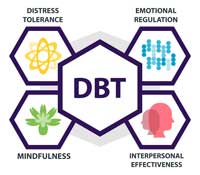
DBT teaches four core skill sets — Mindfulness, Distress Tolerance, Emotion Regulation, and Interpersonal Effectiveness — to help you navigate overwhelming emotions and build healthier relationships. Particularly effective for borderline personality disorder, self-harm, and suicidal ideation, and for managing the sustained pressure of post-industrial community loss, opioid-related family trauma, and the anxiety of living in a county whose extremes of wealth and poverty sit in unusually close proximity.
EMDR (Eye Movement Desensitization and Reprocessing) is a gold-standard treatment for trauma and PTSD. It involves recalling disturbing memories while focusing on bilateral stimulation, helping your brain reprocess traumatic memories and reduce their emotional intensity. Among the most rigorously validated treatments for veteran PTSD, disaster trauma, and the complex multigenerational grief of post-industrial community collapse — all of which are documented in Delaware County's specific experience.
Exposure and Response Prevention (ERP) Therapy
ERP is the gold-standard evidence-based treatment for OCD and related Anxiety Disorders. It involves gradually exposing you to feared thoughts or situations while helping you resist compulsive responses — breaking the OCD cycle and restoring your sense of control over your own mind.
PE is a type of CBT used to treat PTSD and Anxiety disorders — gradually confronting feared memories and avoided situations in a safe therapeutic environment. Proven for veteran PTSD and equally validated for assault trauma, disaster trauma, and the acute events embedded in any community's experience.
Other Therapy Techniques
Narrative Therapy: Encourages you to tell your story and reclaim ownership of your own experience — including what it means to be from Chester, what it means to have watched the industrial waterfront that your grandparents worked on become a bankruptcy filing and a hospital closure; and what it means to carry the ambient anxiety of Philadelphia-adjacent suburban life without a language for the specific weight of it.
Somatic Experiencing: Focuses on the body's physical response to trauma and works to release stored nervous system tension — particularly valuable for opioid-crisis-affected families, for veterans whose trauma has settled into chronic physical symptoms, and for the Philadelphia commuters whose bodies are carrying years of daily stress without adequate release or recognition.
Mindfulness and Relaxation Techniques: Present-moment anchoring grounded in Delaware County's specific landscape — Ridley Creek State Park's wooded trails; Crum Creek Valley; the Brandywine battlefield preserve; the Delaware waterfront near Chester; Tyler Arboretum's 650 acres in Media — as concrete, accessible anchors for a nervous system trained by daily stress to stay perpetually activated.
Psychoeducation: Understanding trauma and its effects in terms directly applicable to Delaware County's specific experience — what post-industrial community grief looks like clinically; why the opioid crisis is rooted in documented trauma rather than individual moral failure; how performance anxiety in high-achieving suburban cultures operates as a chronic trauma-adjacent condition; and why the compound losses of Chester specifically require specialized clinical attention rather than general counseling support.
Our Experienced Anxiety, Trauma, and PTSD Counselors
Our counselors are trained in Trauma-Informed Care and have extensive experience helping individuals heal from traumatic experiences — including the complex, layered, and often starkly contrasting experiences carried by communities across Delaware County's full economic and geographic range, from Chester's post-industrial trauma and healthcare collapse to the hidden anxiety of the county's Main Line suburbs.
Choose Delaware County's Anxiety, PTSD, and Trauma Experts
Specialized Credentials for Delco's Full Range of Clinical Needs: Certified Traumatologists with advanced credentials in EMDR, Brainspotting, CBT, DBT, and Prolonged Exposure — for post-industrial grief, opioid-related family trauma, veteran PTSD, occupational trauma, and the hidden performance anxiety of high-achieving suburban communities. The full breadth of Delaware County's clinical needs, addressed by one team.
Immediate Availability During the Crozer Transition: For Delaware County residents who have lost behavioral health access through the Crozer Health closure, ACRS is available now — no waitlist, no referral, free 10-minute consultation then we schedule.
In Person or Telehealth: Lancaster (~75 miles, ~90 minutes via PA Turnpike) or secure telehealth from home anywhere in Delco.
Complete Confidentiality: What happens in your session is between you and your clinician — 75 miles from Delco's close-knit communities.
Evening Hours Through Thursday: For Philadelphia commuters, working parents, and anyone whose day doesn't end at 5 pm.
Delaware County was the first county in Pennsylvania to sue the pharmaceutical companies that helped create the opioid crisis — in 2017, before most of the country understood what was happening. That instinct to name what was wrong and fight it directly is deeply Delco. The same clarity applies to the full range of trauma this county carries. ACRS provides the specialized clinical care to address it — the post-industrial losses, the hospital closure, the suburban anxiety, the veteran PTSD, and every experience in between. In person or by telehealth, on your terms.
Contact us for a free, confidential 10-minute consultation. We'll listen, answer your questions, and help you find the right path forward.
Cheryl has over 20 years of experience providing the highest-quality trauma and PTSD therapy to clients across Pennsylvania — including those in Delaware County navigating the compound losses of Chester's post-industrial collapse, the Crozer Health closure, the opioid crisis, and the hidden anxiety of a suburban county whose extremes of wealth and poverty sit in unusually close and unacknowledged proximity.
"Delaware County was the first county in Pennsylvania to go after the pharmaceutical companies that helped fuel the opioid crisis. That kind of clarity and fight is part of who Delco is. Every part of this county — from Chester's waterfront to the Main Line — deserves the same specialized trauma care. In person or telehealth, ACRS is here."