Franklin County, PA Anxiety, PTSD, and Trauma Therapy
EMDR, CBT, DBT, PE, Brainspotting and More
In-Person in Lancaster (~65 Miles) or Secure Telehealth — Specialized Care for the County Named for Benjamin Franklin
Advanced Counseling and Research Services
Office Location & Hours (Lancaster)
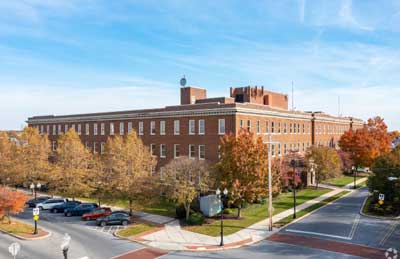
313 W Liberty St STE 224, Lancaster, PA 17603
Mon–Thu 9am–7pm | Fri 9am–5pm
~65 miles from Chambersburg via US-30 E (~1 hour to 1 hr 15 min) Open in Google Maps
On July 30, 1864, Confederate cavalry burned more than 550 structures in Chambersburg — the only Northern city burned during the Civil War. The town rebuilt. One hundred sixty years later, Franklin County remains a county shaped by its proximity to conflict, its military identity anchored by Letterkenny Army Depot, and the specific experiences of the veterans, defense workers, and farming families who have called this Cumberland Valley home across generations. In-person in Lancaster (~65 miles) or secure telehealth from Chambersburg, Waynesboro, or anywhere in Franklin County. Healing starts here.
Franklin County, Pennsylvania — Chambersburg, Waynesboro, Greencastle, Mercersburg, Shippensburg, and the townships spread across 772 square miles of the fertile Cumberland Valley between the Blue Ridge Mountains to the east and Tuscarora Mountain to the west — is one of the most historically layered counties in the Commonwealth. Created on September 9, 1784, from Cumberland County and named in honor of Founding Father Benjamin Franklin, the county sits at the intersection of agriculture, manufacturing, military service, and two centuries of documented wartime proximity.
The county's military identity is not merely historical. Letterkenny Army Depot — located just northwest of Chambersburg in Letterkenny Township — is Franklin County's largest employer, adding over a quarter of a billion dollars annually to the regional economy. Letterkenny's mission is active and current: it holds unique tactical missile repair capabilities including the MIM-104 PATRIOT missile system, repairs Mine Resistant Ambush Protected (MRAP) armored vehicles for deployment, and overhauls tactical wheeled vehicles. Thousands of Franklin County civilians work at Letterkenny supporting active military readiness. The county's relationship with the American military enterprise is not just historical heritage — it is the economic and occupational reality of the county's present.
That military identity extends back through every major American conflict. During the French and Indian War, a network of forts — Fort Loudon, Fort Chambers, Fort McCord, and others — protected the Cumberland Valley's frontier settlers. During the Civil War, Franklin County was a staging ground and repeated target. On June 22, 1863, near Greencastle, Corporal William Rihl became the first Union soldier killed on Pennsylvania soil during the war when concealed Confederate troops fired on a small Union detachment. In the summer of 1863, 20,000 Union soldiers trained in Chambersburg. And on July 30, 1864, Confederate cavalry under Brigadier General John McCausland demanded $500,000 in gold or $100,000 in gold from Chambersburg; when the town could not or would not pay, the Confederate forces burned over 550 structures, made 2,000 people homeless, and caused $1.6 million in damage — making Chambersburg the only Northern city burned during the Civil War. The town rebuilt. John Brown had planned his 1859 Harpers Ferry raid from a boarding house in Chambersburg. James Buchanan, the 15th President of the United States, was born at Cove Gap in what is now Buchanan's Birthplace State Park in Franklin County.
Lancaster is approximately 65 miles east of Chambersburg via US-30 East — about an hour to an hour and fifteen minutes. ACRS offers both in-person care at our Lancaster office and fully secure telehealth for Franklin County residents who prefer the privacy or schedule flexibility of remote sessions. Healing starts here.
Franklin County's Specific Trauma Profile — Military and Defense, Letterkenny Occupational Stress, Civil War Proximity, Agricultural Identity, and the Specific Needs of a Frontier County
Franklin County's trauma landscape reflects its defining characteristics: a deeply embedded military identity anchored by Letterkenny Army Depot; a veteran population with a strong Vietnam-era presence in Chambersburg; the historical weight of being a Civil War front-line county where the only Northern city was burned; a large and active agricultural community carrying the specific stresses of farm life; and the particular clinical needs of a county whose close proximity to the Washington-Baltimore metro area creates significant commuter and economic pressure. Our certified clinical trauma professionals are trained to address all of it:
Letterkenny Army Depot occupational stress and moral injury — the specific burden of defense work: Thousands of Franklin County residents work at Letterkenny supporting active military missions — repairing the missile systems and armored vehicles that serve in active theaters. Defense work at this depth carries a specific occupational trauma profile: exposure to the operational reality of armed conflict through the equipment that serves it; the ethical weight of work whose direct purpose is lethality; the security environment's isolation and institutional pressure; and the compounding stress of civilian work that serves military urgency without the institutional recognition given to uniformed personnel. Moral injury — the damage caused when one's actions or the actions of one's institution conflict with deeply held moral beliefs — is a documented condition among defense industry civilians that is rarely addressed clinically with the same seriousness as combat-related PTSD. ACRS treats it.
Veterans in a deeply military-identified county — with a strong Vietnam-era presence: Franklin County's veteran population includes a notably strong Vietnam-era cohort in Chambersburg — 1.19 times greater than any other conflict era. Vietnam veterans carry well-documented burdens: unresolved combat trauma, complicated grief, moral injury from a war whose institutional handling generated specific psychological harm, and decades of self-management without adequate clinical support. For veterans in Franklin County who have been carrying this for fifty years in a county whose military identity is expressed through Letterkenny's daily operations and the constant proximity of defense work, the layering of historical and current military stress is specific and clinically significant. ACRS provides gold-standard veteran PTSD care — EMDR, Brainspotting, and Prolonged Exposure — via in-person in Lancaster or telehealth, with complete confidentiality.
Civil War legacy and the community memory of Chambersburg's burning: While 160 years have passed since Confederate cavalry burned more than 550 structures in Chambersburg on July 30, 1864, the event remains the most defining moment in Franklin County's civic history and is present in the county's commemorative culture. The burning of Chambersburg is not merely a historical footnote — it is the organizing trauma narrative of a county that rebuilt from total destruction in a single generation. For clinicians working with Franklin County residents, understanding the county's relationship with wartime vulnerability, the historical proximity of conflict, and the specific community pride built around resilience in the face of catastrophic loss is relevant context for the county's contemporary mental health landscape.
Agricultural stress — the specific and underaddressed mental health burden of farming families: Franklin County's 1,439 farms across 263,611 acres represent a major segment of the county's economic and social fabric. Agricultural work carries documented mental health risks that rarely receive adequate clinical attention: financial uncertainty driven by commodity prices, weather, and input costs outside the farmer's control; physical injury and occupational health hazards; social isolation inherent in farm geography; the specific grief of multigenerational farms facing succession crises or forced sale; the compound stress of farm families managing land, debt, equipment, livestock, and weather simultaneously; and the cultural self-reliance of agricultural communities where seeking mental health care is often perceived as inconsistent with the farmer's identity. ACRS treats the specific stresses of agricultural life with the same clinical depth as any other occupational trauma.
Defense commuter stress and the Washington-Baltimore metro proximity: Franklin County's inclusion in the Washington-Baltimore combined statistical area reflects a documented commuter reality: a significant number of Franklin County residents commute south to government, defense, and federal employment in Maryland and Washington, DC. That daily commute — often long, traffic-intensive, and across state lines — creates specific occupational stress that compounds whatever else is happening in a person's life. The psychological cost of long-distance commuting from Franklin County's relatively affordable rural-suburban character into the pressures of federal employment in one of the country's most high-stakes metropolitan regions is a specific and underaddressed form of chronic stress.
First responders in a county with active military-adjacent emergency needs: Franklin County's firefighters, EMS crews, and law enforcement serve a county that includes both the operational complexity of Letterkenny Army Depot and the agricultural and small-town emergencies of the Cumberland Valley's rural communities. The specific occupational stress of first responders working in the shadow of an active defense installation — where emergency planning must account for scenarios well beyond typical civilian emergencies — is a distinct clinical profile. ACRS provides fully confidential care for Franklin County first responders on your schedule, via in-person in Lancaster or telehealth.
Seasonal agricultural community trauma — the particular losses of farm country: The Blue Ridge and Tuscarora Mountains, the Appalachian Trail along the county's eastern border, and the orchards, dairy farms, and working landscapes of the Cumberland Valley are the physical foundation of Franklin County's identity. But rural and agricultural communities carry specific, often invisible trauma profiles: the grief of watching farmland developed, of inherited farms sold under financial pressure, of agricultural communities aging without adequate succession, and of the specific isolation that comes with living and working in beautiful countryside that is steadily becoming more exurban as the Washington-Baltimore metro expands northward.
Why Franklin County Residents Choose ACRS
Certified Trauma Specialists — In Person in Lancaster or Secure Telehealth
We work collaboratively with you to develop a Trauma-Informed Care Plan that addresses your specific needs and goals — in person in Lancaster (~65 miles, ~1 hour via US-30 E) or via secure telehealth from Chambersburg, Waynesboro, Greencastle, or anywhere in Franklin County.
One-on-one sessions with a Certified Traumatologist — in person at Lancaster (~65 miles via US-30 E) or via secure video from your home anywhere in Franklin County.
Facilitated sessions where you heal alongside others — in person in Lancaster or via secure telehealth from Chambersburg, Waynesboro, or anywhere across Franklin County's 772 square miles.
Secure, HIPAA-compliant video therapy from home — particularly valuable for Letterkenny workers, military-community members, and agricultural families for whom leaving work during the day or on a predictable schedule is logistically difficult.
Maximum privacy, maximum flexibility — for defense workers, federal employees, and Franklin County professionals whose security clearances or professional visibility make seeking care locally a genuine concern.
Gold-standard veteran PTSD care — EMDR, Brainspotting, and Prolonged Exposure — for Franklin County's veterans, with a strong Vietnam-era presence in Chambersburg, via in-person in Lancaster or telehealth with complete confidentiality.
First Responders
Fully confidential care for Franklin County fire, EMS, and law enforcement — serving a county whose Letterkenny Army Depot operations add a specific dimension to emergency planning and occupational stress. In person or telehealth, on your schedule.
Survivors of Domestic Violence
Individuals With Substance Use Disorders
In-Person in Lancaster or Telehealth — Both Available for Franklin County
Lancaster is approximately 65 miles east of Chambersburg via US-30 East — about an hour to an hour and fifteen minutes. That is a manageable drive for many Franklin County residents, and ACRS is 65 miles closer to you than it might be to someone in the western reaches of the county. For defense workers, federal employees, and others with security clearance considerations, the 65-mile distance from Chambersburg also provides a layer of geographical separation from the professional community where career visibility around mental health care is a real concern. For Letterkenny workers or federal employees commuting south toward Maryland, telehealth from home can eliminate the additional driving entirely.
You must be physically located in Pennsylvania during telehealth sessions. For in-person visits, ACRS is accessible via US-30 East from Chambersburg to Lancaster.
Here is what Franklin County clients tell us they value:
Certified Traumatologists with advanced credentials in EMDR, Brainspotting, DBT, CBT, and Prolonged Exposure — trained specifically for veteran PTSD, moral injury in defense and military-adjacent work, agricultural occupational trauma, and the specific stress profiles most prevalent in Franklin County's military-economy community. That depth of specialization is not consistently available in every local Franklin County provider.
In person in Lancaster (~65 miles, ~1 hour via US-30 E) or via secure telehealth from home anywhere in the county.
Complete privacy — 65 miles from Chambersburg's close-knit military and defense community where professional visibility can matter.
No waitlist, no referral — a free 10-minute consultation, then we schedule. Available now.
Evening hours through Thursday — for Letterkenny workers, agricultural families who can't leave the farm mid-morning, federal commuters, and anyone whose schedule is not 9-to-5.
Clinicians who understand the specific weight of Franklin County's experience — the Letterkenny mission, the Vietnam-era veteran community, the agricultural life of the Cumberland Valley, the Civil War's long shadow on the county's civic identity, and the specific stress of living in a county that is both deeply rural and increasingly connected to the Washington-Baltimore metro — without requiring you to explain any of it before getting to your own.
ACRS Treatment Modalities for Anxiety, Trauma, and PTSD
Brainspotting operates on the principle that where you look affects how you feel. A therapist helps you identify "brainspots" — eye positions linked to stored emotional experiences or trauma in the brain. By maintaining focus on the brainspot while fostering mindfulness and connection, the brain processes and releases unresolved emotions at a profound neurobiological level.
Brainspotting is particularly effective for the body-carried, often wordless stress most prevalent in Franklin County — the accumulated weight of defense work that processes weapons and armor daily; the moral injury carried by Letterkenny workers who know what their repaired missile systems are used for; the specific numbness of Vietnam veterans who have been managing their own experiences for decades in a county where military service is the dominant professional identity; and the quiet, physical exhaustion of agricultural families managing land and animals in all weather under sustained financial uncertainty.
CBT is a short-term, goal-oriented psychotherapy that helps you identify and challenge unhelpful thought patterns and develop healthier coping mechanisms. Its practical, outcome-focused structure aligns well with the operational mindset of defense and military-adjacent workers, and its rigorous evidence base makes it a cornerstone of effective care for anxiety, depression, and PTSD across Franklin County's full range of clinical needs.
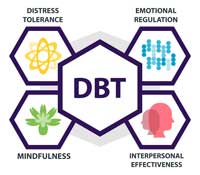
DBT teaches four core skill sets — Mindfulness, Distress Tolerance, Emotion Regulation, and Interpersonal Effectiveness — to help you navigate overwhelming emotions and build healthier relationships. Particularly effective for managing the sustained pressure of defense-sector occupational stress, the moral complexity of military-adjacent work, and the agricultural stress of farm families managing multiple compounding demands simultaneously.
EMDR (Eye Movement Desensitization and Reprocessing) is a gold-standard treatment for trauma and PTSD — recalling disturbing memories while focusing on bilateral stimulation, helping your brain reprocess traumatic memories and reduce their emotional intensity. Among the most rigorously validated treatments for veteran PTSD, including Vietnam-era PTSD, and equally validated for moral injury and defense-sector occupational trauma.
Exposure and Response Prevention (ERP) Therapy
ERP is the gold-standard evidence-based treatment for OCD and related Anxiety Disorders — gradually exposing you to feared thoughts or situations while helping you resist compulsive responses, breaking the OCD cycle and restoring your sense of control. Fully deliverable in person in Lancaster or via telehealth.
PE is a type of CBT used to treat PTSD and Anxiety disorders — gradually confronting feared memories in a safe therapeutic environment. Among the most thoroughly researched treatments for veteran PTSD, PE is particularly suited for Franklin County's Vietnam-era veterans whose combat experiences have been managed privately for decades in a county where military service is the defining occupational and civic identity.
Other Therapy Techniques
Narrative Therapy: Encourages you to tell your story and reclaim ownership of your own experience — what it means to work at Letterkenny and support active military missions as a civilian; what it means to be a Vietnam veteran in a county where military service is the dominant identity and your specific war's reception was complicated; what it means to farm the Cumberland Valley land your family has worked for generations; and what it means to live in a county that rebuilt from having its seat burned to the ground and built that resilience into its civic character.
Somatic Experiencing: Focuses on the body's physical response to trauma and releases stored nervous system tension — particularly valuable for Letterkenny workers whose daily proximity to weapons systems and armored vehicles creates a sustained low-level activation; for agricultural workers whose bodies are carrying years of physical labor in all weather; and for veterans whose combat-related trauma has settled into chronic physical symptoms over decades.
Mindfulness and Relaxation Techniques: Present-moment anchoring grounded in Franklin County's specific and beautiful natural landscape — the Appalachian Trail along the Blue Ridge ridge on the county's eastern border; Caledonia State Park straddling the Franklin-Adams county line; Cowans Gap State Park in the Buchanan State Forest; Buchanan's Birthplace at Cove Gap; Mont Alto State Park (the oldest state park in Pennsylvania) — as concrete, available anchors for a nervous system trained by sustained military, defense, or agricultural pressure to remain perpetually alert.
Psychoeducation: Understanding trauma and its effects in terms directly applicable to Franklin County's specific experience — what moral injury in defense and military-adjacent work looks like clinically and why it deserves the same clinical attention as combat PTSD; why Vietnam-era trauma remains clinically significant regardless of how long ago the service occurred; why agricultural occupational stress is a real clinical burden that warrants specialized attention; and why the specific resilience of a county that rebuilt from total destruction does not mean its residents' individual pain is any less real or deserving of care.
Our Experienced Anxiety, Trauma, and PTSD Counselors
Our counselors are trained in Trauma-Informed Care and have extensive experience helping individuals heal from traumatic experiences — including the specific experiences carried by Franklin County's communities: the defense-sector moral injury and occupational stress of Letterkenny's civilian workforce; the Vietnam-era PTSD present in Chambersburg's veteran population; the agricultural stress of the Cumberland Valley's farming families; and the full range of individual trauma, PTSD, anxiety, and depression that a county this historically significant carries across its 157,000 residents.
Choose Franklin County's Anxiety, PTSD, and Trauma Experts
Specialized Credentials for Franklin County's Clinical Profile: Certified Traumatologists with advanced credentials in EMDR, Brainspotting, CBT, DBT, and Prolonged Exposure — trained for veteran PTSD, defense-sector moral injury, agricultural occupational trauma, and the specific stress profiles most prevalent in Franklin County's military-economy community. That depth is not consistently available in every local provider.
In Person or Telehealth: Lancaster (~65 miles, ~1 hour via US-30 E) or secure telehealth from home in Chambersburg, Waynesboro, Greencastle, or anywhere in the county.
Complete Confidentiality: 65 miles from Chambersburg's close-knit military and defense community, where professional visibility can carry career implications for security-cleared workers.
No Waitlist. Available Now: A free 10-minute consultation, then we schedule.
Evening Hours Through Thursday: For Letterkenny workers, agricultural families, federal commuters, and anyone whose schedule doesn't allow for mid-morning appointments.
Franklin County is named for Benjamin Franklin — a man whose life's work involved confronting hard truths about the human condition, including its capacity for both great destruction and resilient rebuilding. Chambersburg has been rebuilt twice in two centuries. The county's people carry that same rebuilding capacity. ACRS provides the specialized clinical care to support it — the veteran PTSD treatment that has been deferred too long; the defense-sector moral injury that has no public name; the agricultural stress that has no clinical referral pathway; the individual grief that every person carries. In person in Lancaster or by telehealth, on your terms.
Contact us for a free, confidential 10-minute consultation.
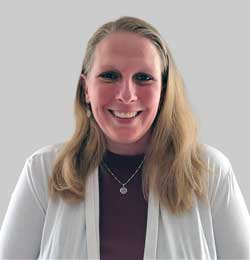
Cheryl has over 20 years of experience providing the highest-quality trauma and PTSD therapy to clients across Pennsylvania — including Franklin County's Letterkenny defense workers navigating moral injury and occupational trauma; Vietnam-era veterans in Chambersburg who have been managing their experiences for decades in a county where military service is the defining community identity; and the agricultural families, first responders, and federal commuters whose specific clinical needs deserve the same depth of specialized attention as any other form of trauma.
"Franklin County's Letterkenny workers support active military readiness every day — repairing PATRIOT missile systems and MRAP vehicles for deployment. That work carries a specific moral and occupational weight that deserves specialized clinical care. So does the Vietnam veteran community in Chambersburg, the county's farming families, and every person navigating the weight of living in America's most historically militarized Cumberland Valley county."