Greene County, PA Anxiety, PTSD, and Trauma Therapy

EMDR, CBT, DBT, PE, Brainspotting and More

Secure Telehealth for Pennsylvania's Coal Capital — Specialized Trauma Care for Waynesburg, the Mining Communities, and All of Greene County
Rolling hills and river valleys of Greene County in southwestern Pennsylvania — Waynesburg visible below the forested ridgelines, with the idle conveyor belts of the Emerald Mine on the outskirts of town
Advanced Counseling and Research Services
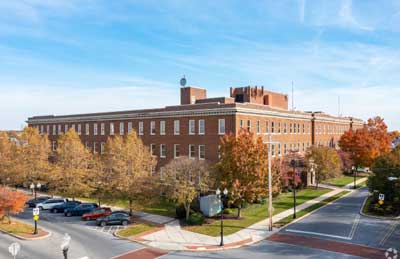
Advanced Counseling and Research Services Office — Lancaster, PA
Office Location & Hours (Lancaster)
313 W Liberty St STE 224, Lancaster, PA 17603
Mon–Thu 9am–7pm | Fri 9am–5pm
~215 miles from Waynesburg via I-70 W and I-79 S (~3–3.5 hours) — telehealth recommended
Open in Google Maps
Anxiety/PTSD/Trauma Treatment Formats
Anxiety/PTSD/Trauma Therapy Modalities
Professional Accountability
Trauma Educational Services
Trauma Research Support
Clinical
Supervision
Rolling hills and river valleys of Greene County in southwestern Pennsylvania — Waynesburg below forested ridgelines, with the idle conveyor belts of the Emerald Mine on the outskirts of town
At its peak in the 1950s, Greene County operated 45 deep mines employing nearly 10,000 workers producing over 12 million tons of coal per year. Today, those towers stand idle on the outskirts of Waynesburg, and the county is navigating what to become after coal. The grief of that transition — specific, compounding, and largely unaddressed clinically — is carried by mining families across the county. ACRS provides specialized trauma care via telehealth from wherever you are in Greene County. Healing starts here.

Greene County, Pennsylvania — Waynesburg, Carmichaels, Mapletown, Nemacolin, Rogersville, Rice's Landing, and the townships spread across 577 square miles in the extreme southwestern corner of the state bordering West Virginia — is Pennsylvania's defining coalfield county. With approximately 35,300 residents and one of the lowest median household incomes in the state, Greene County has been built, sustained, and profoundly shaped by a single industry: bituminous coal. The county holds the largest bituminous coal reserves in Pennsylvania and was the state's highest-producing coal county from 1986 until mine closures and market forces erased much of that production over the following three decades.

Commercial coal mining began in the county in 1902. By the 1950s, at the industry's peak, Greene County operated 45 deep mines and 8 strip mines employing nearly 9,910 workers and producing over 12 million tons of coal per year. Miners earned substantially more than the county average — up to $99,478 per year on average — and mining employment organized the economic and social life of communities from Waynesburg to the coal patch towns along the Monongahela and Cheat Rivers. The county was built around coal, and coal defined who its people were.

Then the closures came. In 2015, the Emerald Mine — one of the county's largest — shut its gates, eliminating approximately 500 jobs. The mine's idle conveyor towers remain visible from the small homes across the street, a daily reminder of what is gone. By 2019, the number of active mining sites had dropped from nine to four. The county population shrank by approximately 2,500 residents in that period. The Marcellus Shale natural gas boom brought financial windfalls through impact fees, but limited permanent local employment — most workers were temporary or commuted in. The county was nearly financially insolvent by 2021, raising property taxes for the first time since 2010. Greene County is now navigating what comes after coal — and that navigation has a documented, specific, and largely unaddressed mental health cost.

The county was created on February 9, 1796, from Washington County and named for Revolutionary War General Nathanael Greene. Waynesburg, the county seat, was named for Major General Anthony Wayne — "Mad Anthony" — another Revolutionary War hero. Lancaster is approximately 215 miles from Waynesburg via I-70 West and I-79 South — about 3 to 3.5 hours. For Greene County residents, ACRS's secure telehealth option is the direct and practical path to specialized trauma and anxiety care. Healing starts here.

Mental Health Conditions We Treat

  • Anxiety Disorders & Environmental Anxiety
  • ADHD & ADD
  • Depression & Persistent Depressive Disorder
  • Grief & Loss — Including Post-Industrial and Community-Level
  • Moral Injury & Occupational Trauma — Mining, Corrections, First Responders
  • Obsessive-Compulsive Disorder (OCD)
  • Phobias
  • Post-Traumatic Stress Disorder (PTSD)
  • Substance Use & Co-Occurring Disorders
  • Trauma — Single Event and Complex/Chronic
  • Veteran & First Responder PTSD

Greene County's Specific Trauma Profile — Mining Occupational Trauma, Post-Industrial Community Grief, Environmental Anxiety, and the Specific Weight of Appalachian Coal Country

Greene County's mental health landscape is inseparable from coal's rise and departure. The specific trauma profiles that result — mining occupational injury, boom-bust economic anxiety, the compound grief of post-industrial community loss, environmental health anxiety from Marcellus Shale extraction, and the opioid crisis rooted in chronic physical pain — require specialized clinical attention that has rarely been adequately provided in the county's own limited provider network. Our certified clinical trauma professionals are trained to address all of it, via telehealth at full clinical depth:

  • Mining occupational trauma — the specific and documented toll of underground coal work: Underground coal mining is among the most physically and psychologically demanding forms of occupational work in the United States. For Greene County's miners and former miners — those still working at the Bailey Mine Complex or Cumberland Mine, and those laid off when Emerald and other mines closed — the accumulated trauma of that work is specific and documented: black lung disease (coal workers' pneumoconiosis), chronic physical injury, hearing loss, the psychological weight of working underground in darkness and confined spaces, the constant proximity to risk, and the grief of a professional identity built around a craft whose economic basis has been systematically dismantled. Mining occupational trauma is distinct from generalized workplace stress and deserves clinical attention that is grounded in understanding the specific demands and culture of underground coal work. ACRS provides that.
  • Post-industrial community grief — the specific loss of coal as Greene County's defining identity: When the Emerald Mine closed in 2015, eliminating 500 jobs on top of hundreds of prior layoffs, the loss was not merely economic. It was the loss of an occupational identity that had organized community life, family routines, social networks, and individual self-concept across generations. For mining families whose fathers, grandfathers, and great-grandfathers had worked the same seams, the closure of those mines represents a specific form of intergenerational grief that is not adequately captured by economic statistics. The idle conveyor towers standing on the edge of Waynesburg are not just unused equipment — they are a daily confrontation with the community's own loss of what made it what it was. This grief is real, compounding, and clinically addressable. ACRS treats it.
  • Boom-bust economic trauma — the specific anxiety of living through the Marcellus Shale cycle: Greene County experienced the Marcellus Shale natural gas boom as a reprieve — impact fees poured into county coffers, landowners received lease payments, and the promise of sustained energy-sector employment briefly replaced coal's departed certainty. Then the cycle repeated. Natural gas activity slowed, impact fee revenues declined, the county was left financially strained, and the workers who had been temporary or commuting departed with the boom. For Greene County residents who lived through this cycle — who watched coal go, watched natural gas arrive with promises, and then watched the uncertainty return — the accumulated psychological weight of repeated economic boom-bust is a documented form of chronic stress that generates anxiety, depression, and distrust of institutional reassurances. ACRS treats this specific form of resource-extraction community trauma.
  • Environmental health anxiety from Marcellus Shale extraction: Greene County sits above the Marcellus Shale formation, and its landscape is dotted with fracking wells, compressor stations, and the infrastructure of natural gas extraction. Residents living near wells report documented symptoms: anxiety, depression, high blood pressure, nosebleeds, breathing problems, and rashes. The uncertainty about water quality — which well is safe, what is in the air, what the long-term health consequences may be — generates a specific and documented form of environmental anxiety that is distinct from generalized anxiety disorder and that rarely receives adequate clinical framing or treatment. People who cannot trust their water, who hear compressor stations running through the night, and who have watched their land change under lease agreements they did not fully choose are carrying a specific environmental stress load. ACRS addresses it.
  • Veterans across the mining and rural communities of Greene County: Greene County's veteran population reflects the county's Appalachian working-class character — a tradition of military service running alongside mining employment across generations. Veterans returning to Greene County navigate the compound weight of service-related trauma alongside a post-industrial rural economy with limited employment and few clinical resources. ACRS provides gold-standard veteran PTSD care — EMDR, Brainspotting, and Prolonged Exposure — via telehealth with complete confidentiality.
  • The opioid crisis and substance use rooted in mining injury and chronic pain: The opioid crisis in Appalachian coal communities follows a well-documented pathway: mining work generates chronic physical injury, chronic pain creates pathways to prescription opioids, and the absence of economic alternatives makes recovery harder than in communities with more robust employment and social infrastructure. In Greene County, the additional factor of mine closure — which eliminated not only jobs but often the health benefits that allowed workers to manage chronic conditions — compounded the opioid crisis substantially. ACRS treats the underlying trauma driving sustained substance use, providing the deeper clinical work that makes lasting recovery more achievable.
  • First responders in a declining rural county: Greene County's first responders — volunteer fire departments, EMS crews, state police — serve communities experiencing sustained economic stress, opioid crisis, and the specific emotional weight of communities watching themselves change. The occupational trauma of first responders in resource-extraction communities is acute and specific. ACRS provides fully confidential telehealth care for Greene County's first responders on your schedule.
  • SCI Greene correctional staff occupational trauma: State Correctional Institution — Greene, located in Waynesburg, employs approximately 670 people — making it one of the county's largest single employers. Correctional facility work carries documented occupational trauma risks: vicarious trauma from sustained exposure to incarcerated populations in serious custody; the institutional pressure and hypervigilance that comes with maximum-security correctional work; and the specific emotional toll of work whose nature is rarely acknowledged as generating clinical need. ACRS provides care for correctional staff occupational trauma via telehealth with complete confidentiality.

Why Greene County Residents Choose ACRS

Certified Trauma Specialists — Fully Available via Secure Telehealth

We work collaboratively with you to develop a Trauma-Informed Care Plan that addresses your specific needs and goals — delivered by telehealth from your home in Waynesburg, Carmichaels, Nemacolin, Rice's Landing, or anywhere in Greene County.

Individual Treatment
Individual Trauma and PTSD Treatment Programs

One-on-one sessions with a Certified Traumatologist via secure video — from your home anywhere in Greene County, without the 3.5-hour drive to Lancaster.

Group Treatment
Group Trauma and PTSD Treatment Programs

Facilitated telehealth group sessions where you heal alongside others — from your home anywhere across Greene County's 577 square miles of coalfield communities.

Online Telehealth
Telehealth Trauma and PTSD Treatment Programs

Secure, HIPAA-compliant video therapy — bringing Certified Traumatologist care directly to Greene County mining families, veterans, correctional workers, and all residents who have needed specialized care and had no way to reach it.

Concierge Counseling
Concierge Trauma and PTSD Counseling

Maximum privacy, maximum flexibility — for SCI Greene staff, coal company supervisors, and Greene County professionals for whom care-seeking visibility is a real professional concern.

Veterans PTSD Support
Veteran PTSD Support Program

Gold-standard PTSD care — EMDR, Brainspotting, and Prolonged Exposure — for Greene County's veterans, via telehealth with complete confidentiality and no three-hour drive to Lancaster.

First Responders & Correctional Staff

Fully confidential telehealth care for Greene County's firefighters, EMS, state police, and SCI Greene correctional workers — whose occupational trauma is real, specific, and rarely receives adequate clinical attention. On your schedule, completely private.

Survivors of Domestic Violence

Individuals With Substance Use Disorders

Why Telehealth Is the Right Answer for Greene County

Lancaster is approximately 215 miles from Waynesburg via I-70 West and I-79 South — about 3 to 3.5 hours each way. For Greene County residents already navigating the compounding stress of post-coal economic uncertainty, a seven-hour round trip for a therapy appointment is not a realistic option. And it is not what you need. What you need is a Certified Traumatologist who understands mining occupational trauma, boom-bust community grief, environmental anxiety, and the specific clinical profiles most prevalent in Greene County — available from your home, on your schedule, at full clinical depth.

Telehealth provides exactly that. With a reliable internet connection, you access your ACRS session from your home in Waynesburg, Carmichaels, Nemacolin, or anywhere in the county, at full clinical depth. Every evidence-based therapy ACRS provides — EMDR, Brainspotting, CBT, DBT, Prolonged Exposure — is fully deliverable by telehealth. The therapeutic relationship, the clinical quality, and the confidentiality are identical to in-person care.

You must be physically located in Pennsylvania during your session. A computer, tablet, or smartphone with a camera and reliable internet is all you need.

Here is what Greene County clients tell us they value:

  • Certified Traumatologists with advanced credentials in EMDR, Brainspotting, DBT, CBT, and Prolonged Exposure — trained specifically for mining occupational trauma, post-industrial community grief, environmental anxiety, veteran PTSD, and correctional occupational trauma. That specialization does not exist within Greene County's own limited provider network.
  • No 3.5-hour drive. Your session comes to you, in Waynesburg, Carmichaels, Nemacolin, or anywhere in the county.
  • Complete privacy — invisible to the tight-knit communities of Greene County's coal patch towns and Waynesburg neighborhoods where social visibility is real.
  • No waitlist, no referral — a free 10-minute consultation, then we schedule. Available now.
  • Evening hours through Thursday — for active miners on shift schedules, correctional workers, and anyone whose day doesn't end at 5 pm.
  • Kim Civitarese, ACRS's Certified Grief Informed Professional — directly addressing Greene County's specific compound grief: the industrial loss, the community fragmentation, the generational mining identity that has no economic future, and the opioid losses that have taken family members across the coalfields.

ACRS Treatment Modalities for Anxiety, Trauma, and PTSD

Brainspotting Therapy

Brainspotting Therapy at ACRS

Brainspotting operates on the principle that where you look affects how you feel. A therapist helps you identify "brainspots" — eye positions linked to stored emotional experiences or trauma in the brain. By maintaining focus on the brainspot while fostering mindfulness and connection, the brain processes and releases unresolved emotions at a profound neurobiological level.

Brainspotting is particularly effective for the body-carried, often wordless grief most prevalent in Greene County — the physical weight of mining work and its lasting toll on the body; the accumulated loss of watching the mines close one by one; the specific numbness that develops when an entire community loses the industry that defined it and has not found a replacement; and the environmental anxiety of living in a landscape permanently altered by extraction, where trust in water and air has been replaced by chronic low-level vigilance.

Cognitive Behavioral Therapy (CBT)

CBT Therapy

CBT is a short-term, goal-oriented psychotherapy that helps you identify and challenge unhelpful thought patterns and develop healthier coping mechanisms. Its practical, outcome-focused structure resonates with the direct communication culture of Greene County's mining and working-class communities, and its rigorous evidence base makes it a cornerstone of effective care for anxiety, depression, and PTSD across the county's full range of clinical needs.

Dialectical Behavior Therapy (DBT)

DBT Therapy

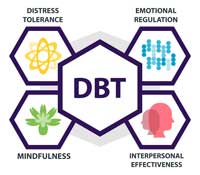
DBT teaches four core skill sets — Mindfulness, Distress Tolerance, Emotion Regulation, and Interpersonal Effectiveness — to help you navigate overwhelming emotions and build healthier relationships. Particularly effective for managing the sustained pressure of post-industrial economic stress, the intense grief of community-level loss, the opioid-crisis family trauma common across Greene County's coalfield communities, and the specific emotional demands of mining, corrections, and first-responder work.

EMDR Therapy

EMDR Therapy

EMDR (Eye Movement Desensitization and Reprocessing) is a gold-standard treatment for trauma and PTSD — recalling disturbing memories while focusing on bilateral stimulation, helping your brain reprocess traumatic memories and reduce their emotional intensity. Among the most rigorously validated treatments for occupational trauma, workplace injury, and veteran PTSD, fully deliverable via telehealth from anywhere in Greene County.

Exposure and Response Prevention (ERP) Therapy

ERP Therapy

ERP is the gold-standard evidence-based treatment for OCD and related Anxiety Disorders — gradually exposing you to feared thoughts or situations while helping you resist compulsive responses, breaking the OCD cycle and restoring your sense of control. Fully deliverable via telehealth to any Greene County resident.

Prolonged Exposure Therapy (PE)

PE Therapy

PE is a type of CBT used to treat PTSD and Anxiety disorders — gradually confronting feared memories in a safe therapeutic environment. Among the most thoroughly researched treatments for occupational trauma and veteran PTSD, PE is particularly appropriate for Greene County's miners, correctional workers, and veterans whose traumatic experiences have accumulated without adequate clinical outlet.

Other Therapy Techniques

  • Narrative Therapy: Encourages you to tell your story and reclaim ownership of your own experience — what it means to come from a mining family, to have your grandfather's identity be the mine and watch it close; what it means to work underground every shift knowing what your body is absorbing; what it means to live in Nemacolin or a coal patch town and watch the community infrastructure that the mining company once provided simply disappear; and what it means to be the Greene County resident who stayed, or who cannot leave, and who carries the weight of watching a place you love become something different than the place where it was built to be.
  • Somatic Experiencing: Focuses on the body's physical response to trauma and releases stored nervous system tension — particularly valuable for miners whose bodies are carrying the accumulated physical cost of underground work, including black lung, vibration-induced injuries, and the constant physical vigilance of working in a confined, high-risk environment; and for environmental anxiety sufferers whose chronic low-level vigilance about water and air quality has settled into persistent physical activation without release.
  • Mindfulness and Relaxation Techniques: Present-moment anchoring grounded in Greene County's specific natural landscape — the Monongahela River valley's views from the hills above Carmichaels; Ryerson Station State Park's wooded trails and Duke Lake; the Ten Mile Creek watershed in Waynesburg; and the rolling forested hills of the county's eastern townships — as concrete, accessible anchors for a nervous system trained by sustained economic stress and occupational exposure to remain in continuous alert.
  • Psychoeducation: Understanding trauma and its effects in terms directly applicable to Greene County's specific experience — what mining occupational trauma looks like clinically and why it deserves the same evidence-based treatment as any other form of PTSD; why the boom-bust economic cycle generates a specific and documented form of chronic stress; why environmental anxiety rooted in Marcellus Shale proximity is a clinically real condition; and why the grief of post-industrial community loss is a form of trauma that warrants the same clinical attention as any discrete traumatic event.

Our Experienced Anxiety, Trauma, and PTSD Counselors

Our counselors are trained in Trauma-Informed Care and have extensive experience helping individuals heal from traumatic experiences — including the specific, layered experiences carried by Greene County's coalfield communities: the mining occupational trauma that the county's families have absorbed across generations; the post-industrial grief of mine closures; the environmental anxiety of Marcellus Shale proximity; the veteran and first-responder PTSD; the correctional occupational trauma of SCI Greene's staff; and the individual losses that every one of the county's 35,000 residents carries.

Cheryl Wilson-Smith
Chief Executive Officer
Cheryl Wilson-Smith, MA, LPC – Chief Executive Officer and trauma expert
  • Licensed Professional Counselor (LPC)
    • Pa. Lic. PC006514
    • Fl. Lic. TPMC1044
  • Certified Traumatologist (CT)
  • National Certified Counselor (NCC)
  • Certified Clinical Mental Health Counselor (CCMHC)
  • Certified Clinical Trauma Professional (CCTP)
  • Certified in Emergency Crisis Response (CECR)
  • Neuropsychotherapist Certified (NPT-C)
  • Master of Arts (MA)
  • 20+ years of clinical experience.
  • Worked with clients across the lifespan.

Read Cheryl's Profile

Cady R. Monasmith
Chief Clinical Officer
Cady Monasmith, MA, LPC – Licensed trauma and DBT therapist
  • Licensed Professional Counselor (PA-015668)
  • Certified Dialectical Behavioral Therapist (C-DBT)
  • Certified Clinical Trauma Professional (CCTP)
  • Certified Dancing Mindfulness Facilitator (CDMF)
  • Bachelor of Fine Arts (BFA)

Read Cady's Profile

Kim Civitarese
Chief Administrative Officer
Trauma Therapist Kim Civitarese
  • Licensed Associate Professional Counselor (LAPC)
  • Cognitive Processing Therapist (CPT)
    Pre-licensed Clinician
  • Certified Grief Informed Professional (CGP)

Experience working with adolescents, couples, the elderly population, blended families, and families in the adoption process.

Read Kim's Profile

Jason Houghton
Psychiatric Mental Health Nurse Practitioner
Jason Houghton, CRNP
  • Psych/Mental Health Nurse Practitioner Education — Johns Hopkins University
  • CRNP License: SP025306
  • RN License: RN606119
  • MSN — Duquesne University
  • BSN — Messiah University

Read Jason's Profile

Kailee Morgan
Clinician
Kailee Morgan, MSW, LAPC
  • Master of Social Work (MSW)
  • Licensed Associate Professional Counselor (LAPC)

Specializes in anxiety, ADHD & ADD, and depression.

Read Kailee's Profile

Choose Expert Anxiety, PTSD, and Trauma Care for Greene County

  • Specialized Credentials for Greene County's Clinical Profile: Certified Traumatologists with advanced credentials in EMDR, Brainspotting, CBT, DBT, and Prolonged Exposure — trained for mining occupational trauma, post-industrial community grief, environmental anxiety, veteran PTSD, and correctional occupational trauma. That depth does not exist within Greene County's own minimal provider network.
  • Kim Civitarese — Certified Grief Informed Professional: Greene County's compound, layered, coal-industry grief — across mine closures, opioid losses, and community fragmentation — is addressed directly by ACRS's grief-specialized clinician.
  • No 3.5-Hour Drive. No Waitlist. Available Now: A free 10-minute consultation, then we schedule — fully via telehealth from your home anywhere in Greene County.
  • Complete Confidentiality: Invisible to the tight-knit communities of Greene County's coalfield towns and Waynesburg neighborhoods.
  • Evening Hours Through Thursday: For active miners on shift schedules, SCI Greene staff, working families, and anyone whose day doesn't end at 5 pm.

Greene County built Pennsylvania's coal industry from its hills, powered the steel that built American cities, and is now navigating what comes after an industry that lasted over a century. That navigation has a documented mental health cost — in mining families carrying occupational trauma, in communities absorbing the grief of closed mines, in the environmental anxiety of living in an extraction landscape, and in the individual losses of every person who stayed, every person who couldn't leave, and every person trying to build something new on the foundation of what coal left behind. ACRS provides the specialized clinical care that cost has always warranted, by telehealth, from wherever you are in Greene County.

Contact us for a free, confidential 10-minute consultation. We'll listen, answer your questions, and help you find the right path forward.

Contact Us Online or

Call Us at 717-394-3994

Cheryl Wilson-Smith
Chief Executive Officer

Cheryl has over 20 years of experience providing the highest-quality trauma and PTSD therapy to clients across Pennsylvania — including Greene County's mining families carrying the documented, multigenerational occupational trauma of underground coal work; the communities absorbing the post-industrial grief of mine closures; the environmental anxiety of residents living near Marcellus Shale infrastructure; the SCI Greene correctional workers whose occupational load is rarely acknowledged clinically; and the veterans, first responders, and individuals navigating the specific difficulties of life in Pennsylvania's coalfield country.

Cheryl Wilson-Smith — Trauma and PTSD Specialist
  • Licensed Professional Counselor (LPC)
    • Pa. Lic. PC006514
    • Fl. Lic. TPMC1044
  • Certified Traumatologist (CT)
  • National Certified Counselor (NCC)
  • Certified Clinical Mental Health Counselor (CCMHC)
  • Certified Clinical Trauma Professional (CCTP)
  • Certified in Emergency Crisis Response (CECR)
  • Neuropsychotherapist Certified (NPT-C)
  • Master of Arts (MA)
  • 20+ years of clinical experience.
  • Worked with clients across the lifespan.

Read Cheryl's Profile

"At its peak, Greene County operated 45 deep coal mines employing nearly 10,000 workers. The grief of watching that industry depart — mine closure after mine closure, layoff after layoff — is a documented clinical burden that the county's families have been carrying without adequate care. ACRS brings Certified Traumatologist-level treatment directly to Greene County by telehealth, for the miners, the families, the veterans, and everyone navigating what coal has left behind."

— Cheryl Wilson-Smith

Take the First Step – Contact Us Today

Secure & Confidential • Free 10-minute consultation