Lawrence County, PA Anxiety, PTSD, and Trauma Therapy
EMDR, CBT, DBT, PE, Brainspotting and More
Secure Telehealth for New Castle — the Fireworks Capital of America — and All of Lawrence County: Specialized Trauma Care for the Tin Plate City, the Rust Belt Families, and Everyone Who Has Never Given Up the Ship
Advanced Counseling and Research Services
Office Location & Hours (Lancaster)
313 W Liberty St STE 224, Lancaster, PA 17603
Mon–Thu 9am–7pm | Fri 9am–5pm
~200–210 miles from New Castle via PA Turnpike and I-376 (~3–3.5 hours) — telehealth recommended Open in Google Maps
Lawrence County is named for Captain James Lawrence, the naval hero whose dying words at the Battle of Lake Erie in 1813 were "Don't give up the ship." New Castle, the county seat, was once the tin plate capital of the world; it became the Fireworks Capital of America; it housed the first Warner Brothers theater; and Shenango China made dishes for the White House. The population peaked at nearly 50,000 in 1950 and the steel closed after that. Lawrence County never gave up the ship. ACRS brings specialized trauma care by telehealth to every community in the county. Healing starts here.
Lawrence County, Pennsylvania — New Castle, Ellwood City, Neshannock Township, New Wilmington, Shenango Township, Pulaski Township, and the boroughs and townships spread across 361 square miles of western Pennsylvania near the Ohio border — carries one of the most richly layered histories of any county in the state. The county was created on March 20, 1849, from portions of Beaver and Mercer Counties, and named for Captain James Lawrence — an American naval hero of the War of 1812 whose final command, "Don't give up the ship!", became one of the defining mottos of American military determination. The county's seat, New Castle, was laid out in 1798 by civil engineer John Carlysle Stewart on land originally part of the "donation lands" that the federal government had reserved for veterans of the Revolutionary War — a founding act of service to those who had served the nation.
New Castle's industrial history is extraordinary in scope. By the turn of the 20th century, the city had become the tin plate capital of the world — producing more tin plate than any other city on earth, with operations that were later merged into Carnegie Steel. The city's population tripled from 11,600 in 1890 to 38,280 in 1910, one of the fastest growth rates in the country. New Castle produced dishes for the White House through Shenango China. The first Warner Brothers theater — the Cascade, which opened in 1907 — was in New Castle; the Warner brothers had discovered the city while touring with their only film, an early copy of The Great Train Robbery. And New Castle is the official Fireworks Capital of America (a designation recognized by the U.S. Patent and Trademark Office in 2006) — home to Pyrotecnico and Zambelli Fireworks Internationale, two of the world's leading pyrotechnics companies, whose displays have lit presidential celebrations and Super Bowls. New Castle is also the Hot Dog Capital of the World, famed for its distinctive Coney Island chili dogs.
What happened to New Castle after 1950 is a story the county knows well. Population peaked at 48,834 that year. The tin mills declined. The steel closed. The Rust Belt compressed the economy. By 1990, the city had 28,334 residents. New Castle was declared a financially distressed municipality under Pennsylvania's Act 47 program — and in 2023, after implementing its recovery plan, the city exited that distressed status. It took decades. The county never gave up the ship. With approximately 86,070 residents and a median household income of $60,779 (below Pennsylvania's median of $76,081), Lawrence County is now navigating post-industrial economic life anchored in healthcare, logistics, and small-scale manufacturing.
Lancaster is approximately 200–210 miles from New Castle via the PA Turnpike — about 3 to 3.5 hours. ACRS's secure telehealth brings specialized trauma care directly to every community in the county. Healing starts here.
Lawrence County's Specific Trauma Profile — Post-Industrial Community Grief, Opioid Crisis, Veterans, First Responders, and the Specific Weight of Being a Rust Belt City That Has Refused to Quit
Lawrence County's mental health landscape is shaped by its century of industrial history, the specific grief of Rust Belt deindustrialization, a documented opioid crisis, a community that includes a disproportionate share of elderly residents (22.7% aged 65+), and the specific resilience — and its costs — of a county whose motto could be the same as its namesake's dying words. Our certified clinical trauma professionals address all of it:
Post-industrial community grief — the specific and documented weight of watching the tin plate capital of the world become a Rust Belt case study: New Castle's population decline from nearly 50,000 in 1950 to under 22,000 today is not an abstraction — it is the lived experience of families who watched parents lose jobs at the mills, watched neighborhoods empty, watched downtown buildings become vacant, and watched the city enter Act 47 financial distress. For Lawrence County residents who grew up in or around New Castle's industrial heyday and who have absorbed the loss of that identity across generations, the post-industrial community grief is specific, compounding, and rarely receives adequate clinical acknowledgment. The grief of watching your city transform from the tin plate capital of the world to an Act 47 distressed municipality is a real clinical burden. ACRS treats it with the depth and respect it deserves.
Opioid crisis and substance use in a western Pennsylvania Rust Belt community: Lawrence County reflects the well-documented western Pennsylvania post-industrial opioid pattern: limited economic alternatives following manufacturing decline, physical occupational injury from remaining industrial work, concentrated poverty in New Castle (18.9% family poverty rate in the city), and geographic proximity to opioid supply routes along the Ohio border and in the Pittsburgh metropolitan corridor. New Castle's 27.4% overall poverty rate and median household income of $41,478 — less than the national average and well below the state average — compound the substance use risk factors that are documented in post-industrial communities. ACRS treats the underlying trauma driving sustained substance use.
Veterans in the county that bears Captain Lawrence's name: Lawrence County was specifically named to honor Captain James Lawrence's sacrifice in the War of 1812, and that honoring tradition has run through every American conflict since. The county's veterans — from the World War II generation who came home to the tin mills' postwar prosperity, through the Vietnam-era veterans navigating decades of inadequate care, to the Iraq- and Afghanistan-era veterans now building post-service civilian lives in a county whose economic landscape is limited — carry a specific, layered clinical burden that ACRS addresses with gold-standard care: EMDR, Brainspotting, and Prolonged Exposure, via telehealth with complete confidentiality.
First responders in a community with concentrated poverty and substance use challenges: New Castle's police, firefighters, and EMS crews serve a community with a 27.4% poverty rate, sustained substance use challenges, and the specific occupational trauma accumulation of first responder work in a post-industrial city. Overdose calls, domestic violence, and the cumulative vicarious trauma of emergency response in a community under compounding economic stress create an acute and specific occupational burden. ACRS provides fully confidential care for Lawrence County's first responders, on your schedule.
Elder isolation in an aging county with a high elderly population: With 22.7% of residents aged 65 or older — above Pennsylvania's already-elevated average — Lawrence County carries a significant elder mental health burden. Elderly residents in New Castle and the county's townships face the specific mental health risks of aging in a post-industrial community: loneliness, elder depression, the grief of watching the city they built their lives in continue to change, limited mobility, and inadequate local support services. Kim Civitarese, ACRS's Certified Grief Informed Professional, addresses elder grief and isolation directly.
Healthcare and service sector workers in an economically stressed community: Lawrence County's largest current employers are healthcare systems and retail operations — serving a population that includes an above-average elderly share and a below-average income level. Healthcare workers in economically stressed communities carry a compound occupational burden: their patients' poverty and trauma come home with them; institutional pressure from underfunded healthcare systems adds moral injury; and the vicarious trauma of caring for a community under sustained stress accumulates without adequate clinical outlet. ACRS provides specialized, fully confidential care for Lawrence County's healthcare workers.
The specific psychological complexity of community pride and post-industrial reality: New Castle's identity is genuinely remarkable — the Fireworks Capital of America, the Hot Dog Capital of the World, the site of the first Warner Brothers theater, the city whose fireworks light presidential celebrations and Super Bowls. For residents living inside that proud, resilient identity while navigating actual poverty rates, actual community decline, and the actual emotional weight of a city that refuses to quit but has been carrying a heavy load for seven decades — the psychological complexity deserves clinical acknowledgment. The county's motto could be its namesake's last words. Healing starts here.
Why Lawrence County Residents Choose ACRS
Certified Trauma Specialists — Fully Available via Secure Telehealth
We work collaboratively with you to develop a Trauma-Informed Care Plan that addresses your specific needs and goals — delivered by telehealth from your home in New Castle, Ellwood City, New Wilmington, Neshannock Township, or anywhere across Lawrence County.
One-on-one sessions with a Certified Traumatologist via secure video — from your home anywhere in Lawrence County, without the 3-hour drive to Lancaster.
Facilitated telehealth group sessions where you heal alongside others — from your home anywhere across Lawrence County, from New Castle to Ellwood City.
Secure, HIPAA-compliant video therapy — bringing Certified Traumatologist care directly to Lawrence County veterans, post-industrial families, first responders, healthcare workers, and elderly residents without the 3-hour drive to Lancaster.
Maximum privacy and flexibility — for Lawrence County professionals and healthcare workers for whom visible care-seeking is a real personal or professional concern.
Gold-standard PTSD care — EMDR, Brainspotting, and Prolonged Exposure — for veterans in the county named for Captain James Lawrence, via telehealth with complete confidentiality. For a county whose motto could be "Don't give up the ship," this is the care its veterans have always deserved.
First Responders
Fully confidential telehealth care for New Castle's and Lawrence County's police, firefighters, and EMS — serving a community navigating poverty and opioid crisis call by call. On your schedule, completely private.
Survivors of Domestic Violence
Individuals With Substance Use Disorders
Why Telehealth Is the Right Answer for Lawrence County
Lancaster is approximately 200–210 miles from New Castle via the PA Turnpike — about 3 to 3.5 hours each way. For a New Castle family navigating a household income of $41,478 against a poverty rate of 27.4%, a seven-hour round trip for a therapy appointment is not a realistic option. For a Lawrence County first responder coming off an overnight shift, or a 70-year-old resident in one of the county's townships without a car, it is equally impractical. Telehealth removes every one of those barriers.
With a reliable internet connection, you access your ACRS session from your home in New Castle, Ellwood City, Neshannock, New Wilmington, or anywhere in the county, at full clinical depth. Every evidence-based therapy ACRS provides — EMDR, Brainspotting, CBT, DBT, Prolonged Exposure — is fully deliverable via telehealth.
You must be physically located in Pennsylvania during your session. A computer, tablet, or smartphone with a camera and reliable internet is all you need.
Here is what Lawrence County clients tell us they value:
Certified Traumatologists with advanced credentials in EMDR, Brainspotting, DBT, CBT, and Prolonged Exposure — trained for post-industrial community grief, veteran PTSD, opioid-crisis family trauma, first responder occupational trauma, and elder isolation. That specialization does not exist within Lawrence County's own limited provider network.
No 3-hour drive. Your session comes to you in New Castle, Ellwood City, or anywhere in the county.
Complete confidentiality — invisible to the close-knit communities of Lawrence County.
No waitlist, no referral — a free 10-minute consultation, then we schedule. Available now.
Evening hours through Thursday — for healthcare workers, first responders on shift schedules, and anyone whose day doesn't end at 5 pm.
Kim Civitarese, ACRS's Certified Grief Informed Professional — for the post-industrial community grief of Lawrence County's families, the opioid losses across the county's neighborhoods, and the elder grief of residents aging through a city's long post-industrial transition.
ACRS Treatment Modalities for Anxiety, Trauma, and PTSD
Brainspotting operates on the principle that where you look affects how you feel. A therapist helps you identify "brainspots" — eye positions linked to stored emotional experiences or trauma in the brain. By maintaining focus on the brainspot while fostering mindfulness and connection, the brain processes and releases unresolved emotions at a profound neurobiological level.
Brainspotting is particularly effective for the body-carried, often wordless experiences most prevalent in Lawrence County — the diffuse, persistent grief of watching a city that lit the world's fireworks and made the world's tin plate become a distressed municipality; the physical weight of occupational labor absorbed over decades in manufacturing and healthcare; the specific numbness of families who have been carrying post-industrial loss for two or three generations without a clinical name for what they are experiencing; and the emotional exhaustion of communities that have refused to quit carrying a very heavy load for a very long time.
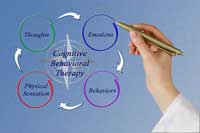
CBT is a short-term, goal-oriented psychotherapy that helps you identify and challenge unhelpful thought patterns and develop healthier coping mechanisms. Its practical, outcome-focused structure suits the direct communication culture of Lawrence County's working-class communities, and its rigorous evidence base makes it a cornerstone of effective treatment for anxiety, depression, and PTSD across the full range of the county's clinical needs.
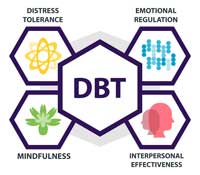
DBT teaches four core skill sets — Mindfulness, Distress Tolerance, Emotion Regulation, and Interpersonal Effectiveness — to help you navigate overwhelming emotions and build healthier relationships. Particularly effective for veterans managing the intensity of post-service civilian reintegration; for families navigating the grief and relational stress of the opioid crisis; for first responders managing occupational emotional suppression; and for elderly residents managing the specific emotional challenges of aging in a post-industrial community under sustained economic stress.
EMDR (Eye Movement Desensitization and Reprocessing) is a gold-standard treatment for trauma and PTSD — recalling disturbing memories while focusing on bilateral stimulation, helping your brain reprocess traumatic memories and reduce their emotional intensity. Among the most rigorously validated treatments for veteran PTSD, first responder occupational trauma, and acute loss events, fully deliverable via telehealth from anywhere in Lawrence County.
Exposure and Response Prevention (ERP) Therapy
ERP is the gold-standard evidence-based treatment for OCD and related Anxiety Disorders — gradually exposing you to feared thoughts or situations while helping you resist compulsive responses, breaking the OCD cycle and restoring your sense of control. Fully deliverable via telehealth to any Lawrence County resident.
PE is a type of CBT used to treat PTSD and Anxiety disorders — gradually confronting feared memories in a safe therapeutic environment. Among the most thoroughly researched treatments for veteran PTSD and occupational trauma, PE is particularly appropriate for Lawrence County's veterans and first responders whose traumatic experiences have accumulated without adequate clinical outlet.
Other Therapy Techniques
Narrative Therapy: Encourages you to tell your story and reclaim ownership of your own experience — what it means to come from a New Castle family whose grandparents worked the tin mills when the city was the fastest growing in America, and whose parents watched those mills close one by one; what it means to be a veteran in the county named for a naval hero whose dying words were about not quitting, carrying your own service experience without adequate clinical support in a community whose motto you feel in your bones; what it means to be a New Castle first responder who administers naloxone on calls in neighborhoods you grew up in; what it means to have watched the Fireworks Capital of America light Super Bowl celebrations on television while navigating your own quiet personal darkness; and what it means to be the person who refused to give up the ship, in the county that never did either.
Somatic Experiencing: Focuses on the body's physical response to trauma and releases stored nervous system tension — particularly valuable for veterans whose service-related nervous system adaptations have carried into civilian life in Lawrence County; for healthcare and manufacturing workers whose bodies carry the accumulated physical cost of their occupational labor; and for first responders whose hypervigilance has become a permanent baseline after years of responding to overdose calls and domestic emergencies in a community navigating sustained poverty.
Mindfulness and Relaxation Techniques: Present-moment anchoring grounded in Lawrence County's specific natural landscape — the Shenango River's banks through New Castle; McConnells Mill State Park in the county's southern reaches, where Slippery Rock Creek cuts through a historic 19th-century gristmill valley; Neshannock Creek State Park; and the rolling hills between New Castle and the Ohio border — as concrete, accessible anchors for a nervous system trained by occupational stress, post-industrial anxiety, or veteran hypervigilance to remain in sustained alert.
Psychoeducation: Understanding trauma and its effects in terms directly applicable to Lawrence County's specific experience — why post-industrial community grief generates specific, clinically addressable symptoms; why the opioid crisis creates documented secondary trauma in families and first responders; why the specific resilience of Rust Belt communities like New Castle — genuine and admirable — can become a barrier to seeking care when it signals that asking for help means giving up the ship; and why the evidence-based treatments ACRS provides work, regardless of how long the trauma has been carried or how self-reliant the person carrying it has been.
Our Experienced Anxiety, Trauma, and PTSD Counselors
Our counselors are trained in Trauma-Informed Care and have extensive experience helping individuals heal from traumatic experiences — including the specific experiences carried by Lawrence County residents: the post-industrial families absorbing two and three generations of the Rust Belt's economic transformation; the veterans in the county named for one of America's most inspiring naval heroes; the first responders on New Castle's front lines of the opioid crisis; the healthcare workers carrying the occupational weight of care in an economically stressed community; the elderly residents aging through a city's long recovery from Act 47 distress; and every resident of this proud, resilient, historically extraordinary community who has needed specialized care and had no practical way to reach it.
Choose Expert Anxiety, PTSD, and Trauma Care for Lawrence County
Specialized Credentials for Lawrence County's Clinical Profile: Certified Traumatologists with advanced credentials in EMDR, Brainspotting, CBT, DBT, and Prolonged Exposure — trained for post-industrial community grief, veteran PTSD, opioid-crisis trauma, first responder occupational stress, elder isolation, and the specific clinical landscape of the Fireworks Capital of America's Rust Belt communities.
Kim Civitarese — Certified Grief Informed Professional: Lawrence County's post-industrial grief, opioid losses, and the elder grief of residents watching their community's long recovery — addressed directly by ACRS's grief-specialized clinician.
No 3-Hour Drive. No Waitlist. Available Now: A free 10-minute consultation, then we schedule — fully via telehealth from anywhere in Lawrence County.
Complete Confidentiality: Invisible to the close-knit communities of New Castle, Ellwood City, and Lawrence County's townships.
Evening Hours Through Thursday: For healthcare and first responder shift workers and anyone whose day doesn't end at 5 pm.
Lawrence County is named for the man who said "Don't give up the ship" — and this county never has. The tin plate capital of the world became the Rust Belt. New Castle entered Act 47 distress. And then it exited it. The fireworks companies that started in the tin mills still light Super Bowls. The chili dogs are still famous. The city still has one of the most beautiful Scottish Rite Cathedrals in America. And the people who live here have been carrying a very specific, very heavy weight for a very long time — with inadequate clinical support. ACRS brings that support by telehealth, from wherever you are in Lawrence County. Don't give up the ship. Healing starts here.
Contact us for a free, confidential 10-minute consultation. We'll listen and find the right path forward.
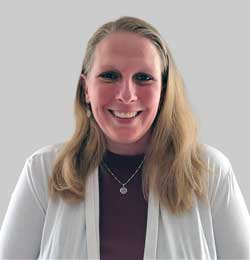
Cheryl has over 20 years of experience providing the highest-quality trauma and PTSD therapy to clients across Pennsylvania — including Lawrence County's post-industrial families absorbing decades of Rust Belt transition; the veterans in the county named for a naval hero whose last words were about perseverance; the first responders navigating New Castle's opioid crisis call by call; the healthcare workers carrying the weight of caring for an economically stressed community; the elderly residents aging through a city's long recovery from Act 47 distress; and every resident of the Fireworks Capital of America who has needed specialized clinical care and had no practical way to reach it. Telehealth brings it directly to them.
"Lawrence County is named for 'Don't give up the ship.' New Castle was the tin plate capital of the world, then the Fireworks Capital of America, then an Act 47 distressed municipality — and then it recovered. The people here have been carrying extraordinary weight with extraordinary resilience for seven decades. ACRS brings Certified Traumatologist-level care by telehealth to every community in Lawrence County. This county has never given up the ship. Neither have we."