McKean County β forested, remote, and carrying the layered legacies of a Bradford oil boom that once rivaled any on earth, the Allegheny National Forest that shapes daily life across most of the county's territory, and the Seneca Nation whose ancestral presence along the Allegheny River represents one of Pennsylvania's most significant and most clinically underaddressed trauma histories β has never had specialized trauma care within realistic reach of most of its residents. Telehealth changes that. Every McKean County resident deserves access to Pennsylvania's most qualified trauma specialists. That access is here.
McKean County occupies the high plateau of Pennsylvania's northwestern corner along the New York state border β a county of roughly 40,000 residents whose landscape is dominated by the Allegheny National Forest, one of the largest national forests in the northeastern United States, and whose communities carry the imprint of two defining historical forces that have shaped this part of Pennsylvania more than any other: the Bradford oil field, which in the 1870s and 1880s produced more oil than anywhere else on earth and made Bradford one of the wealthiest cities per capita in the country for a brief extraordinary period; and the centuries-long presence of the Seneca Nation, whose Allegany Territory runs along the Allegheny River through the county's southern tier and whose people carry a trauma history rooted in dispossession, forced relocation, and the specific wounds of Indigenous communities whose land and sovereignty have been contested across generations.
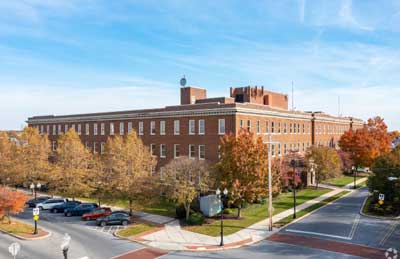
Bradford, the county's largest city and its economic and commercial center, sits in the Tunungwant Creek valley near the New York border β a city whose Victorian commercial architecture and handsome residential neighborhoods still document the extraordinary wealth generated by the Bradford oil boom, and whose current economic reality reflects the long post-extractive contraction that followed when that boom ended. Smethport, the county seat, is a smaller and quieter borough at the county's geographic center, a community of genuine historic character whose administrative role belies the sparse population of the surrounding rural landscape. Kane, named for the Civil War general who founded it, sits within the Allegheny National Forest's boundaries; Port Allegany anchors the county's southeastern corner near the Potter County line. And the county's forested interior β vast, sparsely settled, served by routes that challenge winter travel β is among the most genuinely isolated terrain in Pennsylvania.
At Advanced Counseling and Research Services, our licensed trauma specialists bring evidence-based, certified trauma therapy directly to you through secure telehealth β so every McKean County resident can access Pennsylvania's highest-quality trauma care without the barriers of distance, the complications of the New York border for care access, or the deep provider scarcity that has always characterized this corner of the state. From Bradford and Smethport to Kane and Port Allegany, from the Seneca Nation's Allegany Territory to the most remote township of the Allegheny National Forest, you don't have to drive to Buffalo or Pittsburgh to find a certified traumatologist. Healing starts here.
Oil Boom, Ancient Forest, and Unaddressed Wounds β McKean County's Unmet Trauma Burden
McKean County's trauma burden is shaped by a combination of forces found nowhere else in Pennsylvania: post-extractive oil boom grief, the trauma histories of the Seneca Nation's Allegany Territory, deep Allegheny National Forest isolation, the specific access complications of a New York border county, and a working-class Appalachian cultural identity that has always treated endurance as the only acceptable response to difficulty. Our certified clinical trauma professionals are trained to work with all of these realities:
The Bradford oil boom and its century-long aftermath: In the late 1870s and early 1880s, the Bradford oil field was producing more than half of the world's petroleum supply β a concentration of extractive wealth so extraordinary that Bradford briefly ranked among the wealthiest cities per capita in the United States. The working-class communities that organized themselves around that industry β the roughnecks, the refinery workers, the supply-chain families of Bradford, Smethport, and the county's smaller oil patch communities β built their entire economic and social identity around work that was intense, dangerous, and finite. When the easily accessible Bradford crude played out and the industry consolidated elsewhere, it left behind communities with the specific post-extractive grief of places that had been the center of something world-historical and then were not. That grief β transmitted across generations in families that have been navigating the distance between what Bradford was and what it is β is a clinically real and clinically underaddressed burden that ACRS's certified trauma professionals are specifically trained to recognize and treat.
Seneca Nation trauma and the wounds of the Allegany Territory: The Seneca Nation's Allegany Territory runs along the Allegheny River through McKean County's southern tier β and the Seneca people carry a trauma history whose depth and specificity demand the most careful and culturally competent clinical attention. The Seneca are one of the Six Nations of the Haudenosaunee Confederacy, and their presence in this landscape predates Pennsylvania itself by centuries. Their experience of dispossession, forced treaty renegotiation, the flooding of significant portions of their ancestral Allegany Territory by the Kinzua Dam completed in 1965 β a dam whose construction required the forced relocation of families from land guaranteed to the Seneca by the 1794 Canandaigua Treaty, widely considered one of the most significant treaty violations of the twentieth century β constitutes a specific, documented, multigenerational trauma event whose clinical consequences extend to the present. ACRS's certified clinical trauma professionals provide culturally competent, trauma-informed care for Seneca Nation community members and all Indigenous residents of the county, with the specificity and respect this history deserves.
The Kinzua Dam relocation β a specific and documented community trauma: In 1965, the U.S. Army Corps of Engineers completed the Kinzua Dam on the Allegheny River, flooding more than 10,000 acres of the Seneca Nation's Allegany Territory and forcing the relocation of approximately 600 Seneca people from communities their families had occupied for generations. This relocation β carried out despite the protections of the 1794 Canandaigua Treaty, despite Congressional opposition, and despite a sustained Seneca legal and political campaign to prevent it β was specifically condemned by President John F. Kennedy as a violation of treaty obligations. The trauma of forced relocation, of watching ancestral land submerged, of losing community coherence that had been maintained across generations, has a clinical name and a clinical treatment pathway. ACRS's certified clinical trauma professionals are trained in the specific patterns of forced displacement trauma and intergenerational community loss β and provide care for Seneca Nation community members and their descendants who carry this history.
The Allegheny National Forest and extreme rural isolation: The Allegheny National Forest covers the great majority of McKean County's land area β nearly 513,000 acres of federally managed forest within the county's boundaries, a landscape of extraordinary beauty and extreme clinical inaccessibility. Communities within and adjacent to the forest β Kane, Mount Jewett, the townships along Routes 6 and 59 and the smaller routes threading through the forest interior β are genuinely remote in the clinical sense: far from specialized providers, served by roads that present serious winter travel challenges, and populated by residents whose lives are organized around the forest's rhythms in ways that make conventional outpatient care attendance genuinely difficult. For these residents, telehealth is not an alternative to in-person care. It is the first form of specialized trauma care that has ever been realistically available to them.
New York border and cross-state care complications: McKean County's position along the Pennsylvania-New York state line creates the same access complications present in border counties throughout this region. New York providers may be geographically accessible from Bradford and the county's northern communities β but New York-licensed practitioners cannot serve Pennsylvania residents via telehealth, and Pennsylvania insurance does not cover out-of-state providers. The result is that Bradford residents looking across the border at Salamanca or Olean may find providers who are geographically close and clinically inaccessible. ACRS is licensed to serve all of Pennsylvania, and our telehealth platform reaches every McKean County resident without cross-state complications.
The opioid and fentanyl epidemic in isolated working-class communities: McKean County has been among the hardest-hit counties in northwestern Pennsylvania in the opioid epidemic β communities whose underlying conditions (unaddressed trauma, post-extractive economic despair, geographic isolation, the specific psychology of communities that once had world-historical purpose and lost it) were already at elevated levels before the epidemic arrived. In Bradford, in Kane, in the county's smaller boroughs and rural townships, families have been touched by overdose, addiction, and the grief of loss at rates that the county's thin clinical infrastructure has never been equipped to address. Recovery without treating underlying trauma consistently fails. ACRS's certified clinical trauma professionals address both comprehensively, from wherever in McKean County you are.
Veteran trauma in a county at the far edge of Pennsylvania's VA network: McKean County's veteran population reflects the strong military service tradition of rural northwestern Pennsylvania β and its distance from VA facilities means that veterans seeking specialized PTSD care have always faced the same geographic barrier that shapes every form of specialized healthcare in this county. The drive to the nearest VA medical center with comprehensive mental health services represents a commitment that makes consistent treatment attendance genuinely difficult for most working McKean County veterans. ACRS provides specialized, evidence-based PTSD care via telehealth that delivers what McKean County veterans have never had within reach: a certified traumatologist available from home, on their schedule.
First responders across a vast and forested territory: McKean County's volunteer fire departments, EMS services, and law enforcement cover a vast territory of forest roads, isolated communities, and the full spectrum of rural and small-city crisis β including the specific challenges of responding in areas of the Allegheny National Forest where distance, terrain, and weather create operating conditions that accumulate psychological cost over careers in ways that have never been given clinical acknowledgment. Telehealth provides specialized trauma care that is private, accessible from home, and available on a schedule that works for rural volunteer responders.
Domestic violence in geographically isolated communities: Geographic isolation amplifies every barrier to help-seeking for domestic violence survivors β limiting transportation options, concentrating social networks in communities where relationships are deeply intertwined, creating economic dependencies in areas with limited employment options, and placing the nearest specialized services at distances that are genuinely prohibitive without reliable transportation. For survivors in McKean County's rural townships and forest communities, telehealth provides access to trauma-informed care that is private, safe, and accessible from wherever they are.
Distance from Pennsylvania's clinical infrastructure: McKean County is approximately 150 miles from Pittsburgh and more than 350 miles from Philadelphia β at the far northern edge of the state's clinical reach, bordered by New York rather than by a Pennsylvania county with more robust services. The county's own provider pool has never been adequate to its population's specialized needs. Telehealth closes that distance entirely β bringing Pennsylvania's best trauma specialists to Bradford, Smethport, Kane, Port Allegany, and every township of the Allegheny National Forest.
ACRS's certified clinical trauma professionals are trained specifically to work with complex, layered trauma β not just acute single-event PTSD. Whether you are in Bradford, Smethport, Kane, Port Allegany, Mount Jewett, or the most remote corner of the Allegheny National Forest, we meet you where you are.
Why McKean County Residents Choose ACRS
Personalized, Trauma-Informed Care β Delivered to Your Home
We work collaboratively with you to develop a Trauma-Informed Care Plan that addresses your specific needs and goals.
Secure, HIPAA-compliant video therapy from the comfort and privacy of your own home β no long drive to Pittsburgh or Buffalo, no cross-state complications, no one in Bradford or Smethport who needs to know.
Specialized, compassionate PTSD care for McKean County veterans and active military families. You served β you deserve care that honors what you've been through, delivered to your home without the long drive that VA system access has always required from this corner of Pennsylvania.
First Responders
McKean County's volunteer firefighters, EMS professionals, and law enforcement officers cover a territory of national forest, mountain roads, and isolated communities that creates some of the most demanding and isolating first responder service environments in the state. What accumulates over a career in those conditions β in a county with essentially no critical incident support infrastructure β deserves clinical acknowledgment. Our trauma specialists understand that reality and provide confidential, effective telehealth care on your schedule, from your home.
Survivors of Domestic Violence
Individuals With Substance Use Disorders
Why Telehealth Is Essential for McKean County
McKean County's geographic position β along the New York border at the northern edge of the Allegheny National Forest, 150 miles from Pittsburgh and more than 350 miles from Philadelphia β creates a care access situation that is in practice nearly as isolated as Potter County's. The nearest certified clinical trauma professionals in independent outpatient practice are concentrated in Pittsburgh's metropolitan area, and the drive from Bradford or Smethport or Kane represents a commitment of multiple hours before and after sessions whose emotional demands are already considerable. The New York border creates additional complications: providers in Salamanca or Olean may be geographically accessible but cannot legally serve Pennsylvania residents via telehealth, and Pennsylvania insurance won't cover their services.
Telehealth removes all of those barriers. With today's secure video technology, your session with an ACRS certified traumatologist is every bit as effective and connected as being in the same room β without the drive, without the cross-state complications, and without the scheduling demands that have always made consistent specialized care attendance effectively impossible for working McKean County residents.
You must be physically located in Pennsylvania during your telehealth session. Our Lancaster office is approximately 310β330 miles from Bradford β and you are always welcome to visit us in person. But for McKean County residents, telehealth is not merely a convenience. It is the first time that the full range of specialized trauma care has ever been genuinely within reach.
Here is what McKean County clients tell us they value about telehealth:
No long drive to Pittsburgh β your session takes place in your home, on your device, without the hours of travel that in-person specialized care has always required from McKean County.
No cross-state complications β ACRS is licensed to serve all of Pennsylvania, and your location near the New York border doesn't create coverage gaps or provider access problems.
Complete privacy β in communities as small and socially interconnected as Bradford, Smethport, Kane, and the county's rural boroughs, being seen in a therapist's waiting room has consequences. Your telehealth session is known only to you.
Reliable access regardless of weather β Allegheny National Forest road conditions in winter are a real barrier to consistent appointment attendance. Your telehealth session is never canceled by a snowstorm.
Sessions fit around shift work, forest industry schedules, hunting seasons, and the demands of rural life in a county where every appointment has always required substantial logistical planning.
Access to Pennsylvania's best trauma specialists β including professionals with specific training in Indigenous community trauma, post-extractive community grief, and the complex PTSD forms that are most common in northwestern Pennsylvania's rural communities.
It works. Evidence-based telehealth therapy delivers outcomes fully comparable to in-person care for trauma, anxiety, and PTSD.
ACRS Treatment Modalities for Anxiety, Trauma, and PTSD
Brainspotting operates on the principle that where you look affects how you feel. A therapist helps you identify "brainspots" β eye positions linked to stored emotional experiences or trauma in the brain. By maintaining focus on the brainspot while fostering mindfulness and connection, the brain processes and releases unresolved emotions at a profound neurobiological level.
Brainspotting is effective for PTSD, Anxiety, Depression, chronic pain, and performance issues β and is particularly well-suited to the deep, multigenerational, and often unspeakable trauma carried by McKean County residents: the post-extractive grief of Bradford's oil legacy, the Seneca Nation's historical wounds of dispossession and forced relocation, the accumulated weight of geographic isolation, and the specific burdens of veteran and first responder service in one of Pennsylvania's most remote operating environments. These are traumas that have often been carried without words for generations β and Brainspotting's neurobiological approach reaches what words alone may not.
CBT is a short-term, goal-oriented psychotherapy that helps you identify and challenge unhelpful thought patterns and develop healthier coping mechanisms. It is highly effective for Anxiety, Depression, and PTSD β and its structured, practical approach resonates strongly with McKean County residents who value directness and concrete results, including the working-class communities of Bradford and Kane and the veterans and first responders who need skills they can apply immediately in their daily lives.
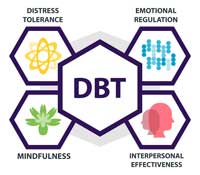
DBT teaches four core skill sets β Mindfulness, Distress Tolerance, Emotion Regulation, and Interpersonal Effectiveness β to help you navigate overwhelming emotions and build healthier relationships. Especially effective for borderline personality disorder, self-harm, and suicidal ideation.
EMDR (Eye Movement Desensitization and Reprocessing) is a gold-standard treatment for trauma and PTSD. It involves recalling disturbing memories while focusing on bilateral stimulation, helping your brain reprocess traumatic memories and reduce their emotional intensity. Effective for PTSD, Anxiety, Phobias, and other trauma-related conditions.
Exposure and Response Prevention (ERP) Therapy
ERP is the gold-standard, evidence-based treatment for OCD and related Anxiety Disorders. It involves gradually exposing you to feared thoughts or situations while helping you resist compulsive responses β breaking the OCD cycle and restoring your sense of control.
PE is a type of CBT used to treat PTSD and Anxiety disorders. It involves gradually confronting feared memories and avoided situations in a safe environment. Through repeated exposure, the anxiety associated with trauma triggers diminishes over time β helping you reclaim your life.
Other Therapy Techniques
Narrative Therapy: Encourages you to tell your story, helping you understand and reclaim your own experiences β including the stories of Bradford families that have lived in the long shadow of an oil boom their great-grandparents experienced and that shaped the city they inhabit without any of them ever having access to a clinical space to reckon with what that shadow means; of Seneca Nation community members whose families were relocated from land the federal government had promised them by treaty, who watched ancestral places disappear beneath the Kinzua reservoir, and who have been working out what continuity means in the aftermath ever since; of veterans who came home to a county that honored their service with nothing specialized to offer them; and of the people who built their lives in the Allegheny National Forest and have carried its particular solitudes β beautiful and isolating β without ever once being asked what that carrying costs.
Somatic Experiencing: Focuses on your body's physical response to trauma and works to release stored tension β particularly valuable for Seneca Nation community members and other Indigenous residents whose bodies carry the intergenerational transmission of historical trauma in forms that talk-based therapy alone may not reach; for veterans and first responders whose years of high-alert service have normalized physiological stress states that don't resolve at the end of a shift; and for anyone whose history of living in geographic isolation, carrying unaddressed wounds, has left their nervous system in a state of chronic vigilance that has never been given clinical attention.
Mindfulness and Relaxation Techniques: Meditation and deep breathing to help manage trauma-related stress and Anxiety β practices that can be grounded in the particular landscape McKean County residents already inhabit: the Allegheny National Forest's deep seasonal rhythms, the Allegheny River's flow through the county's southern communities, the particular quality of light in the Bradford valley, the stillness of the county's forested interior in winter. For those with a clinical framework to access it, this landscape is not only beautiful β it is a foundation for mindfulness practice rooted in the specific place where McKean County residents actually live.
Psychoeducation: Understanding trauma and its effects β including the specific patterns of post-extractive community grief in Bradford's oil legacy communities, the clinical dimensions of historical Indigenous trauma and forced displacement, the intergenerational transmission of community-scale traumatic loss, opioid grief in rural Appalachian communities, occupational trauma in first responders and veterans in remote service environments, and the particular burden of carrying unaddressed wounds in a county where specialized clinical care has always been hours away β to help you understand your own experience in terms that are honest, specific, and genuinely applicable to your life in McKean County.
Our Experienced Anxiety, Trauma, and PTSD Counselors
Our counselors are trained in Trauma-Informed Care and have extensive experience helping individuals heal from traumatic experiences β including the specific and layered trauma of McKean County life: the post-extractive grief of Bradford's oil communities, the historical trauma of the Seneca Nation's Allegany Territory and the Kinzua Dam relocation, the veterans and first responders whose service to one of Pennsylvania's most remote counties has never been matched with adequate clinical support, and the residents of the Allegheny National Forest whose endurance in one of the state's most isolated landscapes has always been mistaken for the absence of need.
Choose McKean County's Anxiety, PTSD, and Trauma Experts
Specialized Expertise: Certified Traumatologists with advanced credentials in evidence-based trauma treatment β EMDR, Brainspotting, CBT, DBT, Prolonged Exposure, and more β including specific expertise in post-extractive community grief, Indigenous historical trauma and forced displacement, the multigenerational impact of treaty violations and community relocation, veteran and first responder PTSD in remote service environments, and the particular cultural dynamics of help-seeking in northwestern Pennsylvania's most isolated communities. We treat trauma as our primary focus, with depth that no generalist provider can match.
No Drive to Pittsburgh β No Cross-Border Complications: Secure telehealth brings Pennsylvania's best trauma specialists directly to your home β in Bradford, Smethport, Kane, Port Allegany, Mount Jewett, or any community within the Allegheny National Forest. Your location at the Pennsylvania-New York border does not determine your access to care.
Culturally Competent Indigenous Trauma Care: For Seneca Nation community members and all Indigenous residents of McKean County, ACRS provides trauma care that is grounded in the historical knowledge and cultural sensitivity that this community's specific experiences demand β including care informed by the Kinzua Dam relocation, the long history of treaty violation and forced dispossession, and the intergenerational transmission of community-scale historical trauma.
McKean County is a place of extraordinary natural beauty and extraordinary unaddressed need β a county where the forest is vast and magnificent and the distance to specialized clinical care has always been measured in hours rather than minutes. The Bradford oil families, the Seneca Nation communities along the Allegheny, the veterans who came home to the forest, the first responders covering territory that most Pennsylvanians have never seen β all of them have been carrying things that specialized trauma care can address, and none of them have had that care within realistic reach. Until now.
Contact us today for a free, confidential 10-minute consultation. We'll listen, answer your questions, and help you find the right path forward β from wherever in McKean County you are.
Cheryl has over 20 years of experience providing the highest-quality trauma and PTSD therapy to clients across Pennsylvania β including residents of remote communities at the far edges of the state's clinical reach, and communities whose trauma histories include some of the most significant and least-addressed wounds in the Commonwealth. Telehealth reaches McKean County β the Bradford oil families, the Seneca Nation communities of the Allegany Territory, the veterans and first responders of the Allegheny National Forest β completely, effectively, and without requiring anyone to make the long drive that has always stood between this county and the care it deserves.
"McKean County carries some of Pennsylvania's most layered and least-acknowledged trauma. Bradford's oil families living in the long shadow of a boom their ancestors built and that left before they were born. The Seneca Nation communities of the Allegany Territory, who watched the federal government flood their ancestral land sixty years ago in violation of a treaty that was supposed to protect it forever. The veterans and first responders who have served one of the most remote and beautiful counties in the state with almost nothing offered in return. Every one of them deserves the best trauma care in Pennsylvania β care that knows their history, respects their community, and reaches them where they are. Telehealth brings it to their door."