Mercer County β from the Shenango Valley steel towns of Sharon, Farrell, and Sharpsville to Grove City's college community, Hermitage's suburban corridor, and the farming townships and rural communities stretching to the Ohio border β is a county that has absorbed one of Pennsylvania's most severe post-industrial trauma events and has never had adequate specialized clinical resources to address it. Every Mercer County resident deserves access to Pennsylvania's most qualified trauma specialists. With telehealth, that access is here.
Mercer County occupies Pennsylvania's northwestern corner along the Ohio border β a county of roughly 110,000 residents whose identity has been shaped, more than any other single force, by the rise and catastrophic collapse of the steel industry in the Shenango Valley. Sharon, the county's largest city, and its neighboring communities of Farrell, Sharpsville, and Hermitage along the Shenango River were, through the mid-twentieth century, among the most productive steelmaking communities in the world β a dense urban corridor of mills, furnaces, and the working-class neighborhoods that organized themselves around shift work, union solidarity, and a specific working-class pride rooted in making things that the rest of the country needed. That world ended in the late 1970s and 1980s with a speed and totality that left these communities with unemployment rates, population loss, and concentrated poverty that have never fully recovered. Forty years after the mills closed, the Shenango Valley is still working out who it is without the industry that defined it.
The county's other significant communities tell a different story. Grove City, in the county's eastern half along Interstate 79, is home to Grove City College β a conservative Christian liberal arts institution that draws students from across the country and creates a college-town dynamic whose cultural and economic character is sharply distinct from the Shenango Valley's post-industrial working-class reality. The county seat of Mercer Borough, in the geographic center of the county, is a quiet administrative hub whose courthouse functions bear little resemblance to the daily lives of residents at either end of the county. And the county's eastern and northern townships β farming communities, small boroughs like Sandy Lake, Greenville, and Fredonia, and the rural landscape between the Shenango Valley corridor and the Lawrence and Butler County lines β carry their own specific combination of agricultural stress, limited clinical infrastructure, and provider scarcity.
At Advanced Counseling and Research Services, our licensed trauma specialists bring evidence-based, certified trauma therapy directly to you through secure telehealth β so every Mercer County resident can access Pennsylvania's highest-quality trauma care without the barriers of distance, the complications of cross-state care access at the Ohio border, or the deep provider scarcity that has always characterized the Shenango Valley's mental health infrastructure. You don't have to drive to Pittsburgh to find a certified traumatologist. Healing starts here.
The Valley That Steel Left Behind β Mercer County's Unmet Trauma Burden
Mercer County carries one of the heaviest post-industrial trauma burdens in Pennsylvania β compounded by geographic distance from the state's clinical infrastructure, a border location that creates insurance and access complications, and a working-class cultural identity that has historically treated asking for help as incompatible with the self-reliance that steel communities demanded. Our certified clinical trauma professionals are trained to work with exactly these realities:
The Shenango Valley deindustrialization and multigenerational economic trauma: The steel industry's departure from Sharon, Farrell, Sharpsville, and the surrounding Shenango Valley communities was not a gradual transition β it was an economic catastrophe that eliminated tens of thousands of jobs within a decade, shattered the union infrastructure that had organized working-class life and provided its economic security, produced unemployment rates that rivaled the Great Depression, and set in motion a population loss and community disinvestment from which the valley has never recovered. The psychological weight of that collapse β transmitted across generations in families that built their entire identity around industries that disappeared β is one of the most significant and least clinically addressed trauma burdens in western Pennsylvania. Children who grew up watching their parents lose work they had defined themselves by, who absorbed the specific grief and rage and shame of post-industrial abandonment, carry complex trauma whose origins are economic and communal rather than individual. ACRS's certified clinical trauma professionals are specifically trained to work with this form of intergenerational community trauma.
Farrell and concentrated poverty β the Shenango Valley's most acute wound: Farrell, on the Shenango River adjacent to Sharon, is among the most economically distressed communities in Pennsylvania β a small city whose post-industrial contraction produced concentrated poverty, housing instability, limited economic opportunity, and exposure to community violence that creates trauma at rates far exceeding those of the surrounding county. Children growing up in Farrell experience adverse childhood experiences at elevated rates, and the longitudinal health and psychological consequences of that exposure are well-established in research and deeply undertreated in practice. The distance between Farrell's trauma burden and any adequate specialized clinical response has always been measured not just in miles but in systemic disinvestment. Telehealth provides what geography and economics have never delivered: access to specialized trauma care from wherever you are.
The opioid and fentanyl epidemic in the Shenango Valley's working communities: Mercer County has been among the hardest-hit counties in western Pennsylvania in the opioid epidemic. In Sharon, in Farrell, in the working-class neighborhoods of Sharpsville and Hermitage, overdose, addiction, and the grief of losing family members to substance use have touched an enormous proportion of the population. The conditions that drive substance use β unaddressed trauma, post-industrial economic despair, limited opportunity, social isolation, the specific psychology of communities that once had purpose and lost it β are present here in some of their most concentrated forms anywhere in the state. Recovery without treating the underlying trauma consistently fails. ACRS's certified clinical trauma professionals address both comprehensively.
The Ohio border and cross-state care complications: Mercer County's position on the Pennsylvania-Ohio state line creates specific care access complications that residents of inland counties never encounter. Ohio providers may be geographically closer to western Mercer County communities than Pennsylvania providers β but Pennsylvania insurance does not cover Ohio practitioners, and the PA licensure requirement for telehealth means that providers licensed only in Ohio cannot serve Pennsylvania residents. This creates a situation where the nearest available specialist may be across a border that insurance cannot cross, and where Pennsylvania-licensed providers are concentrated in Pittsburgh rather than in the western tier counties that need them most. ACRS is licensed to serve all of Pennsylvania, and our telehealth platform reaches Mercer County residents wherever they are β without cross-state complications.
Grove City College and the conservative Christian community's mental health gap: Grove City College's presence creates a community whose specific relationship to mental health care is shaped by the conservative Christian values that define the institution. For students, faculty, staff, and community members who carry trauma, anxiety, or PTSD while navigating an environment where help-seeking may conflict with religious frameworks around faith, self-reliance, or the meaning of suffering, the gap between clinical need and accessible care can be significant. ACRS's certified clinical trauma professionals provide care that is respectful of religious identity and values, culturally sensitive, and clinically effective β without asking anyone to choose between their faith and their healing.
Agricultural stress in the county's farming townships: Mercer County's eastern and northern townships β the rural landscape between the Shenango Valley corridor and the county lines with Lawrence, Butler, and Crawford Counties β support active dairy and crop farming whose families carry the same financial and psychological pressures bearing down on Pennsylvania farm families everywhere: commodity price volatility, equipment debt, land succession uncertainty, the isolation of agricultural labor, and the cultural prohibition on acknowledging difficulty. Farm families in these townships are geographically distant from providers, shaped by a culture that treats endurance as identity, and are deeply unlikely to seek in-person help. Telehealth provides access on the farm's schedule, from the kitchen table, without requiring anyone to leave the operation that depends on them.
Veteran and first responder trauma in a county with deep working-class service traditions: Mercer County's veteran population reflects the strong military service tradition of western Pennsylvania's working-class communities, and its first responder infrastructure β city police and fire in Sharon and Farrell, volunteer departments throughout the county, EMS covering both urban and rural terrain β encounters a wide spectrum of traumatic incidents with limited critical incident support. First responders in the Shenango Valley operate in communities with concentrated poverty, high overdose rates, and community violence that accumulates into specific occupational trauma profiles. Telehealth provides specialized PTSD care that is accessible, private, and effective for veterans and first responders across all of the county's communities.
Domestic violence across an economically stressed county: The relationship between economic stress, post-industrial despair, substance use, and domestic violence is well-documented in research and acutely present in the Shenango Valley communities. For survivors in Farrell, Sharon, and the county's rural townships, geographic remoteness from Pittsburgh's clinical infrastructure, limited transportation, small community social networks, and economic dependency that is inseparable from post-industrial poverty all intensify the barriers to accessing trauma-informed care. Telehealth provides a path to specialized care that is accessible privately, from wherever a survivor is, without any community visibility.
Geographic distance from Pennsylvania's clinical infrastructure: Mercer County is approximately 75 miles from Pittsburgh and more than 300 miles from Philadelphia β effectively at the far western edge of the state's clinical reach. Specialized trauma providers in independent outpatient practice are concentrated in the Pittsburgh metro area, and the drive from Sharon or Farrell to find a certified traumatologist represents a commitment of half a day or more that makes consistent treatment attendance genuinely difficult for working-class residents without flexible schedules and reliable transportation. Telehealth closes that distance entirely.
ACRS's certified clinical trauma professionals are trained specifically to work with complex, layered trauma β not just acute single-event PTSD. Whether you are in Sharon, Farrell, Grove City, Hermitage, Greenville, or the most rural township of the county's eastern farming communities, we meet you where you are.
Why Mercer County Residents Choose ACRS
Personalized, Trauma-Informed Care β Delivered to Your Home
We work collaboratively with you to develop a Trauma-Informed Care Plan that addresses your specific needs and goals.
Secure, HIPAA-compliant video therapy from the comfort and privacy of your own home β no long drive to Pittsburgh, no cross-state complications, no one who needs to know.
Specialized, compassionate PTSD care for Mercer County veterans and active military families. You served β and you deserve care that understands what you've been through, delivered to your door without a 75-mile drive to Pittsburgh to find a certified traumatologist.
First Responders
Mercer County's law enforcement officers, firefighters, and EMS professionals work across environments ranging from the urban challenges of Sharon and Farrell's post-industrial communities to the rural stretches of the county's farming townships. What they encounter β overdose, violence, poverty, the deaths of community members β accumulates over careers in a culture that treats seeking help as incompatible with the work. Our trauma specialists understand that culture and provide confidential, effective telehealth care on your schedule, from your home, without a waiting room and without anyone who needs to know.
College Students & University Community
Grove City College students, faculty, and staff navigating anxiety, trauma, depression, and acute crisis β within an environment that may make campus-connected help feel complicated β deserve access to specialized, private, evidence-based trauma care. ACRS provides telehealth therapy that is completely independent of campus systems, respectful of religious and cultural identity, and available when campus counseling resources have limits.
Survivors of Domestic Violence
Individuals With Substance Use Disorders
Why Telehealth Is the Right Choice for Mercer County
Mercer County's position at the far western edge of Pennsylvania creates a specific and serious care access problem. The state's concentration of specialized mental health providers in the Philadelphia and Pittsburgh metropolitan areas means that Mercer County residents seeking certified clinical trauma professionals in independent outpatient practice face a drive of 75 miles or more to Pittsburgh β a commitment that, in combination with the emotional demands of trauma work and the practical realities of working-class schedules, makes consistent treatment attendance difficult to maintain even for those motivated to seek help. And the Ohio border creates additional complications: Ohio providers may be geographically closer, but Pennsylvania insurance doesn't cover them and Ohio-licensed practitioners cannot serve Pennsylvania residents via telehealth.
Telehealth removes those barriers entirely. With today's secure video technology, your session with an ACRS certified traumatologist is every bit as effective and connected as being in the same room β without the 75-mile drive, without the cross-state complications, and without the scheduling demands that have always made consistent care attendance difficult for Shenango Valley working-class residents.
You must be physically located in Pennsylvania during your telehealth session. Our Lancaster office is approximately 275β300 miles from Sharon via the Pennsylvania Turnpike β and you are always welcome to visit us in person. But for Mercer County residents, telehealth is not merely convenient. It is the right choice: accessible, private, effective, and available without the drive that has always stood between the Shenango Valley and the care its residents deserve.
Here is what Mercer County clients tell us they value about telehealth:
No long drive to Pittsburgh before or after a session that requires everything you have emotionally β and that, in the Shenango Valley's working-class communities, means real time away from jobs and families that can't easily be arranged.
No cross-state complications β ACRS is licensed to serve all of Pennsylvania, and your location in western Mercer County doesn't create coverage gaps.
Complete privacy β in communities as small and socially interconnected as Farrell, Sharon, and the county's rural boroughs, being seen in a therapist's waiting room has consequences. Your telehealth session is known only to you.
Sessions fit around shift work, farm schedules, and the demands of daily life in post-industrial working-class communities β including evenings through Thursday.
For Grove City College students, care entirely independent of campus systems β private, specialized, and respectful of the values that matter to you.
Access to Pennsylvania's best trauma specialists β certified clinical trauma professionals with credentials that the Shenango Valley's limited local provider pool cannot match.
It works. Evidence-based telehealth therapy delivers outcomes fully comparable to in-person care for trauma, anxiety, and PTSD.
ACRS Treatment Modalities for Anxiety, Trauma, and PTSD
Brainspotting operates on the principle that where you look affects how you feel. A therapist helps you identify "brainspots" β eye positions linked to stored emotional experiences or trauma in the brain. By maintaining focus on the brainspot while fostering mindfulness and connection, the brain processes and releases unresolved emotions at a profound neurobiological level.
Brainspotting is effective for PTSD, Anxiety, Depression, chronic pain, and performance issues β and is particularly well-suited to the complex, multigenerational, community-scale trauma of the Shenango Valley, where the wounds of post-industrial collapse, concentrated poverty, racial injustice, and opioid loss are layered in ways that require a neurobiological approach capable of reaching what talk therapy alone may not access.
CBT is a short-term, goal-oriented psychotherapy that helps you identify and challenge unhelpful thought patterns and develop healthier coping mechanisms. It is highly effective for Anxiety, Depression, and PTSD β and its structured, practical approach resonates with Mercer County residents who value directness and want concrete skills they can apply immediately, including the working-class communities of the Shenango Valley and Grove City College students navigating mental health challenges on a structured academic timeline.
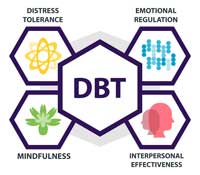
DBT teaches four core skill sets β Mindfulness, Distress Tolerance, Emotion Regulation, and Interpersonal Effectiveness β to help you navigate overwhelming emotions and build healthier relationships. Especially effective for borderline personality disorder, self-harm, and suicidal ideation.
EMDR (Eye Movement Desensitization and Reprocessing) is a gold-standard treatment for trauma and PTSD. It involves recalling disturbing memories while focusing on bilateral stimulation, helping your brain reprocess traumatic memories and reduce their emotional intensity. Effective for PTSD, Anxiety, Phobias, and other trauma-related conditions.
Exposure and Response Prevention (ERP) Therapy
ERP is the gold-standard, evidence-based treatment for OCD and related Anxiety Disorders. It involves gradually exposing you to feared thoughts or situations while helping you resist compulsive responses β breaking the OCD cycle and restoring your sense of control.
PE is a type of CBT used to treat PTSD and Anxiety disorders. It involves gradually confronting feared memories and avoided situations in a safe environment. Through repeated exposure, the anxiety associated with trauma triggers diminishes over time β helping you reclaim your life.
Other Therapy Techniques
Narrative Therapy: Encourages you to tell your story, helping you understand and reclaim your own experiences β including the stories of Shenango Valley families that built their lives around the mill, watched it close, and have been working out who they are without it for forty years; of Farrell community members navigating concentrated poverty in a city that was systematically left behind when the industry that brought their families here departed; of veterans who came home to a county at the far edge of the state with nothing specialized to offer them; and of working-class residents who have spent their lives carrying things in a cultural tradition that treats carrying them quietly as the only acceptable form of strength.
Somatic Experiencing: Focuses on your body's physical response to trauma and works to release stored tension β particularly valuable for individuals whose years of physical labor in demanding industrial or agricultural environments have normalized high physiological stress states, for first responders whose physical alert responses were engaged daily over careers, and for anyone whose history of living in economically stressed, high-adversity communities has left their nervous system in a chronic state of vigilance that does not resolve without specific clinical intervention.
Mindfulness and Relaxation Techniques: Meditation and deep breathing to help manage trauma-related stress and Anxiety β practices grounded in the rhythms of daily life that Mercer County residents actually live: the particular pace of the Shenango Valley's post-industrial communities, the seasonal rhythms of the county's farming townships, the quiet of the rural eastern corridor, and the smaller moments of stillness that are available in any life, in any part of the county, when given a clinical framework to access them.
Psychoeducation: Understanding trauma and its effects β including the specific patterns of intergenerational post-industrial community trauma, racial trauma in communities shaped by the Shenango Valley's segregated steel economy, opioid grief in working-class neighborhoods, occupational trauma in first responders and veterans, and the particular burden of carrying unaddressed wounds in a county at the far edge of the state's clinical reach β to help you understand your own experience in terms that are honest, specific, and genuinely applicable to your life.
Our Experienced Anxiety, Trauma, and PTSD Counselors
Our counselors are trained in Trauma-Informed Care and have extensive experience helping individuals heal from traumatic experiences β including the specific and layered trauma of Mercer County life, from the Shenango Valley communities still reckoning with what deindustrialization took, to the working-class neighborhoods of Farrell navigating concentrated poverty without adequate clinical infrastructure, to the rural farming communities and college-town populations who have always been too far from the state's clinical centers to access the care they deserve.
Choose Mercer County's Anxiety, PTSD, and Trauma Experts
Specialized Expertise: Certified Traumatologists with advanced credentials in evidence-based trauma treatment β EMDR, Brainspotting, CBT, DBT, Prolonged Exposure, and more β including specific expertise in post-industrial community trauma, intergenerational economic grief, racial trauma, and the complex forms that PTSD takes in working-class communities that have endured what the Shenango Valley has endured. We treat trauma as our primary focus, with the depth of training that general outpatient providers cannot match.
No Cross-State Complications, No Pittsburgh Drive: Secure telehealth brings Pennsylvania's best trauma specialists directly to your home β in Sharon, Farrell, Hermitage, Grove City, Greenville, or any of the county's rural communities. Your location at the Pennsylvania-Ohio border does not determine your access to care.
Personalized Approach: We recognize that trauma in Mercer County takes forms specific to this place β the post-industrial grief of the Shenango Valley, the concentrated poverty of Farrell, the racial dimensions of a steel economy's segregated legacy, the agricultural stress of the county's rural east, and the particular isolation of a county that has always been too far from the state's clinical centers to be adequately served by them. Your care plan reflects your specific experience, not a generic protocol.
The Shenango Valley has always known how to take care of itself β in the way that steel communities have always meant that phrase, with union solidarity, neighbor-to-neighbor resilience, and a specific working-class pride in handling what comes without asking for help that shouldn't need to be asked for. That pride is real and it has sustained these communities through things that would have broken communities without it. And some wounds do not heal on their own. Specialized trauma care β the kind that has always been 75 miles away down the Turnpike β can change things in ways that endurance alone never could.
Contact us today for a free, confidential 10-minute consultation. We'll listen, answer your questions, and help you find the right path forward β from wherever in Mercer County you are.
Cheryl has over 20 years of experience providing the highest-quality trauma and PTSD therapy to clients across Pennsylvania β including working-class and post-industrial communities at the far edges of the state's clinical reach, where the distance to specialized care has always been measured not just in miles but in the accumulated weight of going without it. Telehealth reaches Mercer County β completely, effectively, and on terms the Shenango Valley's residents can actually accept.
"The Shenango Valley built things that the whole country needed, and when the country stopped needing them, the valley was left with the consequences and very little of the support. Sharon, Farrell, Sharpsville β these communities have been carrying the weight of that for forty years. The families that watched the mills close. The communities where poverty concentrated when the jobs left. The people who grew up in the aftermath of something their parents built and lost before they were old enough to understand what happened. All of them deserve the best trauma care in Pennsylvania. Telehealth brings it to their door β without the drive to Pittsburgh, without the cross-state complications, and without asking them to fit into a clinical world that has always been designed for somewhere else."