Perry County, PA Online Anxiety, PTSD, and Trauma Therapy

EMDR, CBT, DBT, PE, Brainspotting and More

Online Anxiety, PTSD, and Trauma Counseling for Perry County, PA
Advanced Counseling and Research Services
Advanced Counseling and Research Services Office
Office Location & Hours (Lancaster)
313 W Liberty St STE 224, Lancaster, PA 17603
Mon–Thu 9am–7pm | Fri 9am–5pm
Open in Google Maps
Anxiety/PTSD/Trauma Treatment Formats
Anxiety/PTSD/Trauma Therapy Modalities
Professional Accountability
Trauma Educational Services
Trauma Research Support
Clinical
Supervision
Online Anxiety, PTSD, and Trauma Counseling in Perry County, PA
Perry County's communities β€” from New Bloomfield and Newport along the Susquehanna to Duncannon beneath the Blue Mountain ridge, from the Juniata River valleys to the forested hollows of the county's rural interior β€” deserve specialized trauma care delivered by Pennsylvania's most qualified traumatologists. With telehealth, that care comes directly to you.

Perry County occupies a singular position in central Pennsylvania β€” directly across the Susquehanna River from the state capital in Harrisburg, yet worlds apart from it in terms of services, resources, and the daily realities of its residents. It is a county defined by the Blue Mountain ridge to its north, the Susquehanna and Juniata Rivers along its eastern and southern edges, and the forested Appalachian ridges and narrow valleys that make up its interior. Its county seat, New Bloomfield, is a small borough. Its largest communities β€” Newport, Millerstown, Duncannon β€” are modest river towns. There are no cities. There is no hospital. And despite being separated from Pennsylvania's seat of government by only a few miles of river, Perry County remains one of the most underserved counties in south-central Pennsylvania for mental health care.

Perry County is a county of deep rural roots β€” of farming families, of working-class communities shaped by the decline of local industry, of veterans who came home to a landscape they love but to a support system that was never adequate. It is also a county caught in an uncomfortable in-between: too close to Harrisburg and Lancaster to be classified as truly remote, but too rural and too poorly served to have the mental health infrastructure that proximity to those cities might suggest. For many Perry County residents, the trauma is real, the need is genuine, and the options have always been limited.

At Advanced Counseling and Research Services, our licensed trauma specialists bring evidence-based, certified trauma therapy directly to you through secure telehealth β€” so you can access the highest-quality care in Pennsylvania without crossing the river to Harrisburg, without a lengthy drive to Lancaster or York, and without navigating a system that has historically left Perry County communities behind. From Duncannon to New Bloomfield, from Newport to the most remote mountain township, we meet you where you are.

You don't have to leave Perry County to find a certified traumatologist. Healing starts here.

Mental Health Conditions We Treat

  • Anxiety Disorders & Panic
  • ADHD & ADD
  • Depression
  • Grief & Loss
  • Obsessive-Compulsive Disorder (OCD)
  • Phobias
  • Post-Traumatic Stress Disorder (PTSD)
  • Substance Use & Co-Occurring Disorders
  • Trauma β€” Single Event and Complex/Chronic
  • Veteran & First Responder PTSD

Hidden in Plain Sight β€” Perry County's Unmet Trauma Burden

Perry County's communities carry real and specific burdens that general counseling approaches rarely recognize or reach. Our certified clinical trauma professionals are trained to work with exactly this kind of complex, place-shaped trauma:

  • The paradox of proximity β€” close to Harrisburg, far from care: Perry County sits directly across the Susquehanna from Pennsylvania's capital city, yet its residents face significant barriers to the mental health services concentrated there. No bridge connects Perry County directly to Harrisburg; access requires driving to Duncannon, crossing the river, and navigating the city β€” a trip that feels much longer than the miles suggest, particularly for residents deeper in the county's interior. That paradox β€” being adjacent to resources yet practically unable to access them β€” is its own form of chronic frustration that compounds the experience of people already struggling with untreated trauma.
  • The legacy of agricultural and working-class hardship: Perry County's economy has historically rested on farming and small-scale industry, and the financial pressures facing both have intensified dramatically over recent decades. Farm families navigating rising land costs, falling commodity prices, and generational succession challenges carry a form of chronic economic stress that rarely gets named as the trauma it is. Working-class communities that once had anchoring local employers β€” small manufacturers, mills, tradesmen β€” have watched those economic pillars erode, leaving behind communities with fewer jobs, less stability, and more unaddressed psychological need.
  • Profound rural isolation despite geographic centrality: Perry County's interior townships β€” Tyrone, Saville, Toboyne, Spring, Wheatfield β€” are among the most sparsely populated communities in south-central Pennsylvania. Many are accessible only by narrow mountain roads that become hazardous in winter. Despite the county's location near major population centers, residents of these townships face genuine geographic barriers to mental health care. There is no inpatient psychiatric facility in Perry County. Outpatient mental health providers of any kind are scarce. Certified traumatologists are effectively absent without telehealth.
  • The opioid and fentanyl crisis: Perry County has been significantly affected by Pennsylvania's opioid epidemic. The intersection of economic precarity, social isolation, limited healthcare access, and the cultural expectation of self-sufficiency creates exactly the conditions in which addiction takes hold and in which people do not seek help until a crisis forces the issue. Every family touched by overdose carries unresolved grief and trauma that requires specialized clinical care β€” not just substance use treatment in isolation.
  • Veteran and first responder trauma: Perry County has a meaningful veteran population, and the community's cultural identity β€” shaped by deep patriotism and a tradition of military service β€” means that veterans often carry significant PTSD without acknowledging or seeking help for it. The county's volunteer fire, EMS, and emergency services cover extensive rural terrain with small departments, and first responders frequently know the people they respond to. The cumulative toll of that work, in a community that expects stoic endurance, rarely surfaces until it becomes a crisis.
  • Domestic violence in isolated communities: In a county where small communities mean that everyone knows everyone, domestic violence survivors face profound barriers to seeking help discreetly. Geographic isolation, limited public transportation, few local shelter options, and the social dynamics of tight-knit rural communities all make it harder to reach out β€” and harder to leave. Telehealth provides a level of safety and privacy for domestic violence survivors in Perry County that no in-person option can match.
  • The corrections and incarceration impact: Perry County is home to SCI Mahanoy β€” a state correctional institution β€” and the presence of the corrections system in a rural county creates specific trauma dynamics for incarcerated individuals, their families, and the corrections officers and staff who work there. The psychological burden carried by corrections officers β€” a form of occupational trauma that closely parallels first responder PTSD β€” is widely underrecognized and undertreated. Families of incarcerated individuals carry their own complex trauma that rarely finds adequate clinical support.
  • Cultural barriers to seeking mental health care: Perry County's cultural identity β€” rooted in self-reliance, stoicism, religious faith, and a deep skepticism of outside institutions β€” creates significant cultural barriers to seeking mental health treatment. For many residents, the idea of talking to a therapist carries stigma that the physical act of driving to an office compounds. Telehealth, accessed from home and on one's own terms, removes much of that friction. ACRS's certified clinical trauma professionals are skilled at working with clients for whom seeking help represents a genuine act of courage against cultural expectations.

ACRS's certified clinical trauma professionals are trained specifically to work with complex, layered trauma β€” not just acute single-event PTSD. We meet you where you are.

Why Perry County Residents Choose ACRS

Personalized, Trauma-Informed Care β€” Delivered to Your Home

We work collaboratively with you to develop a Trauma-Informed Care Plan that addresses your specific needs and goals.

Individual Treatment
Individual Trauma and PTSD Treatment

One-on-one sessions with a certified traumatologist β€” via secure video on your phone, tablet, or computer.

Group Treatment
Group Trauma and PTSD Treatment

Facilitated online sessions where you share your experiences and heal alongside others who understand.

Online Telehealth
Telehealth Trauma and PTSD Treatment

Secure, HIPAA-compliant video therapy from the comfort and privacy of your own home.

Concierge Counseling
Concierge Trauma and PTSD Counseling

A highly personalized, private approach to care with maximum flexibility and attention.

Veterans PTSD Support
Veteran PTSD Support Program

Specialized, compassionate PTSD care for Perry County veterans and active military families. You served β€” you deserve care that understands what you've been through.

First Responders

Perry County's volunteer firefighters, EMS crews, and corrections officers carry psychological burdens that are rarely acknowledged in communities where stoicism is the cultural norm. Our trauma specialists understand the unique weight of first responder and corrections work in a rural county, and provide confidential, effective telehealth care on your schedule, from your home.

Survivors of Domestic Violence

Individuals With Substance Use Disorders

Why Telehealth Works β€” Especially in Perry County

Perry County's position in the Pennsylvania landscape creates a particular kind of access paradox. Harrisburg β€” with its hospitals and mental health resources β€” is visible from the eastern edge of the county across the Susquehanna River. But for the majority of Perry County residents, and especially those in the county's interior townships, that proximity is largely illusory. There is no direct bridge from most of Perry County to Harrisburg. The drive around the river adds time, distance, and the friction of navigating an unfamiliar city. Lancaster β€” home to ACRS β€” is roughly 45 to 60 minutes away via Route 322 and Route 30 depending on your starting point. For the county's mountain townships, it can be longer.

Telehealth removes those barriers completely. With today's secure video technology, your session with an ACRS certified traumatologist is every bit as effective and connected as being in the same room. You see your therapist's face. They see yours. The therapeutic relationship is real β€” and so are the results.

Here's why Perry County clients tell us they value telehealth:

  • No drive over the Susquehanna, through Harrisburg traffic, or along Route 322 and Route 34 before or after a difficult session.
  • Sessions fit around your work and family schedule β€” including evenings through Thursday.
  • You're in your own home β€” your own comfortable, private space.
  • In a small, interconnected county where communities are tight-knit and privacy is limited, telehealth allows you to seek care without your neighbors knowing.
  • You have access to Pennsylvania's best trauma specialists β€” certified clinical trauma professionals, not general therapists with long waitlists.
  • It works. Evidence-based telehealth therapy delivers outcomes comparable to in-person care for trauma, anxiety, and PTSD.

You must be physically located in Pennsylvania during your telehealth session. Our Lancaster office is approximately 45–60 miles from New Bloomfield via Route 322 and Route 30 β€” and you are always welcome to visit us in person if you prefer.

ACRS Treatment Modalities for Anxiety, Trauma, and PTSD

Brainspotting Therapy

Brainspotting Therapy

Brainspotting operates on the principle that where you look affects how you feel. A therapist helps you identify "brainspots" β€” eye positions linked to stored emotional experiences or trauma in the brain. By maintaining focus on the brainspot while fostering mindfulness and connection, the brain processes and releases unresolved emotions at a profound neurobiological level.

Brainspotting is effective for PTSD, Anxiety, Depression, chronic pain, and performance issues β€” and is particularly well-suited to the complex, quietly carried trauma of Perry County communities shaped by agricultural hardship, economic decline, veteran service, and the cultural expectation of self-reliance that has kept so many from seeking the help they deserve.

Cognitive Behavioral Therapy (CBT)

CBT Therapy

CBT is a short-term, goal-oriented psychotherapy that helps you identify and challenge unhelpful thought patterns and develop healthier coping mechanisms. It is highly effective for Anxiety, Depression, and PTSD β€” and its structured, practical approach resonates especially well with clients who prefer concrete, measurable progress over open-ended conversation.

Dialectical Behavior Therapy (DBT)

DBT Therapy

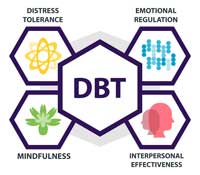
DBT teaches four core skill sets β€” Mindfulness, Distress Tolerance, Emotion Regulation, and Interpersonal Effectiveness β€” to help you navigate overwhelming emotions and build healthier relationships. Especially effective for borderline personality disorder, self-harm, and suicidal ideation.

EMDR Therapy

EMDR Therapy

EMDR (Eye Movement Desensitization and Reprocessing) is a gold-standard treatment for trauma and PTSD. It involves recalling disturbing memories while focusing on bilateral stimulation, helping your brain reprocess traumatic memories and reduce their emotional intensity. Effective for PTSD, Anxiety, Phobias, and other trauma-related conditions.

Exposure and Response Prevention (ERP) Therapy

ERP Therapy

ERP is the gold-standard, evidence-based treatment for OCD and related Anxiety Disorders. It involves gradually exposing you to feared thoughts or situations while helping you resist compulsive responses β€” breaking the OCD cycle and restoring your sense of control.

Prolonged Exposure Therapy (PE)

PE Therapy

PE is a type of CBT used to treat PTSD and Anxiety disorders. It involves gradually confronting feared memories and avoided situations in a safe environment. Through repeated exposure, the anxiety associated with trauma triggers diminishes over time β€” helping you reclaim your life.

Other Therapy Techniques

  • Narrative Therapy: Encourages you to tell your story, helping you understand and reclaim your own experiences β€” including the stories of farm family struggle, veteran service, working-class endurance, and the quiet grief of communities that have been passed over, that define so many Perry County lives and that deserve to be fully heard.
  • Somatic Experiencing: Focuses on your body's physical response to trauma and works to release stored tension β€” particularly valuable for clients whose chronic stress or long-carried trauma manifests as persistent physical symptoms, which is common in individuals who have normalized high levels of ongoing stress for years.
  • Mindfulness and Relaxation Techniques: Meditation and deep breathing to help manage trauma-related stress and Anxiety β€” practices that can be naturally grounded in the rhythms of rural life and the natural environment of Perry County's Appalachian ridges, river valleys, and open farmland.
  • Psychoeducation: Understanding trauma and its effects β€” including the patterns common in farm families, veteran communities, corrections professionals, and individuals shaped by generational rural hardship and the cultural imperative to handle things quietly β€” to help you make sense of your own experiences.

Our Experienced Anxiety, Trauma, and PTSD Counselors

Our counselors are trained in Trauma-Informed Care and have extensive experience helping individuals heal from traumatic experiences β€” including the layered, quietly carried trauma common in Perry County's rural communities, where self-reliance has always been the expectation and asking for help has always required real courage.

Cheryl Wilson-Smith
Chief Executive Officer
Cheryl Wilson-Smith, MA, LPC – Chief Clinical Officer and trauma expert
  • Licensed Professional Counselor (LPC)
    • Pa. Lic. PC006514
    • Fl. Lic. TPMC1044
  • Certified Traumatologist (CT)
  • National Certified Counselor (NCC)
  • Certified Clinical Mental Health Counselor (CCMHC)
  • Certified Clinical Trauma Professional (CCTP)
  • Certified in Emergency Crisis Response (CECR)
  • Neuropsychotherapist Certified (NPT-C)
  • Master of Arts (MA)
  • 20+ years of clinical experience.
  • Worked with clients across the lifespan.

Read Cheryl's Profile

Cady R. Monasmith
Chief Clinical Officer
Cady Monasmith, MA, LPC – Licensed trauma and DBT therapist
  • Licensed Professional Counselor (PA-015668)
  • Certified Dialectical Behavioral Therapist (C-DBT)
  • Certified Clinical Trauma Professional (CCTP)
  • Certified Dancing Mindfulness Facilitator (CDMF)
  • Bachelor of Fine Arts (BFA)

Read Cady's Profile

Kim Civitarese
Chief Administrative Officer
Trauma Therapist Kim Civitarese
  • Licensed Associate Professional Counselor (LAPC)
  • Cognitive Processing Therapist (CPT)
    Pre-licensed Clinician
  • Certified Grief Informed Professional (CGP)

Experience working with adolescents, couples, the elderly population, blended families, and families in the adoption process.

Read Kim's Profile

Jason Houghton
Psychiatric Mental Health Nurse Practitioner
Jason Houghton, CRNP
  • Psych/Mental Health Nurse Practitioner Education β€” Johns Hopkins University
  • CRNP License: SP025306
  • RN License: RN606119
  • MSN β€” Duquesne University
  • BSN β€” Messiah University

Read Jason's Profile

Kailee Morgan
Clinician
Kailee Morgan, MSW, LAPC
  • Master of Social Work (MSW)
  • Licensed Associate Professional Counselor (LAPC)

Specializes in anxiety, ADHD & ADD, and depression.

Read Kailee's Profile

Choose Perry County's Anxiety, PTSD, and Trauma Experts

  • Specialized Expertise: Certified Traumatologists β€” not general counselors with long waitlists. We treat trauma, PTSD, and anxiety as our primary focus, with advanced training and credentials to match.
  • No Commute Required: Secure telehealth brings Pennsylvania's best trauma specialists directly to your home in New Bloomfield, Newport, Duncannon, Millerstown, Landisburg, or anywhere in Perry County β€” including the mountain townships that have never had easy access to specialized care.
  • Personalized Approach: We recognize that trauma in Perry County takes many forms β€” shaped by farm and working-class hardship, veteran service, corrections work, rural isolation, the opioid crisis, and the cultural expectation that you handle things yourself. Your care plan reflects your unique experience.

Taking the first step toward healing takes real courage β€” especially in a community where self-reliance is expected and the instinct to manage on your own runs deep. You deserve specialized care that meets you where you are, on your terms, without having to cross a river or navigate someone else's city to find it.

Contact us today to set up a free, confidential 10-minute consultation. We'll listen, answer your questions, and help you find the right path forward.

Contact Us Online or

Call Us at 717-394-3994

Cheryl Wilson-Smith
Chief Executive Officer

Cheryl has over 20 years of experience providing the highest-quality trauma and PTSD therapy to clients across Pennsylvania β€” including those in rural communities where self-reliance is a matter of cultural identity, where the mental health system has never adequately reached, and where asking for help requires overcoming not just logistics but deeply held personal values.

Cheryl Wilson-Smith, Chief Clinical Officer β€” Trauma and PTSD Specialist
  • Licensed Professional Counselor (LPC)
    • Pa. Lic. PC006514
    • Fl. Lic. TPMC1044
  • Certified Traumatologist (CT)
  • National Certified Counselor (NCC)
  • Certified Clinical Mental Health Counselor (CCMHC)
  • Certified Clinical Trauma Professional (CCTP)
  • Certified in Emergency Crisis Response (CECR)
  • Neuropsychotherapist Certified (NPT-C)
  • Master of Arts (MA)
  • 20+ years of clinical experience.
  • Worked with clients across the lifespan.

Read Cheryl's Profile

"Perry County sits right across the river from the state capital β€” and yet for many of its residents, the help they need has always felt just out of reach. Every person in this county deserves trauma care that comes to them, on their own terms, in the place where they feel safest. That's exactly what telehealth makes possible."

β€” Cheryl Wilson-Smith

Take the First Step – Contact Us Today

Secure & Confidential β€’ Free 10-minute consultation