Potter County, PA Online Anxiety, PTSD, and Trauma Therapy

EMDR, CBT, DBT, PE, Brainspotting and More

Online Anxiety, PTSD, and Trauma Counseling for Potter County, PA
Advanced Counseling and Research Services
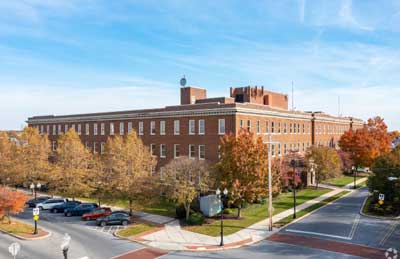
Advanced Counseling and Research Services Office
Office Location & Hours (Lancaster)
313 W Liberty St STE 224, Lancaster, PA 17603
Mon–Thu 9am–7pm | Fri 9am–5pm
Open in Google Maps
Anxiety/PTSD/Trauma Treatment Formats
Anxiety/PTSD/Trauma Therapy Modalities
Professional Accountability
Trauma Educational Services
Trauma Research Support
Clinical
Supervision
Online Anxiety, PTSD, and Trauma Counseling in Potter County, PA
Potter County β€” Pennsylvania's "Wilds" at their most undisturbed, one of the least densely populated counties in the entire northeastern United States, home to Coudersport and some of the most spectacular and most isolated forested terrain in the Commonwealth β€” is also one of Pennsylvania's most clinically underserved counties. The distance between a Potter County resident and a certified traumatologist has always been measured in hours. Telehealth changes that. Every Potter County resident deserves access to Pennsylvania's most qualified trauma specialists. That access is here.

Potter County sits at the high plateau of north-central Pennsylvania β€” a county of roughly 16,000 residents spread across nearly 1,100 square miles of some of the most dramatic and most remote forested terrain in the eastern United States. Known as "Pennsylvania's Wilds" and anchored by the Pine Creek Gorge β€” the geological formation that gives the county its claim to a Pennsylvania Grand Canyon β€” Potter County is a place whose extraordinary natural landscape has always been its most visible feature and whose human communities have organized themselves around the rhythms of that landscape: the lumber and tanning industries that stripped and reshaped the county's forests in the nineteenth century, the hunting and fishing culture that remains central to the county's identity and economy, the small boroughs and rural townships whose residents measure distance in the particular terms of people who have always lived far from everywhere else.

Coudersport, the county seat, is a borough of fewer than 2,500 people β€” the commercial, governmental, and social center of a county with no interstate highway, no four-lane road running through it, and neighbors that are themselves remote: Clinton and Lycoming Counties to the south, Tioga to the east, McKean to the north, Cameron and Clinton to the west. Every direction out of Potter County is a long drive through forested hills before you reach anything that approximates a clinical infrastructure. The nearest hospital with anything beyond emergency services, the nearest specialist of virtually any kind, has always required a commitment of time and distance that most residents of more accessible Pennsylvania counties cannot fully imagine.

At Advanced Counseling and Research Services, our licensed trauma specialists bring evidence-based, certified trauma therapy directly to you through secure telehealth β€” so every Potter County resident can access Pennsylvania's highest-quality trauma care without any of the barriers that have always made specialized clinical services effectively unreachable from this part of the state. From Coudersport to Galeton, from Austin to Shinglehouse, from the most remote hunting camp township to the Pine Creek corridor, you don't have to drive two hours to find a certified traumatologist. Healing starts here.

Mental Health Conditions We Treat

  • Anxiety Disorders & Panic
  • ADHD & ADD
  • Depression
  • Grief & Loss
  • Obsessive-Compulsive Disorder (OCD)
  • Phobias
  • Post-Traumatic Stress Disorder (PTSD)
  • Substance Use & Co-Occurring Disorders
  • Trauma β€” Single Event and Complex/Chronic
  • Veteran & First Responder PTSD

The Most Remote County in Pennsylvania β€” Potter County's Unmet Trauma Burden

Potter County's combination of extreme geographic isolation, deep provider scarcity, a post-extractive economic history rooted in the lumber and tanning industries, and a working-class Appalachian cultural identity that prizes self-reliance above all creates what may be the most concentrated access gap for specialized trauma care of any county in Pennsylvania. Our certified clinical trauma professionals are trained to work with exactly these realities:

  • Extreme geographic isolation as a clinical barrier unlike anything in the state: Potter County's provider scarcity is not a matter of degree β€” it is a matter of kind. Other rural Pennsylvania counties have limited local clinical resources but exist within reasonable driving distance of larger communities with specialized providers. Potter County does not. There is no nearby metropolitan area. There is no neighboring county whose clinical infrastructure meaningfully supplements what Potter County lacks. The drive from Coudersport to the nearest certified traumatologist in independent outpatient practice is not 45 minutes or an hour β€” it is the better part of two hours in any direction, on roads that wind through mountains and are not reliably passable in winter. For a county of 16,000 people spread across 1,100 square miles, this is not a minor inconvenience. It means that for the overwhelming majority of Potter County residents, specialized trauma care has simply never existed as a realistic option. Telehealth provides it β€” for the first time β€” within reach.
  • The lumber and tanning legacy β€” post-extractive grief in a forest that remembers: Potter County's forests were stripped bare in the second half of the nineteenth century by the lumber and hemlock tanning industries that swept through north-central Pennsylvania with a thoroughness that left the landscape nearly unrecognizable from its original form. The communities that grew up around those industries β€” Galeton, Austin, Coudersport, the mill towns along Pine Creek and the Allegheny River headwaters β€” organized their entire economic and social existence around extraction, and when the timber ran out and the tanneries closed, those communities were left to rebuild their identities from what remained. The forests have grown back; the psychic landscape of post-extractive communities takes longer to recover. The specific grief of communities whose defining industry departed β€” present in different forms across the Pennsylvania Wilds, in Tioga and Sullivan and Clinton Counties as well β€” takes one of its most concentrated forms here, in a county that has been navigating post-extraction for well over a century without a clinical framework for naming what that navigation costs.
  • The Austin Dam disaster and community trauma memory: On September 30, 1911, the Bayless Pulp and Paper Company dam above the borough of Austin failed catastrophically, sending a wall of water down Freeman Run that killed at least 78 people β€” nearly one in twelve of Austin's entire population β€” in minutes. The Austin Dam Disaster was one of the deadliest flood disasters in Pennsylvania history, and its impact on the community of Austin has never been fully reckoned with clinically. More than a century later, the descendants of survivors, the community members who grew up with the story as part of their local identity, and the borough itself carry a form of community trauma memory whose long tail extends to the present in ways that deserve acknowledgment. ACRS's certified clinical trauma professionals are trained in the specific patterns of historical community-scale traumatic loss β€” including the way such events shape place-based identity across generations in communities that have never had clinical support for the reckoning.
  • Hunting culture, masculinity, and the barriers to help-seeking among men: Potter County's identity is shaped as much as anything by hunting β€” whitetail deer season transforms the county every November, drawing thousands of hunters from across Pennsylvania and beyond, and year-round the county's economy and social life are organized around the outdoor recreation that its forests and waterways provide. This is a community where masculine identity is built around physical competence, independence, and the management of hardship without complaint β€” values that are genuine, admirable, and that create some of the most specific and least-discussed barriers to mental health care of any population in rural Pennsylvania. Men in Potter County who are carrying trauma, PTSD, depression, or the cumulative weight of service as veterans or first responders are navigating those burdens in a cultural context that has few sanctioned ways to acknowledge them. Telehealth provides access to specialized trauma care that is completely private β€” not a waiting room on Main Street in Coudersport, not a conversation that requires navigating the visibility of help-seeking in a community this small, but a session in your own home on your own device, known only to you.
  • The opioid and fentanyl epidemic in communities with no clinical safety net: Potter County has been touched by Pennsylvania's opioid epidemic in communities that had, to begin with, the thinnest clinical infrastructure of any county in the state. In Coudersport, in Galeton, in the county's small boroughs and rural townships, families have been touched by overdose, addiction, and the specific grief of losing people in communities small enough that every loss is personally felt by nearly everyone. The underlying conditions that drive substance use β€” unaddressed trauma, economic precarity, geographic isolation, limited opportunity, the cultural prohibition on acknowledging difficulty β€” are present here in some of their most concentrated forms in Pennsylvania. Recovery without treating underlying trauma consistently fails. ACRS's certified clinical trauma professionals address both comprehensively, via telehealth, from wherever in Potter County you are.
  • Veteran trauma in a county whose service tradition far exceeds its size: Potter County's veteran population β€” as a proportion of the county's small total population β€” reflects the strong military service tradition of rural Appalachian Pennsylvania communities, where military service has always been among the most accessible paths to education, stability, and purpose for young people in communities with limited economic options. Veterans returning to Potter County from any era of service have returned to a county with essentially no specialized PTSD clinical resources β€” no outpatient trauma specialist, no credentialed traumatologist within realistic reach, and a VA system whose nearest facilities are hours away. ACRS provides specialized, evidence-based PTSD care via telehealth that delivers what Potter County's veterans have never had: a certified traumatologist available from their home, on their schedule, without a multi-hour drive.
  • First responders in the most isolated service environment in the state: Potter County's volunteer fire departments, EMS services, and law enforcement cover a territory of extreme geographic challenge β€” responding to accidents on mountain roads, medical emergencies in communities accessible only by routes that challenge even experienced drivers in bad weather, and the full spectrum of rural crisis in a county where backup is always far away. What these first responders encounter accumulates over careers with essentially no critical incident support infrastructure and in a professional culture that treats acknowledgment of psychological cost as incompatible with the work. Telehealth provides specialized trauma care that is confidential, accessible from home, and available on a schedule that works for rural volunteer responders whose service demands don't conform to business hours.
  • Domestic violence in the most isolated rural setting in Pennsylvania: For domestic violence survivors in Potter County, geographic isolation intensifies every barrier to accessing help to a degree that has no parallel in more accessible Pennsylvania counties. Limited transportation infrastructure, small community social networks where everyone knows everyone, economic dependency that has few alternatives in a county with limited employment opportunities, and the practical reality that the nearest domestic violence services may be well over an hour away β€” all combine to create a set of barriers that telehealth is specifically equipped to address. A secure video session from a private moment at home is, for many Potter County survivors, the only realistic path to trauma-informed care.
  • The psychological weight of living at the edge of Pennsylvania's service infrastructure: There is a specific and underrecognized psychological burden carried by residents of communities that exist at the furthest reaches of the state's service delivery capacity β€” communities that have always had to manage without the resources that residents in more accessible areas take for granted, and that have developed a specific relationship to self-reliance that is both a genuine strength and a form of chronic stress. For Potter County residents who have spent their lives solving problems without institutional help, the idea of seeking specialized mental health care raises a set of practical and cultural obstacles that telehealth is uniquely suited to remove. The session comes to you. The privacy is complete. The care is the same quality available in Philadelphia or Pittsburgh.

ACRS's certified clinical trauma professionals are trained specifically to work with complex, layered trauma β€” not just acute single-event PTSD. Whether you are in Coudersport, Galeton, Austin, Shinglehouse, or the most remote township of the Pennsylvania Wilds, we meet you where you are.

Why Potter County Residents Choose ACRS

Personalized, Trauma-Informed Care β€” Delivered to Your Home

We work collaboratively with you to develop a Trauma-Informed Care Plan that addresses your specific needs and goals.

Individual Treatment
Individual Trauma and PTSD Treatment

One-on-one sessions with a certified traumatologist β€” via secure video on your phone, tablet, or computer, from wherever you are in Potter County.

Group Treatment
Group Trauma and PTSD Treatment

Facilitated online sessions where you share your experiences and heal alongside others who understand β€” without leaving your home.

Online Telehealth
Telehealth Trauma and PTSD Treatment

Secure, HIPAA-compliant video therapy from the comfort and privacy of your own home β€” no two-hour mountain drive, no half-day commitment just to reach a specialist, no one in Coudersport who needs to know.

Concierge Counseling
Concierge Trauma and PTSD Counseling

A highly personalized, private approach to care with maximum flexibility and attention.

Veterans PTSD Support
Veteran PTSD Support Program

Specialized, compassionate PTSD care for Potter County veterans and active military families. You served β€” you deserve care that honors what you've been through, brought directly to your home without the multi-hour drive that has always been the only option.

First Responders

Potter County's volunteer firefighters, EMS professionals, and law enforcement officers serve one of the most geographically challenging territories of any first responder community in Pennsylvania β€” isolated mountain roads, remote access, communities where backup is far away and every response requires managing difficulty independently. What accumulates over a career in those conditions deserves clinical acknowledgment. Our trauma specialists understand that world and provide confidential, effective telehealth care that respects it.

Survivors of Domestic Violence

Individuals With Substance Use Disorders

Why Telehealth Isn't Optional for Potter County β€” It's the Only Realistic Path

For residents of most Pennsylvania counties, telehealth is a convenience β€” a way to see a provider without driving across town. For Potter County residents, telehealth is categorically different. It is the difference between specialized trauma care being available and it not being available at all. There is no in-county certified traumatologist in independent outpatient practice. There is no neighboring county whose clinical infrastructure fills that gap. The drive to the nearest specialized trauma provider β€” in any direction from Coudersport β€” is the better part of two hours on mountain roads that are not always passable in winter, before and after sessions that require considerable emotional engagement. For virtually any working Potter County resident β€” a farmer, a shift worker, a volunteer firefighter, a parent managing childcare β€” consistent attendance at in-person trauma therapy has always been functionally impossible.

Telehealth makes it possible. Not convenient. Possible.

You must be physically located in Pennsylvania during your telehealth session. Our Lancaster office is approximately 160–175 miles from Coudersport β€” and you are always welcome to visit us in person. But for Potter County residents, telehealth is not a preference. It is the first time that specialized trauma care has ever genuinely existed as an option.

Here is what Potter County clients tell us they value about telehealth:

  • No two-hour mountain drive each way β€” your session takes place in your home, on your device, without the full-day commitment that in-person specialized care would require.
  • Complete privacy β€” in a county as small and socially interconnected as Potter, being seen at any clinical provider in Coudersport is not a private act. Your telehealth session is known only to you.
  • Reliable access regardless of weather β€” winter road conditions in Potter County can make mountain routes genuinely impassable. Your telehealth session is never canceled by a snowstorm.
  • Sessions fit around farm schedules, hunting seasons, shift work, and the demands of rural life in a county where every appointment has always required extraordinary logistical planning.
  • Access to Pennsylvania's best trauma specialists β€” certified clinical trauma professionals with advanced credentials in evidence-based trauma treatment that Potter County has never had available locally.
  • It works. Evidence-based telehealth therapy delivers outcomes fully comparable to in-person care for trauma, anxiety, and PTSD.

ACRS Treatment Modalities for Anxiety, Trauma, and PTSD

Brainspotting Therapy

Brainspotting Therapy

Brainspotting operates on the principle that where you look affects how you feel. A therapist helps you identify "brainspots" β€” eye positions linked to stored emotional experiences or trauma in the brain. By maintaining focus on the brainspot while fostering mindfulness and connection, the brain processes and releases unresolved emotions at a profound neurobiological level.

Brainspotting is effective for PTSD, Anxiety, Depression, chronic pain, and performance issues β€” and is particularly well-suited to the deep, often wordless, multigenerational trauma carried by Potter County residents: the post-extractive grief of communities shaped by industries that departed, the accumulated weight of extreme geographic isolation on communities that have always had to manage without support, the specific burdens of veteran and first responder service in one of Pennsylvania's most remote operating environments, and the long legacy of the Austin Dam disaster in a community small enough that its reverberations have never fully stilled.

Cognitive Behavioral Therapy (CBT)

CBT Therapy

CBT is a short-term, goal-oriented psychotherapy that helps you identify and challenge unhelpful thought patterns and develop healthier coping mechanisms. It is highly effective for Anxiety, Depression, and PTSD β€” and its structured, practical approach resonates strongly with Potter County residents who value results over process, concrete skills over abstract frameworks, and efficiency in a county where every appointment has always represented a significant investment of time. For veterans and first responders especially, CBT provides the kind of direct, skills-based framework that fits naturally into working lives that don't have time for open-ended conversation.

Dialectical Behavior Therapy (DBT)

DBT Therapy

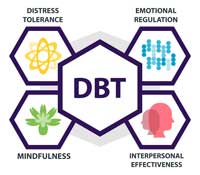
DBT teaches four core skill sets β€” Mindfulness, Distress Tolerance, Emotion Regulation, and Interpersonal Effectiveness β€” to help you navigate overwhelming emotions and build healthier relationships. Especially effective for borderline personality disorder, self-harm, and suicidal ideation.

EMDR Therapy

EMDR Therapy

EMDR (Eye Movement Desensitization and Reprocessing) is a gold-standard treatment for trauma and PTSD. It involves recalling disturbing memories while focusing on bilateral stimulation, helping your brain reprocess traumatic memories and reduce their emotional intensity. Effective for PTSD, Anxiety, Phobias, and other trauma-related conditions.

Exposure and Response Prevention (ERP) Therapy

ERP Therapy

ERP is the gold-standard, evidence-based treatment for OCD and related Anxiety Disorders. It involves gradually exposing you to feared thoughts or situations while helping you resist compulsive responses β€” breaking the OCD cycle and restoring your sense of control.

Prolonged Exposure Therapy (PE)

PE Therapy

PE is a type of CBT used to treat PTSD and Anxiety disorders. It involves gradually confronting feared memories and avoided situations in a safe environment. Through repeated exposure, the anxiety associated with trauma triggers diminishes over time β€” helping you reclaim your life.

Other Therapy Techniques

  • Narrative Therapy: Encourages you to tell your story, helping you understand and reclaim your own experiences β€” including the stories of Potter County families that have built their lives in one of the most remote and beautiful corners of Pennsylvania and have never once had a clinical space to name what that life actually costs; of veterans who came home to a county they love and that had nothing specialized to offer them; of Austin community members and their descendants carrying the long shadow of 1911; of hunters and farmers and volunteer firefighters whose identities are built on the capacity to handle what comes β€” and who have spent their lives wondering whether that capacity has a limit they are not allowed to acknowledge.
  • Somatic Experiencing: Focuses on your body's physical response to trauma and works to release stored tension β€” particularly valuable for first responders and veterans whose years of high-alert service in geographically demanding environments have left their nervous systems in a state of chronic vigilance, for individuals whose history of carrying difficulty alone in isolated communities has built the weight of that isolation into the body, and for anyone whose experience of acute trauma has never been given the clinical attention it required in a county where that attention has never existed locally.
  • Mindfulness and Relaxation Techniques: Meditation and deep breathing to help manage trauma-related stress and Anxiety β€” practices that can be grounded in the particular landscape Potter County residents already inhabit and know with the intimacy of people who have spent their lives in it: the Pine Creek Gorge at different seasons, the stillness of the county's forested ridgelines, the Allegheny River headwaters, the particular quality of silence in a county where the nearest town is twenty miles away. For those with a clinical framework to access it, that landscape is not only beautiful β€” it is a genuine resource for practices that are clinically effective and rooted in the specific place where Potter County residents actually live.
  • Psychoeducation: Understanding trauma and its effects β€” including the specific patterns of post-extractive community grief, the multigenerational impact of historical community disasters like the Austin Dam failure, the occupational trauma of first responders and veterans in geographically isolated service environments, the psychological burden of extreme rural isolation, and the particular dynamic of seeking help in a county where help-seeking has always been complicated by distance, stigma, and a cultural identity built entirely around managing without it β€” to help you understand your own experience in terms that are honest, specific, and genuinely applicable to life in Potter County.

Our Experienced Anxiety, Trauma, and PTSD Counselors

Our counselors are trained in Trauma-Informed Care and have extensive experience helping individuals heal from traumatic experiences β€” including the specific and often invisible trauma of Potter County life, from the communities still carrying the long weight of a post-extractive history and a century-old disaster, to the veterans and first responders whose service to one of Pennsylvania's most remote counties has never been matched by adequate clinical support, to the residents of the Pennsylvania Wilds whose endurance has always been mistaken β€” by everyone including themselves β€” for the absence of need.

Cheryl Wilson-Smith
Chief Executive Officer
Cheryl Wilson-Smith, MA, LPC – Chief Clinical Officer and trauma expert
  • Licensed Professional Counselor (LPC)
    • Pa. Lic. PC006514
    • Fl. Lic. TPMC1044
  • Certified Traumatologist (CT)
  • National Certified Counselor (NCC)
  • Certified Clinical Mental Health Counselor (CCMHC)
  • Certified Clinical Trauma Professional (CCTP)
  • Certified in Emergency Crisis Response (CECR)
  • Neuropsychotherapist Certified (NPT-C)
  • Master of Arts (MA)
  • 20+ years of clinical experience.
  • Worked with clients across the lifespan.

Read Cheryl's Profile

Cady R. Monasmith
Chief Clinical Officer
Cady Monasmith, MA, LPC – Licensed trauma and DBT therapist
  • Licensed Professional Counselor (PA-015668)
  • Certified Dialectical Behavioral Therapist (C-DBT)
  • Certified Clinical Trauma Professional (CCTP)
  • Certified Dancing Mindfulness Facilitator (CDMF)
  • Bachelor of Fine Arts (BFA)

Read Cady's Profile

Kim Civitarese
Chief Administrative Officer
Trauma Therapist Kim Civitarese
  • Licensed Associate Professional Counselor (LAPC)
  • Cognitive Processing Therapist (CPT)
    Pre-licensed Clinician
  • Certified Grief Informed Professional (CGP)

Experience working with adolescents, couples, the elderly population, blended families, and families in the adoption process.

Read Kim's Profile

Jason Houghton
Psychiatric Mental Health Nurse Practitioner
Jason Houghton, CRNP
  • Psych/Mental Health Nurse Practitioner Education β€” Johns Hopkins University
  • CRNP License: SP025306
  • RN License: RN606119
  • MSN β€” Duquesne University
  • BSN β€” Messiah University

Read Jason's Profile

Kailee Morgan
Clinician
Kailee Morgan, MSW, LAPC
  • Master of Social Work (MSW)
  • Licensed Associate Professional Counselor (LAPC)

Specializes in anxiety, ADHD & ADD, and depression.

Read Kailee's Profile

Choose Potter County's Anxiety, PTSD, and Trauma Experts

  • Specialized Expertise: Certified Traumatologists with advanced credentials in evidence-based trauma treatment β€” EMDR, Brainspotting, CBT, DBT, Prolonged Exposure, and more β€” including specific expertise in extreme rural isolation as a clinical context, post-extractive community grief, historical community trauma, veteran and first responder PTSD in remote service environments, and the particular cultural dynamics of help-seeking in Appalachian Pennsylvania communities that have always been shaped by the absence of nearby institutional support. We treat trauma as our primary focus, with depth that no generalist provider can match.
  • No Multi-Hour Drive Required β€” Ever: Secure telehealth brings Pennsylvania's best trauma specialists directly to your home β€” in Coudersport, Galeton, Austin, Shinglehouse, Roulette, or the most remote township of the Pennsylvania Wilds. The geographical barrier that has always made specialized care impossible in Potter County no longer applies.
  • Weather-Proof Access: Potter County's mountain roads in winter have always made consistent appointment attendance genuinely difficult. Your telehealth session is never canceled by road conditions. Specialized care is available to you every week, on schedule, regardless of what the Allegheny Plateau is doing outside your window.

Potter County has always been a place where people manage. The landscape demands it; the distance from everywhere else requires it; the culture honors it. That capacity for self-reliance is real, and it has sustained these communities through extraordinary circumstances. It also has limits. And some wounds β€” the ones that accumulate quietly over careers of first response service, or that come home from military service, or that have been transmitted generation to generation in communities shaped by loss and isolation β€” do not respond to management alone. They respond to specialized clinical care. That care has never been available here before. It is available now.

Contact us today for a free, confidential 10-minute consultation. We'll listen, answer your questions, and help you find the right path forward β€” from wherever in Potter County you are.

Contact Us Online or

Call Us at 717-394-3994

Cheryl Wilson-Smith
Chief Executive Officer

Cheryl has over 20 years of experience providing the highest-quality trauma and PTSD therapy to clients across Pennsylvania β€” including residents of the most remote and clinically underserved communities in the state, where the distance to specialized care has never been inconvenient but impossible, and where the accumulated weight of going without it has been carried quietly for generations. Telehealth reaches Potter County β€” completely, effectively, and without requiring anyone to manage another thing that has always had to be managed alone.

Cheryl Wilson-Smith, Chief Clinical Officer β€” Trauma and PTSD Specialist
  • Licensed Professional Counselor (LPC)
    • Pa. Lic. PC006514
    • Fl. Lic. TPMC1044
  • Certified Traumatologist (CT)
  • National Certified Counselor (NCC)
  • Certified Clinical Mental Health Counselor (CCMHC)
  • Certified Clinical Trauma Professional (CCTP)
  • Certified in Emergency Crisis Response (CECR)
  • Neuropsychotherapist Certified (NPT-C)
  • Master of Arts (MA)
  • 20+ years of clinical experience.
  • Worked with clients across the lifespan.

Read Cheryl's Profile

"Potter County is one of the most beautiful places in Pennsylvania β€” and one of the most overlooked when it comes to what its residents actually need. The people in Coudersport and Galeton and Austin and the townships that don't appear on most maps have been managing without specialized clinical support for as long as those communities have existed. The veterans who came home to the Wilds. The first responders covering mountain roads in the middle of the night. The families still carrying what 1911 left in Austin. The people who built their lives in one of the most remote and demanding landscapes in the state and have never once been asked what that costs. Every one of them deserves the best trauma care in Pennsylvania. Telehealth brings it to their door β€” for the first time, without the drive."

β€” Cheryl Wilson-Smith

Take the First Step – Contact Us Today

Secure & Confidential β€’ Free 10-minute consultation