Susquehanna County's communities β from Montrose and Forest City to the Endless Mountains townships along the New York border, from the farms of the Great Bend and Oakland areas to the scattered villages of the county's forested interior β deserve specialized trauma care delivered by Pennsylvania's most qualified traumatologists. With telehealth, that care comes directly to you.
Susquehanna County occupies Pennsylvania's northeastern corner, stretching from the Endless Mountains in its south to the New York State border along its entire northern edge. It is one of Pennsylvania's most sparsely populated and geographically isolated counties β a landscape of rolling farmland, forested ridges, and small river valleys where the Susquehanna River begins its long southward journey through the state. Its county seat, Montrose, is a small borough. Its largest communities β Forest City, Susquehanna Borough, Hallstead, New Milford β are modest towns that serve as commercial anchors for the farmsteads and scattered households spread across the county's rural townships. Scranton, the nearest small city with a meaningful concentration of services, is 30 to 45 minutes south for residents near the county's southern edge β and considerably farther for those in the north.
Susquehanna County is a county of working farms, deep community roots, and a fierce cultural independence that has always made asking for help from outside institutions feel foreign. It is also a county that experienced one of the most dramatic economic disruptions in Pennsylvania's recent history: the Marcellus Shale natural gas drilling boom that arrived with force around 2008 and transformed the county's landscape, economy, social fabric, and environment in ways that its communities are still processing. The boom brought jobs, trucks, pipeline crews, and unfamiliar money β and it also brought industrialization of a landscape that had been agricultural for generations, contamination fears, community divisions over leasing and royalties, and the particular trauma of watching the land your family has farmed for a century become an industrial site. When activity slowed, it left behind a county with altered land, fractured social relationships, depleted aquifers in some communities, and a renewed sense of economic precarity layered on top of the county's already-limited mental health infrastructure.
At Advanced Counseling and Research Services, our licensed trauma specialists bring evidence-based, certified trauma therapy directly to you through secure telehealth β so you can access the highest-quality care available in Pennsylvania without a long drive to Scranton or Binghamton. From Montrose to the New York border, from Forest City to the most remote township farm, we meet you where you are.
You don't have to leave Susquehanna County to find a certified clinical trauma professional. Healing starts here.
Quiet Land, Real Wounds β Susquehanna County's Unmet Trauma Burden
Susquehanna County's communities carry real and specific burdens that general counseling approaches rarely recognize or reach. Our certified clinical trauma professionals are trained to work with exactly this kind of complex, place-shaped trauma:
The Marcellus Shale drilling boom β environmental anxiety, community fracture, and broken promises: When natural gas companies arrived in Susquehanna County beginning in the late 2000s, they brought the most dramatic transformation the county had seen in generations. For some families, leasing agreements brought unexpected income. For others β particularly those near drilling sites, compressor stations, and pipeline corridors β the boom brought noise, truck traffic, industrialized landscapes, and deep anxiety about the safety of well water. Reports of contamination, documented cases of methane in water supplies, and the persistent uncertainty about long-term environmental health effects created a form of chronic stress and anticipatory anxiety that is clinically recognized as traumatic. When the pace of drilling slowed, it left behind altered land, divided communities β neighbors who had leased against those who hadn't, families who trusted the companies against those who didn't β and an economic hangover that renewed the county's sense of vulnerability. The wound of watching your ancestral farmland transformed by an industrial process you had little power over, and then seeing that process depart without full accounting for what it left behind, is a specific form of environmental and community trauma that ACRS's certified clinical trauma professionals are trained to recognize and treat.
Agricultural stress and farm family trauma across generations: Susquehanna County remains one of Pennsylvania's most actively farmed counties, with dairy and crop farms that have been in families for multiple generations. The financial pressures facing farm families β from commodity price volatility and milk price collapses that have devastated Pennsylvania's dairy industry, to equipment costs, land taxes, succession challenges, and the relentless physical and psychological demands of farm labor β create a form of chronic stress that is rarely recognized as the clinical condition it is. The isolation of farm life compounds this: farm families are geographically separated from neighbors, culturally expected to handle difficulties without outside help, and disproportionately unlikely to seek mental health care even when the need is genuine and serious. Farm family trauma in Susquehanna County is among the most underserved clinical realities in the county.
Extreme geographic isolation and the total absence of specialized care: Susquehanna County has no hospital within its borders β residents travel to Scranton, Binghamton, or Tunkhannock for acute medical care. Mental health services are severely limited. There are no certified clinical trauma professionals practicing locally. For residents in the county's northern townships β Harmony, Herrick, Clifford, Lenox, Apolacon, and the communities along Route 171 near the New York line β even reaching Montrose requires a meaningful drive. Telehealth is not a convenience for these residents. It is the only realistic path to specialized trauma care that meets them where they actually are.
The opioid and fentanyl crisis in a county without treatment resources: Susquehanna County has not been spared Pennsylvania's opioid epidemic. The combination of economic isolation, social disconnection, limited healthcare access, and the specific psychological aftermath of the drilling boom's disruption created fertile conditions for addiction to take hold in communities that had little treatment infrastructure to respond. Every family in Susquehanna County touched by overdose carries unresolved grief and trauma that requires specialized clinical care β and that grief is compounded when the treatment resources that exist are an hour's drive away in a city that feels culturally foreign.
Veteran and first responder trauma in a county with no backup: Susquehanna County has a meaningful veteran population with deep military service traditions, and its volunteer fire, EMS, and emergency services cover over 800 square miles of rural terrain with small departments that respond β frequently alone and to people they know personally β to medical emergencies, accidents, and incidents of violence. The psychological weight of that work, accumulated over years of service in a community where showing vulnerability is rarely acceptable, is significant and rarely treated. Specialized PTSD care for veterans and first responders is effectively absent locally without telehealth.
Domestic violence in a county where privacy and isolation are total: The combination of geographic remoteness, the near-absence of public transportation, small communities where social networks are tight and secrets travel fast, and a culture of handling family matters internally creates severe barriers for domestic violence survivors in Susquehanna County. There are no local shelter options adequate to the county's need. The drive to resources in Scranton or Binghamton is long, visible, and for many survivors, impossible. Telehealth provides a path to trauma-informed care that can be accessed from home, privately, without the exposure that seeking in-person help in a small rural county inevitably creates.
Economic precarity, population decline, and the grief of a shrinking community: Susquehanna County has been losing population for decades. Young people leave for education and employment. Small businesses close. Schools consolidate. The landscape of a county slowly emptying of the people who grew up in it creates a form of communal grief β a sense of diminishment and loss β that is difficult to name but psychologically real for those who stay, who watch their communities become quieter and smaller, and who carry the weight of a place that the broader economy has decided it no longer needs. That grief, compounded by economic insecurity and uncertainty about the future, creates chronic psychological burden that specialized trauma care can address.
Cultural barriers to care in a county where self-reliance is foundational: Susquehanna County's cultural identity β rooted in agricultural self-sufficiency, community independence, religious faith, and a deep skepticism of outside institutions and experts β creates significant barriers to seeking mental health care. The idea of talking to a therapist carries real stigma in communities where the expectation has always been to work through difficulties on your own, within your family, or through your church. Telehealth β accessed at home, on your own terms, in complete privacy β removes much of that friction. ACRS's certified clinical trauma professionals are experienced in working respectfully with clients for whom seeking help is a genuine act of courage against deeply held cultural expectations.
ACRS's certified clinical trauma professionals are trained specifically to work with complex, layered trauma β not just acute single-event PTSD. We meet you where you are.
Specialized, compassionate PTSD care for Susquehanna County veterans and active military families. You served β you deserve care that understands what you've been through.
First Responders
Susquehanna County's volunteer firefighters and EMS crews cover over 800 square miles of rural terrain β often alone, in all weather, responding to people they've known their entire lives. Our trauma specialists understand the cumulative weight of that work in a community where asking for help has never come easily, and provide confidential, effective telehealth care on your schedule, from your home.
Survivors of Domestic Violence
Individuals With Substance Use Disorders
Why Telehealth Works β Especially in Susquehanna County
Susquehanna County's isolation is genuine in every direction. Scranton β the nearest city with a meaningful concentration of mental health providers β is 30 to 45 minutes south of Montrose via Route 11 and Interstate 81 under good conditions, and considerably farther for residents in the county's northern and western townships. Binghamton, just across the New York State border, is accessible but out of state and out of Pennsylvania's insurance networks for most residents. The nearest certified clinical trauma professionals β clinicians with the advanced training, credentials, and specialized focus that effective trauma treatment requires β are effectively unavailable locally without telehealth. For residents along Route 171 near Lanesboro and Susquehanna Borough, in the Harford and Gibson communities of the county's western reaches, or in the farming townships of Choconut, Bridgewater, or Silver Lake, that distance is not a minor inconvenience. It is a genuine barrier to care.
Telehealth removes those barriers completely. With today's secure video technology, your session with an ACRS certified traumatologist is every bit as effective and connected as being in the same room. You see your therapist's face. They see yours. The therapeutic relationship is real β and so are the results.
Here's why Susquehanna County clients tell us they value telehealth:
No long drive on Route 11, Route 171, or Interstate 81 before or after a difficult session β roads that become hazardous in the county's hard winters.
Sessions fit around your farm schedule, work schedule, and family commitments β including evenings through Thursday.
You're in your own home β your own comfortable, private space.
In a county where everyone knows everyone and privacy is essentially nonexistent, telehealth allows you to seek care without anyone in your community knowing about it.
You have access to Pennsylvania's best trauma specialists β certified clinical trauma professionals, not general therapists with long waitlists in Scranton.
It works. Evidence-based telehealth therapy delivers outcomes comparable to in-person care for trauma, anxiety, and PTSD.
You must be physically located in Pennsylvania during your telehealth session. Our Lancaster office is approximately 150β165 miles from Montrose via Interstate 81 and Interstate 78 or the Northeast Extension of the Pennsylvania Turnpike β and you are always welcome to visit us in person if you prefer.
ACRS Treatment Modalities for Anxiety, Trauma, and PTSD
Brainspotting operates on the principle that where you look affects how you feel. A therapist helps you identify "brainspots" β eye positions linked to stored emotional experiences or trauma in the brain. By maintaining focus on the brainspot while fostering mindfulness and connection, the brain processes and releases unresolved emotions at a profound neurobiological level.
Brainspotting is effective for PTSD, Anxiety, Depression, chronic pain, and performance issues β and is particularly well-suited to the complex, quietly accumulated trauma of Susquehanna County communities shaped by environmental disruption, farm family stress, generational rural isolation, and the long habit of managing everything internally that makes acknowledging pain one of the hardest things a person can do.
CBT is a short-term, goal-oriented psychotherapy that helps you identify and challenge unhelpful thought patterns and develop healthier coping mechanisms. It is highly effective for Anxiety, Depression, and PTSD β and its structured, practical approach resonates especially well with clients who value concrete, measurable progress over open-ended conversation.
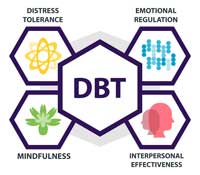
DBT teaches four core skill sets β Mindfulness, Distress Tolerance, Emotion Regulation, and Interpersonal Effectiveness β to help you navigate overwhelming emotions and build healthier relationships. Especially effective for borderline personality disorder, self-harm, and suicidal ideation.
EMDR (Eye Movement Desensitization and Reprocessing) is a gold-standard treatment for trauma and PTSD. It involves recalling disturbing memories while focusing on bilateral stimulation, helping your brain reprocess traumatic memories and reduce their emotional intensity. Effective for PTSD, Anxiety, Phobias, and other trauma-related conditions.
Exposure and Response Prevention (ERP) Therapy
ERP is the gold-standard, evidence-based treatment for OCD and related Anxiety Disorders. It involves gradually exposing you to feared thoughts or situations while helping you resist compulsive responses β breaking the OCD cycle and restoring your sense of control.
PE is a type of CBT used to treat PTSD and Anxiety disorders. It involves gradually confronting feared memories and avoided situations in a safe environment. Through repeated exposure, the anxiety associated with trauma triggers diminishes over time β helping you reclaim your life.
Other Therapy Techniques
Narrative Therapy: Encourages you to tell your story, helping you understand and reclaim your own experiences β including the stories of farm families under pressure, the disruption of the drilling era, the grief of watching a beloved community grow quieter and smaller, and the quiet endurance of people who have always handled everything themselves and are only now finding the space to set some of it down.
Somatic Experiencing: Focuses on your body's physical response to trauma and works to release stored tension β particularly valuable for farm workers and rural residents whose chronic physical labor and long-carried stress have normalized high levels of physiological burden that they no longer consciously register as distress.
Mindfulness and Relaxation Techniques: Meditation and deep breathing to help manage trauma-related stress and Anxiety β practices that can find natural resonance in the rhythms of Susquehanna County's agricultural seasons, its open landscapes, and the particular quality of quiet that defines life in the Endless Mountains.
Psychoeducation: Understanding trauma and its effects β including the patterns common in farm families, communities affected by environmental disruption, veterans, first responders, and individuals shaped by generational self-reliance and rural isolation β to help you make sense of your own experiences in clinical terms that feel honest and relevant.
Our Experienced Anxiety, Trauma, and PTSD Counselors
Our counselors are trained in Trauma-Informed Care and have extensive experience helping individuals heal from traumatic experiences β including the complex, quietly carried, and often unacknowledged trauma that shapes life in Susquehanna County, where self-reliance runs deep, help has always been hard to reach, and the people who most need care are often the last to ask for it.
Choose Susquehanna County's Anxiety, PTSD, and Trauma Experts
Specialized Expertise: Certified Traumatologists β not general counselors with long waitlists in Scranton. We treat trauma, PTSD, and anxiety as our primary focus, with advanced training and credentials to match.
No Commute Required: Secure telehealth brings Pennsylvania's best trauma specialists directly to your home in Montrose, Forest City, Susquehanna, Hallstead, New Milford, or anywhere in Susquehanna County β including the farming townships and border communities where specialized care has simply never been available.
Personalized Approach: We recognize that trauma in Susquehanna County takes many forms β from the environmental disruption of the drilling era to farm family hardship, from veteran service and first responder stress to domestic violence in total isolation, from the opioid crisis to the quiet grief of a community watching itself diminish. Your care plan reflects your unique experience.
Taking the first step toward healing takes real courage β especially in a county where self-reliance is not just a value but a survival skill, and where reaching out has always meant admitting to something the culture expects you to handle on your own. You deserve specialized care that respects that, meets you where you are, and comes to you on your own terms.
Contact us today to set up a free, confidential 10-minute consultation. We'll listen, answer your questions, and help you find the right path forward.
"Susquehanna County's people carry a particular kind of strength β and a particular kind of wound. The farm families, the veterans, the people who watched the drilling industry transform their land and then move on β every one of them deserves trauma care that truly sees what they've been through. Telehealth brings that care to their door, no matter where in the county they live."