Warren County, PA Online Anxiety, PTSD, and Trauma Therapy

EMDR, CBT, DBT, PE, Brainspotting and More

Online Anxiety, PTSD, and Trauma Counseling for Warren County, PA
Advanced Counseling and Research Services
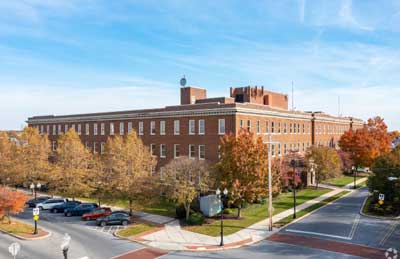
Advanced Counseling and Research Services Office
Office Location & Hours (Lancaster)
313 W Liberty St STE 224, Lancaster, PA 17603
Mon–Thu 9am–7pm | Fri 9am–5pm
Open in Google Maps
Anxiety/PTSD/Trauma Treatment Formats
Anxiety/PTSD/Trauma Therapy Modalities
Professional Accountability
Trauma Educational Services
Trauma Research Support
Clinical
Supervision
Online Anxiety, PTSD, and Trauma Counseling in Warren County, PA
Warren County β€” the Allegheny River city of Warren anchoring a county whose eastern half is defined by the Allegheny National Forest and the Kinzua Reservoir, whose working-class manufacturing heritage is as much a part of its identity as its spectacular natural landscape, and whose residents have always lived at a distance from the specialized clinical services available in Erie or Pittsburgh β€” carries a trauma burden shaped by deindustrialization, geographic isolation, and the specific psychology of a county that considers itself self-sufficient because it has always had to be. Every Warren County resident deserves access to Pennsylvania's most qualified trauma specialists. With telehealth, that access is here.

Warren County occupies the northwestern corner of Pennsylvania's Allegheny Plateau along the New York state border β€” a county of roughly 37,000 residents whose character is shaped by the convergence of two landscapes that rarely coexist so dramatically: the Allegheny River corridor, which flows south through the county from the New York border and creates the valley in which Warren city and most of the county's significant communities are situated; and the Allegheny National Forest, whose vast forested plateau fills the county's eastern half and defines the lives of residents in Tidioute, Sugar Grove, and the rural townships far from the river valley's modest commercial infrastructure.

Warren city is the county's commercial, governmental, and cultural center β€” a small city of around 9,000 residents whose handsome Victorian architecture documents the prosperity generated by the oil and lumber industries of the late nineteenth century and by the manufacturing base that developed in their wake. For much of the twentieth century, Warren was known for a cluster of significant industrial employers β€” Blair Corporation, the Struthers Wells Corporation, and others β€” that anchored the working-class economy of the Allegheny River valley and gave Warren a manufacturing identity that was more stable and more diversified than the purely extractive economies of neighboring counties. The contraction of that manufacturing base over recent decades has left Warren navigating the same post-industrial grief as the Shenango Valley communities to the south and west β€” but with the particular texture of a small city that was never as dramatically prosperous as Bradford or as catastrophically undone as Farrell, and that has consequently carried its economic decline with a quieter and less-acknowledged grief.

At Advanced Counseling and Research Services, our licensed trauma specialists bring evidence-based, certified trauma therapy directly to you through secure telehealth β€” so every Warren County resident can access Pennsylvania's highest-quality trauma care without the barriers of distance, the complications of the New York border, or the provider scarcity that has always characterized this corner of the state. From Warren city and Youngsville to Tidioute and the Sugar Grove farming community, you don't have to drive to Erie or Pittsburgh to find a certified traumatologist. Healing starts here.

The River City and the Forest β€” Warren County's Unmet Trauma Burden

Warren County's trauma burden combines the post-industrial grief of a manufacturing city in slow contraction, the extreme geographic isolation of its Allegheny National Forest communities, the specific complications of a New York border county, and a working-class Appalachian identity that has built its pride around managing without asking for help. Our certified clinical trauma professionals are trained to work with exactly these realities:

  • Manufacturing deindustrialization and the quiet grief of Warren city: Warren's working-class manufacturing economy β€” Blair Corporation, the industrial employers along the Allegheny River valley, the supply-chain and service industries organized around those anchors β€” contracted steadily through the late twentieth and early twenty-first centuries in a process less catastrophic than the Shenango Valley's steel collapse but no less psychologically real to the families who experienced it. The specific grief of a small industrial city watching its economic foundation shrink β€” the plant closures, the workforce reductions, the steady population loss from the peak years, the downtown commercial corridors that now serve fewer people than they were built for β€” is a clinically real and clinically underaddressed burden that accumulates across generations in communities that have never had the clinical infrastructure to name it. ACRS's certified clinical trauma professionals are specifically trained in post-industrial community grief and provide care that meets Warren County residents where their actual experience is.
  • The Allegheny National Forest and the isolation of the county's eastern communities: The Allegheny National Forest covers the great majority of Warren County's eastern half β€” a vast, forested plateau whose communities (Tidioute along the Allegheny River, Sugar Grove and the rural townships of the county's interior) live at a genuine clinical remove from even Warren's modest provider infrastructure. For these residents, the distance to specialized mental health care is not measured in the inconvenient minutes that urban Pennsylvanians experience but in the half-days and full days that rural Appalachian communities have always accepted as the cost of accessing specialized services. Telehealth removes that cost entirely β€” bringing Pennsylvania's best trauma specialists to the Allegheny National Forest community, in whatever home or device they're reaching from, without any drive at all.
  • The Kinzua Reservoir and the county's relationship to the Seneca Nation's displacement: The Allegheny Reservoir β€” created by the Kinzua Dam completed in 1965 β€” fills a significant portion of Warren County's eastern landscape along the border with McKean County. For Warren County residents, the reservoir is a recreational and scenic feature of daily life. For the Seneca Nation, whose Allegany Territory it flooded, it represents one of the most significant forced displacement events of the twentieth century β€” the destruction of communities guaranteed protection by the 1794 Canandaigua Treaty. Warren County residents who recreate on and around the Kinzua Reservoir inhabit a landscape whose current form is the direct result of a historical trauma whose human consequences extend to the present. ACRS serves all residents of Warren County including Seneca Nation community members, with the cultural competence and historical knowledge this community's specific experience requires.
  • Oil and lumber legacy β€” the long post-extractive shadow: Warren County's nineteenth-century prosperity was built on the same oil and lumber boom that defined the broader Pennsylvania Wilds region β€” the Allegheny River served as a primary transportation artery for the logs floated downstream from the forests of the plateau, and the county's early industrial development was financed by the wealth those industries generated. The contraction that followed when the extractable resources ran out left a landscape of communities that had been built for a larger population and a more resource-intensive economy than the twentieth century provided. That post-extractive inheritance β€” present in Warren's Victorian architecture, in the scale of its public buildings relative to its current population, in the specific texture of a place that was built for a different future β€” creates a chronic ambient grief that is rarely named clinically and never adequately addressed.
  • New York border and cross-state care complications: Warren County's position along the Pennsylvania-New York state line creates the same access complications present across the state's northern border counties. New York providers in Jamestown, Salamanca, or other communities near the border may be geographically closer to some Warren County residents than Pennsylvania providers in Erie or Pittsburgh β€” but New York-licensed practitioners cannot serve Pennsylvania residents via telehealth under current licensure requirements, and Pennsylvania insurance does not cover out-of-state providers. ACRS is licensed to serve all of Pennsylvania, and our telehealth platform reaches every Warren County resident without any cross-state complications.
  • The opioid and fentanyl epidemic across the Allegheny River valley and forest communities: Warren County has been touched by Pennsylvania's opioid epidemic in communities whose underlying conditions β€” unaddressed trauma, post-industrial economic anxiety, geographic isolation, the cultural prohibition on acknowledging difficulty β€” were already present before the epidemic's arrival. In Warren city, in Youngsville, in the county's smaller boroughs and rural townships, families have navigated overdose, addiction, and grief at rates the county's modest clinical infrastructure has never been equipped to address comprehensively. Recovery without treating underlying trauma consistently fails. ACRS's certified clinical trauma professionals address both, from wherever in Warren County you are.
  • Veteran and first responder trauma across a rural and forested county: Warren County's veteran population reflects the strong military service tradition of rural northwestern Pennsylvania β€” and its first responder infrastructure covers a territory ranging from Warren city's urban environment to the remote roads and forest communities of the Allegheny National Forest plateau, where the distances involved in emergency response create operating conditions that accumulate psychological cost over careers in ways that have never received adequate clinical acknowledgment. Telehealth provides specialized PTSD and trauma care for Warren County's veterans and first responders that is private, accessible from home, and available on a schedule that works for people whose service doesn't conform to business hours.
  • Domestic violence in communities defined by geographic and economic isolation: For domestic violence survivors in Warren County β€” in the river valley communities as well as the more isolated townships of the Allegheny National Forest β€” geographic distance from specialized services, small community social networks, and the economic dependencies created by limited employment options in a post-industrial county all intensify the barriers to accessing trauma-informed care. Telehealth provides a private, accessible path to specialized care that doesn't require any community visibility and doesn't depend on transportation infrastructure that many survivors cannot access safely.
  • Distance from Pennsylvania's clinical infrastructure: Warren County is approximately 115 miles from Pittsburgh and roughly 75 miles from Erie β€” close enough to neither that the drive to find a certified traumatologist in independent outpatient practice represents a significant commitment before and after the emotional demands of trauma work. Erie's clinical infrastructure is somewhat closer, but Erie's specialized outpatient trauma providers are concentrated in the city proper and are not easily accessible for Warren County residents managing working schedules and rural transportation realities. Telehealth closes that distance entirely.

ACRS's certified clinical trauma professionals are trained specifically to work with complex, layered trauma β€” not just acute single-event PTSD. Whether you are in Warren city, Youngsville, Tidioute, Sugar Grove, or any of the county's rural forest communities, we meet you where you are.

Mental Health Conditions We Treat

  • Anxiety Disorders & Panic
  • ADHD & ADD
  • Depression
  • Grief & Loss
  • Obsessive-Compulsive Disorder (OCD)
  • Phobias
  • Post-Traumatic Stress Disorder (PTSD)
  • Substance Use & Co-Occurring Disorders
  • Trauma β€” Single Event and Complex/Chronic
  • Veteran & First Responder PTSD

Why Warren County Residents Choose ACRS

Personalized, Trauma-Informed Care β€” Delivered to Your Home

We work collaboratively with you to develop a Trauma-Informed Care Plan that addresses your specific needs and goals.

Individual Treatment
Individual Trauma and PTSD Treatment

One-on-one sessions with a certified traumatologist β€” via secure video on your phone, tablet, or computer, from wherever you are in Warren County.

Group Treatment
Group Trauma and PTSD Treatment

Facilitated online sessions where you share your experiences and heal alongside others who understand β€” without leaving your home.

Online Telehealth
Telehealth Trauma and PTSD Treatment

Secure, HIPAA-compliant video therapy from the comfort and privacy of your own home β€” no drive to Erie or Pittsburgh, no cross-state complications at the New York border, no one in Warren who needs to know.

Concierge Counseling
Concierge Trauma and PTSD Counseling

A highly personalized, private approach to care with maximum flexibility and attention.

Veterans PTSD Support
Veteran PTSD Support Program

Specialized, compassionate PTSD care for Warren County veterans and active military families. You served β€” you deserve care that honors what you've been through, delivered directly to your home without the drive to Pittsburgh's VA facilities that has always been the only option from this corner of Pennsylvania.

First Responders

Warren County's firefighters, EMS professionals, and law enforcement officers serve a territory that ranges from Warren city's riverfront to the remote plateau communities of the Allegheny National Forest β€” encountering the full spectrum of rural and small-city trauma in a professional culture that has always treated acknowledgment of psychological cost as incompatible with the job. Our trauma specialists understand that culture and provide confidential, effective telehealth care on your schedule, without a waiting room and without anyone in your community who needs to know.

Survivors of Domestic Violence

Individuals With Substance Use Disorders

Why Telehealth Is the Right Choice for Warren County

Warren County occupies a particular position in the geography of northwestern Pennsylvania's clinical infrastructure: more developed than its immediate neighbors β€” McKean County to the east, Forest County to the south, Crawford County to the west β€” but still fundamentally rural, still far from the metropolitan clinical centers where specialized outpatient trauma providers are concentrated, and still shaped by a working-class culture that has always been more comfortable managing difficulty independently than seeking professional support for it.

The nearest certified clinical trauma professionals in independent outpatient practice are in Erie, roughly 75 miles to the northwest, or in Pittsburgh, roughly 115 miles to the south. For Warren County residents β€” particularly those in the Allegheny National Forest communities east of Warren city β€” neither is accessible on anything resembling a routine basis. The New York border adds a further complication: communities near the state line may find that the nearest geographically accessible providers are licensed in New York and legally unable to serve Pennsylvania residents via telehealth.

Telehealth eliminates all of these barriers. Here is what Warren County clients tell us they value about it:

  • No drive to Erie or Pittsburgh β€” your session takes place in your home, on your device, without the hours of travel that in-person specialized care has always required from Warren County.
  • No cross-state complications β€” ACRS is licensed to serve all of Pennsylvania, and your location near the New York border doesn't create coverage gaps.
  • Complete privacy β€” in a county as socially interconnected as Warren, being seen in a therapist's waiting room has real consequences in communities where everyone's business is everyone's business. Your telehealth session is known only to you.
  • Reliable access regardless of weather β€” Allegheny Plateau winters create road conditions that regularly make drive-in appointment attendance genuinely difficult. Your telehealth session is never canceled by a snowstorm on Route 6.
  • Sessions fit around shift work, manufacturing schedules, hunting seasons, and the practical demands of working life in a county where flexible time is not a given β€” including evenings through Thursday.
  • Access to Pennsylvania's best trauma specialists β€” certified clinical trauma professionals with advanced credentials in evidence-based trauma treatment that Warren County's own limited provider pool cannot match.
  • It works. Evidence-based telehealth therapy delivers outcomes fully comparable to in-person care for trauma, anxiety, and PTSD.

You must be physically located in Pennsylvania during your telehealth session. Our Lancaster office is approximately 310–325 miles from Warren city β€” and you are always welcome to visit us in person. But for most Warren County residents, telehealth is not merely a convenience. It is the most direct and most realistic path to specialized trauma care that has ever existed for this community.

ACRS Treatment Modalities for Anxiety, Trauma, and PTSD

Brainspotting Therapy

Brainspotting Therapy

Brainspotting operates on the principle that where you look affects how you feel. A therapist helps you identify "brainspots" β€” eye positions linked to stored emotional experiences or trauma in the brain. By maintaining focus on the brainspot while fostering mindfulness and connection, the brain processes and releases unresolved emotions at a profound neurobiological level.

Brainspotting is effective for PTSD, Anxiety, Depression, chronic pain, and performance issues β€” and is particularly well-suited to the layered, often quietly carried trauma of Warren County residents: the post-industrial grief of a manufacturing city whose contraction has never been given clinical language, the accumulated weight of geographic isolation in the Allegheny National Forest communities, the specific burdens of veteran and first responder service in a remote operating environment, and the particular psychology of a working-class community that has always defined its strength as the capacity to carry difficulty without complaint.

Cognitive Behavioral Therapy (CBT)

CBT Therapy

CBT is a short-term, goal-oriented psychotherapy that helps you identify and challenge unhelpful thought patterns and develop healthier coping mechanisms. It is highly effective for Anxiety, Depression, and PTSD β€” and its structured, practical approach resonates strongly with Warren County's working-class residents who value concrete results, direct engagement, and skills they can apply immediately in their daily lives without open-ended process. For veterans, first responders, and manufacturing workers especially, CBT's efficiency and practicality make it a natural fit.

Dialectical Behavior Therapy (DBT)

DBT Therapy

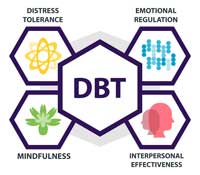
DBT teaches four core skill sets β€” Mindfulness, Distress Tolerance, Emotion Regulation, and Interpersonal Effectiveness β€” to help you navigate overwhelming emotions and build healthier relationships. Especially effective for borderline personality disorder, self-harm, and suicidal ideation.

EMDR Therapy

EMDR Therapy

EMDR (Eye Movement Desensitization and Reprocessing) is a gold-standard treatment for trauma and PTSD. It involves recalling disturbing memories while focusing on bilateral stimulation, helping your brain reprocess traumatic memories and reduce their emotional intensity. Effective for PTSD, Anxiety, Phobias, and other trauma-related conditions.

Exposure and Response Prevention (ERP) Therapy

ERP Therapy

ERP is the gold-standard, evidence-based treatment for OCD and related Anxiety Disorders. It involves gradually exposing you to feared thoughts or situations while helping you resist compulsive responses β€” breaking the OCD cycle and restoring your sense of control.

Prolonged Exposure Therapy (PE)

PE Therapy

PE is a type of CBT used to treat PTSD and Anxiety disorders. It involves gradually confronting feared memories and avoided situations in a safe environment. Through repeated exposure, the anxiety associated with trauma triggers diminishes over time β€” helping you reclaim your life.

Other Therapy Techniques

  • Narrative Therapy: Encourages you to tell your story, helping you understand and reclaim your own experiences β€” including the stories of Warren city families that have watched the industrial base their parents and grandparents built their lives around shrink decade by decade, without a clinical space to name what that watching costs; of Allegheny National Forest community members whose daily lives are shaped by a remote and beautiful landscape that the rest of Pennsylvania rarely visits and never thinks about; of veterans who came home to a county that honored their service without anything specialized to offer them in return; and of working-class residents who have spent their lives carrying the weight of a culture that has always equated endurance with worth and struggling with weakness.
  • Somatic Experiencing: Focuses on your body's physical response to trauma and works to release stored tension β€” particularly valuable for manufacturing workers and first responders whose years of physically demanding labor and high-alert service have normalized stress states that don't resolve at the end of a shift; for veterans whose bodies carry the physical residue of service in ways that talk therapy alone doesn't always reach; and for anyone whose history of carrying difficulty quietly in a community that doesn't make room for acknowledgment has left their nervous system in a state of chronic vigilance without a clinical outlet.
  • Mindfulness and Relaxation Techniques: Meditation and deep breathing to help manage trauma-related stress and Anxiety β€” practices that can be grounded in the particular landscape Warren County residents already inhabit: the Allegheny River's movement through Warren city and the valley communities, the Kinzua Reservoir's expanse in the county's eastern forest, the deep seasonal rhythms of the Allegheny National Forest plateau, and the particular stillness of the county's rural interior that is, for those with a clinical framework to access it, a genuine foundation for mindfulness practice rooted in where Warren County residents actually live.
  • Psychoeducation: Understanding trauma and its effects β€” including the specific patterns of post-industrial manufacturing community grief, the intergenerational transmission of economic anxiety across working-class families navigating deindustrialization, opioid loss in rural Appalachian communities, the occupational trauma of first responders and veterans in remote and challenging service environments, the psychological burden of geographic isolation, and the specific dynamic of a county whose self-sufficient identity has always made seeking help feel like a concession β€” to help you understand your own experience in terms that are honest, specific, and genuinely applicable to your life in Warren County.

Our Experienced Anxiety, Trauma, and PTSD Counselors

Our counselors are trained in Trauma-Informed Care and have extensive experience helping individuals heal from traumatic experiences β€” including the specific and layered trauma of Warren County life: the manufacturing families of the Allegheny River valley navigating the quiet grief of deindustrialization, the Allegheny National Forest communities whose isolation has always been mistaken for self-sufficiency, the veterans and first responders whose service to this county has never been matched by adequate clinical support in return, and the residents of a corner of Pennsylvania that has always been too far from the state's clinical centers to have its specialized needs adequately met.

Cheryl Wilson-Smith
Chief Executive Officer
Cheryl Wilson-Smith, MA, LPC – Chief Clinical Officer and trauma expert
  • Licensed Professional Counselor (LPC)
    • Pa. Lic. PC006514
    • Fl. Lic. TPMC1044
  • Certified Traumatologist (CT)
  • National Certified Counselor (NCC)
  • Certified Clinical Mental Health Counselor (CCMHC)
  • Certified Clinical Trauma Professional (CCTP)
  • Certified in Emergency Crisis Response (CECR)
  • Neuropsychotherapist Certified (NPT-C)
  • Master of Arts (MA)
  • 20+ years of clinical experience.
  • Worked with clients across the lifespan.

Read Cheryl's Profile

Cheryl Wilson-Smith's LinkedIn Profile
Cady R. Monasmith
Chief Clinical Officer
Cady Monasmith, MA, LPC – Licensed trauma and DBT therapist
  • Licensed Professional Counselor (PA-015668)
  • Certified Dialectical Behavioral Therapist (C-DBT)
  • Certified Clinical Trauma Professional (CCTP)
  • Certified Dancing Mindfulness Facilitator (CDMF)
  • Bachelor of Fine Arts (BFA)

Read Cady's Profile

Kim Civitarese
Chief Administrative Officer
Trauma Therapist Kim Civitarese
  • Licensed Associate Professional Counselor (LAPC)
  • Cognitive Processing Therapist (CPT)
    Pre-licensed Clinician
  • Certified Grief Informed Professional (CGP)

Experience working with adolescents, couples, the elderly population, blended families, and families in the adoption process.

Read Kim's Profile

Jason Houghton
Psychiatric Mental Health Nurse Practitioner
Jason Houghton, CRNP
  • Psych/Mental Health Nurse Practitioner Education β€” Johns Hopkins University
  • CRNP License: SP025306
  • RN License: RN606119
  • MSN β€” Duquesne University
  • BSN β€” Messiah University

Read Jason's Profile

Kailee Morgan
Clinician
Kailee Morgan, MSW, LAPC
  • Master of Social Work (MSW)
  • Licensed Associate Professional Counselor (LAPC)

Specializes in anxiety, ADHD & ADD, and depression.

Read Kailee's Profile

Choose Warren County's Anxiety, PTSD, and Trauma Experts

  • Specialized Expertise: Certified Traumatologists with advanced credentials in evidence-based trauma treatment β€” EMDR, Brainspotting, CBT, DBT, Prolonged Exposure, and more β€” including specific expertise in post-industrial manufacturing community grief, the intergenerational transmission of economic anxiety in working-class Appalachian communities, veteran and first responder PTSD in rural and remote service environments, opioid loss, and the particular cultural dynamics of help-seeking in a county whose self-sufficient identity has always been both a genuine strength and a barrier to accessing care. We treat trauma as our primary focus, with depth that no generalist provider can match.
  • No Drive to Erie or Pittsburgh β€” No Cross-Border Complications: Secure telehealth brings Pennsylvania's best trauma specialists directly to your home β€” in Warren city, Youngsville, Tidioute, Sugar Grove, North Warren, or any community in the Allegheny National Forest. Your location near the New York border and far from Pennsylvania's metropolitan clinical centers does not determine your access to care.
  • Privacy Without Community Visibility: Warren County is a community where people know each other β€” where being seen in the right waiting room carries social meaning and where help-seeking has always required navigating the visibility of small-city social networks. Your telehealth session takes place in your home, on your device, with no community visibility whatsoever. For many Warren County residents, that privacy is the difference between seeking care and not seeking it at all.

Warren County has always known how to take care of itself β€” in the specific way that working-class manufacturing communities and Appalachian forest towns have always meant that phrase: with the practical competence, neighbor-to-neighbor solidarity, and genuine resilience that comes from living in a place that has never had more institutional support than it absolutely required. That resilience is real. It has sustained Warren County through everything the twentieth century brought. And some of what it brought has produced wounds β€” in families, in veterans, in first responders, in working-class communities navigating the slow loss of what they were built around β€” that resilience alone does not heal. Specialized trauma care does. That care is available now, from wherever in Warren County you are.

Contact us today for a free, confidential 10-minute consultation. We'll listen, answer your questions, and help you find the right path forward β€” from wherever in Warren County you are.

Contact Us Online or

Call Us at 717-394-3994

Cheryl Wilson-Smith
Chief Executive Officer

Cheryl has over 20 years of experience providing the highest-quality trauma and PTSD therapy to clients across Pennsylvania β€” including the working-class manufacturing and forest communities of northwestern Pennsylvania, where the distance to specialized care has always been real and the cultural expectation of self-sufficiency has always made seeking help feel like something that requires more justification than it should. Telehealth reaches Warren County β€” completely, effectively, and on terms that the Allegheny River valley and the Allegheny National Forest communities can actually accept.

Cheryl Wilson-Smith, Chief Clinical Officer β€” Trauma and PTSD Specialist
  • Licensed Professional Counselor (LPC)
    • Pa. Lic. PC006514
    • Fl. Lic. TPMC1044
  • Certified Traumatologist (CT)
  • National Certified Counselor (NCC)
  • Certified Clinical Mental Health Counselor (CCMHC)
  • Certified Clinical Trauma Professional (CCTP)
  • Certified in Emergency Crisis Response (CECR)
  • Neuropsychotherapist Certified (NPT-C)
  • Master of Arts (MA)
  • 20+ years of clinical experience.
  • Worked with clients across the lifespan.

Read Cheryl's Profile

"Warren County is a place that has always taken care of itself β€” and paid the price of that quietly, in the way that working-class communities pay for self-sufficiency, carrying things that specialized care could address without ever quite having that care within reach. The manufacturing families of the Allegheny River valley. The communities in the Allegheny National Forest that the rest of Pennsylvania visits and doesn't think about. The veterans and first responders who served this county with almost nothing offered in return. Every one of them deserves the best trauma care in Pennsylvania β€” brought to their door, without the drive, without the complications, and without asking them to pretend they don't need what they've always needed."

β€” Cheryl Wilson-Smith
Cheryl Wilson-Smith's LinkedIn Profile

Take the First Step – Contact Us Today

Secure & Confidential β€’ Free 10-minute consultation