Wyoming County's communities β from Tunkhannock along the North Branch Susquehanna to Meshoppen, Nicholson, Factoryville, and the farming townships of the Endless Mountains foothills β deserve specialized trauma care delivered by Pennsylvania's most qualified traumatologists. With telehealth, that care comes directly to you.
Wyoming County occupies a narrow corridor in northeastern Pennsylvania, defined by the North Branch of the Susquehanna River as it flows south through the county toward the Wyoming Valley. It is one of Pennsylvania's smallest and most rural counties β bounded by Susquehanna County to the north, Luzerne County to the south and east, and Sullivan and Lackawanna Counties to the west. Its county seat, Tunkhannock, is a small borough of a few thousand people that serves as the county's commercial and civic anchor. Scattered along the river valley and across the forested ridges above it are the county's other communities: Meshoppen, Nicholson, Factoryville, Laceyville, Mehoopany, and dozens of townships and villages whose populations are measured in hundreds rather than thousands.
Wyoming County is a place where the landscape has always shaped the rhythms of daily life β where farming families have worked the same valley bottomland for generations, where the river defines both the geography and the history, and where the distance from larger cities has always meant doing more with less. It is also a county that experienced significant disruption during the Marcellus Shale natural gas drilling era, when the industrialization of its rural landscape created economic divisions, environmental anxieties, and community tensions that its residents are still navigating. And it sits directly in the flood shadow of the North Branch Susquehanna: Wyoming County communities bore the brunt of both the devastating 1972 Agnes Flood and subsequent flooding events that have repeatedly reminded residents that the river which defines the valley can also destroy it.
At Advanced Counseling and Research Services, our licensed trauma specialists bring evidence-based, certified trauma therapy directly to you through secure telehealth β so you can access the highest-quality care available in Pennsylvania without a long drive to Scranton or Wilkes-Barre. From Tunkhannock to the county's most remote ridge-top farm, we meet you where you are.
You don't have to leave Wyoming County to find a certified clnical trauma professional. Healing starts here.
River, Ridge, and Resilience β Wyoming County's Unmet Trauma Burden
Wyoming County's communities carry real and specific burdens that general counseling approaches rarely recognize or reach. Our certified clinical trauma professionals are trained to work with exactly this kind of complex, place-shaped trauma:
Flood trauma β a valley that has been underwater more than once: The North Branch Susquehanna is not a passive presence in Wyoming County life. Hurricane Agnes in June 1972 sent the river surging through the valley in what remains one of the most devastating natural disasters in Pennsylvania's recorded history, flooding Tunkhannock and communities throughout the county, destroying homes, displacing families, and severing the sense of safety and permanence that had sustained the valley's communities for generations. Agnes was not the last flood: subsequent events in 2004, 2006, and 2011 revisited the valley with damaging high water, each time reopening the psychological wounds of the previous disaster for residents who had rebuilt and resumed their lives along the same riverside land their families had always farmed and lived. Flood trauma of this kind β acute in the moment, renewed with every subsequent event, and layered with the grief of repeated loss β is a specific clinical reality for Wyoming County families that ACRS's certified clinical trauma professionals are trained to recognize and treat. The anticipatory anxiety alone β the dread that rises with every heavy rain and rising river gauge β is a form of chronic psychological burden that deserves clinical attention.
The Marcellus Shale drilling era β land transformed, communities divided: Wyoming County sits in the heart of Pennsylvania's most productive Marcellus Shale territory, and the natural gas drilling boom that transformed the region beginning around 2008 hit the county with particular force. Mehoopany and the townships along the river corridor became centers of drilling activity, and the industrialization of what had been agricultural and forested land reshaped the county's landscape, economy, social relationships, and psychological environment in ways that are still unfolding. Families who leased found themselves neighbors to those who hadn't, creating fractures in tight-knit communities. Water well contamination fears were real and in some cases documented. The constant presence of truck traffic, compressor stations, pipeline construction, and industrial activity on land that had been quiet for generations created chronic sensory stress and environmental anxiety. When drilling activity slowed, the economic benefit contracted while the altered landscape remained. The wound of watching a place you love transformed by forces largely outside your control β and then navigating the community divisions and environmental uncertainties that persist afterward β is a form of trauma that requires specialized clinical attention.
Agricultural stress and the slow erosion of farm family stability: Wyoming County's valley floor and lower ridges support active dairy and crop farming that has sustained families for multiple generations. The financial pressures bearing down on Pennsylvania farm families β sustained low milk prices and repeated dairy price crises, rising operating costs, land succession challenges as aging farmers confront the question of what happens to the farm, and the relentless physical and psychological demands of agricultural work β create chronic stress that rarely receives clinical recognition. Farm families in Wyoming County are geographically isolated, culturally expected to manage their own burdens, and deeply unlikely to seek help from outside professionals even when the psychological weight they carry is genuinely clinical in nature. The accumulation of financial worry, physical exhaustion, succession anxiety, and community pressure creates a burden that compound trauma care is uniquely positioned to address.
Profound geographic isolation and the near-total absence of specialized mental health care: Wyoming County has no hospital. Its single most important healthcare anchor β Tyler Memorial Hospital in Tunkhannock β closed in 2018, leaving the county without inpatient medical services of any kind. Residents now travel to Scranton or Wilkes-Barre for hospital care β each roughly 30 to 45 minutes from Tunkhannock under good conditions, and significantly farther for those in the county's northern townships near the Susquehanna County line. Specialized mental health care, and certified trauma treatment in particular, is effectively absent within the county. For residents in Eaton, Windham, Forkston, or the county's western mountain communities, even reaching Tunkhannock requires a meaningful drive on rural roads that become hazardous in winter. Telehealth is not a preference for these residents β it is the only realistic path to the quality of care they deserve.
The opioid and fentanyl crisis in a county without treatment infrastructure: Wyoming County has not been spared Pennsylvania's opioid epidemic. The convergence of rural economic precarity, social isolation, limited healthcare access, and the psychological disruptions of the drilling era created conditions in which addiction took root in communities with almost no treatment infrastructure to respond. Every Wyoming County family touched by overdose carries grief and unresolved trauma that requires specialized clinical care. The loss of Tyler Memorial Hospital removed the county's only local point of inpatient stabilization, making the already-inadequate treatment landscape even more fragmented.
Veteran and first responder trauma in a county that expects its people to endure: Wyoming County's veteran population reflects the deep military service tradition of northeastern Pennsylvania's working-class and farming communities, and the county's volunteer fire, EMS, and emergency services cover a large rural area with small departments responding to people they have known for decades. The combination of that personal familiarity with those in crisis, the absence of critical incident support infrastructure, and a community culture that prizes stoic endurance over emotional acknowledgment creates conditions in which the cumulative psychological toll of emergency service and military service accumulates unreported and untreated. Specialized PTSD care for veterans and first responders is effectively unavailable locally without telehealth.
Domestic violence in total geographic and social isolation: Wyoming County's combination of geographic remoteness, the closure of Tyler Memorial Hospital, limited public transportation, small and interconnected social networks, and a cultural expectation that family difficulties stay within the family creates severe barriers for domestic violence survivors. Resources in Scranton or Wilkes-Barre are accessible in distance but not always in practice β for a survivor without reliable transportation or the ability to leave home without being noticed in a small county where everyone knows everyone, that distance is absolute. Telehealth provides a path to trauma-informed care that can be accessed privately, from home, without any of the visible steps that in-person help requires.
The grief of hospital loss and the collapse of institutional trust: The 2018 closure of Tyler Memorial Hospital was not simply a logistical inconvenience. For a rural county that had organized its healthcare expectations around that institution, its loss represented a form of institutional abandonment β the removal of a community anchor that had been a source of security and identity as well as medical care. That kind of institutional loss, particularly for elderly residents and for families who had relied on the hospital across generations, carries a grief and a sense of vulnerability that is rarely acknowledged in clinical terms. ACRS's certified clinical trauma professionals recognize institutional loss as a genuine trauma trigger and are trained to work with clients navigating the specific anxiety and grief it creates.
Cultural barriers to care in a county built on self-reliance: Wyoming County's cultural identity β shaped by agricultural self-sufficiency, close-knit community norms, religious faith, and a deep-seated skepticism toward outside institutions β creates significant barriers to seeking mental health care. In a county where neighbors notice who parks outside which office and where reputation matters, the act of driving to a therapist's office carries social exposure that many residents are unwilling to accept. Telehealth, accessed at home in complete privacy, removes that barrier without requiring anyone to compromise the values and community relationships they have built their lives around. ACRS's certified clinical trauma professionals are experienced in working respectfully with clients whose cultural context makes reaching out one of the most significant things they have ever chosen to do.
ACRS's certified clinical trauma professionals are trained specifically to work with complex, layered trauma β not just acute single-event PTSD. We meet you where you are.
Specialized, compassionate PTSD care for Wyoming County veterans and active military families. You served β you deserve care that understands what you've been through.
First Responders
Wyoming County's volunteer firefighters and EMS crews cover an expansive rural area β responding to people they have known all their lives, on roads that become treacherous in winter, with small departments and no critical incident support infrastructure. Our trauma specialists understand the cumulative psychological weight of that work and provide confidential, effective telehealth care on your schedule, from your home.
Survivors of Domestic Violence
Individuals With Substance Use Disorders
Why Telehealth Works β Especially in Wyoming County
Wyoming County lost its only hospital in 2018 when Tyler Memorial in Tunkhannock closed. The county's residents already knew what it meant to be far from specialized care β but that closure made the reality impossible to ignore. Scranton is approximately 30 to 40 minutes south via Interstate 81 for residents near Tunkhannock, and considerably farther for those in the county's northern and western townships along Route 6 and the Susquehanna County border. Wilkes-Barre is similarly distant to the southeast. Lancaster β home to ACRS β is approximately 120β135 miles from Tunkhannock via Interstate 81 and Interstate 78 or the Northeast Extension of the Pennsylvania Turnpike.
Telehealth removes those barriers completely. With today's secure video technology, your session with an ACRS certified traumatologist is every bit as effective and connected as being in the same room. You see your therapist's face. They see yours. The therapeutic relationship is real β and so are the results.
Here's why Wyoming County clients tell us they value telehealth:
No long drive on Route 6, Route 29, or Interstate 81 before or after a difficult session β roads that become dangerous in the county's hard winters.
Sessions fit around your farm schedule, work schedule, and family commitments β including evenings through Thursday.
You're in your own home β your own comfortable, private space, away from a county where everyone knows everyone and confidentiality in a small town office is never guaranteed.
You have access to Pennsylvania's best trauma specialists β certified clinical trauma professionals with advanced credentials, not general therapists with long waitlists in Scranton.
No need to cross a flooding-prone river valley to get to an appointment β telehealth is available in any weather, on any road condition.
It works. Evidence-based telehealth therapy delivers outcomes comparable to in-person care for trauma, anxiety, and PTSD.
You must be physically located in Pennsylvania during your telehealth session. Our Lancaster office is approximately 120β135 miles from Tunkhannock, and you are always welcome to visit us in person if you prefer.
ACRS Treatment Modalities for Anxiety, Trauma, and PTSD
Brainspotting operates on the principle that where you look affects how you feel. A therapist helps you identify "brainspots" β eye positions linked to stored emotional experiences or trauma in the brain. By maintaining focus on the brainspot while fostering mindfulness and connection, the brain processes and releases unresolved emotions at a profound neurobiological level.
Brainspotting is effective for PTSD, Anxiety, Depression, chronic pain, and performance issues β and is particularly well-suited to the layered, place-rooted trauma of Wyoming County communities shaped by repeated flood events, the disruptions of the drilling era, farm family stress, the loss of institutional anchors, and the long practice of carrying everything quietly that has been the cultural expectation in this valley for as long as anyone can remember.
CBT is a short-term, goal-oriented psychotherapy that helps you identify and challenge unhelpful thought patterns and develop healthier coping mechanisms. It is highly effective for Anxiety, Depression, and PTSD β and its structured, practical approach resonates especially well with clients who value concrete, measurable progress over open-ended conversation.
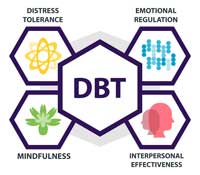
DBT teaches four core skill sets β Mindfulness, Distress Tolerance, Emotion Regulation, and Interpersonal Effectiveness β to help you navigate overwhelming emotions and build healthier relationships. Especially effective for borderline personality disorder, self-harm, and suicidal ideation.
EMDR (Eye Movement Desensitization and Reprocessing) is a gold-standard treatment for trauma and PTSD. It involves recalling disturbing memories while focusing on bilateral stimulation, helping your brain reprocess traumatic memories and reduce their emotional intensity. Effective for PTSD, Anxiety, Phobias, and other trauma-related conditions.
Exposure and Response Prevention (ERP) Therapy
ERP is the gold-standard, evidence-based treatment for OCD and related Anxiety Disorders. It involves gradually exposing you to feared thoughts or situations while helping you resist compulsive responses β breaking the OCD cycle and restoring your sense of control.
PE is a type of CBT used to treat PTSD and Anxiety disorders. It involves gradually confronting feared memories and avoided situations in a safe environment. Through repeated exposure, the anxiety associated with trauma triggers diminishes over time β helping you reclaim your life.
Other Therapy Techniques
Narrative Therapy: Encourages you to tell your story, helping you understand and reclaim your own experiences β including the stories of flooding and rebuilding, of watching land transformed by industry, of farm families that kept going through years of hardship, and of the quiet grief of people who stayed in a place they love and carried its weight without anyone ever asking how they were doing.
Somatic Experiencing: Focuses on your body's physical response to trauma and works to release stored tension β particularly valuable for flood survivors, farm workers, and first responders whose bodies have been carrying the physiological signatures of chronic stress and acute trauma for years without clinical acknowledgment.
Mindfulness and Relaxation Techniques: Meditation and deep breathing to help manage trauma-related stress and Anxiety β practices that can be grounded in the rhythms of the river valley, the agricultural seasons, and the particular quality of presence that comes from living close to the land.
Psychoeducation: Understanding trauma and its effects β including the specific patterns associated with natural disaster, repeated flooding, environmental disruption, farm family stress, institutional loss, and the cumulative burden of rural self-reliance β to help you make sense of your own experiences in clinical terms that feel honest and applicable to your life.
Our Experienced Anxiety, Trauma, and PTSD Counselors
Our counselors are trained in Trauma-Informed Care and have extensive experience helping individuals heal from traumatic experiences β including the layered, place-shaped, and often unacknowledged trauma that defines life in Wyoming County's river valley communities, where the land and the people have both endured more than they've ever been given credit for.
Choose Wyoming County's Anxiety, PTSD, and Trauma Experts
Specialized Expertise: Certified Traumatologists β not general counselors with long waitlists in Scranton or Wilkes-Barre. We treat trauma, PTSD, and anxiety as our primary focus, with advanced training and credentials to match.
No Commute Required: Secure telehealth brings Pennsylvania's best trauma specialists directly to your home in Tunkhannock, Meshoppen, Nicholson, Factoryville, Laceyville, or anywhere in Wyoming County β including the farming townships and remote ridge communities where specialized care has simply never existed locally.
Personalized Approach: We recognize that trauma in Wyoming County takes many forms β from repeated flood events and the drilling era's disruptions to farm family hardship, the loss of Tyler Memorial Hospital, veteran and first responder stress, and the particular weight of carrying everything quietly in a place where that has always been the expectation. Your care plan reflects your unique experience.
Taking the first step toward healing takes real courage β especially in a county that has always taken pride in resilience, and where asking for help can feel like an admission that the resilience everyone expects of you has its limits. It does have limits. Every person does. You deserve specialized care that meets you in that honest place, on your own terms.
Contact us today to set up a free, confidential 10-minute consultation. We'll listen, answer your questions, and help you find the right path forward.
Cheryl has over 20 years of experience providing the highest-quality trauma and PTSD therapy to clients across Pennsylvania β including those in river valley communities that have rebuilt after flooding, farming families that have never told anyone how hard it really is, and people whose county lost its hospital and was left to manage on its own, because that is what Wyoming County has always done.
"Wyoming County's people have rebuilt after floods, watched their land change during the drilling years, and lost their hospital β and through all of it, they kept going. That kind of strength is real. So is the wound underneath it. Every person in this valley deserves trauma care that sees both. Telehealth brings that care to their door."