Brainspotting Therapy (BSP)
Advanced trauma therapy using eye positions to access and release deep emotional pain.


“ACRS Trauma-Informed Care specialists can — and will — walk with you toward healing…”
Everyone experiences anxiety or trauma at some point in life. For some, it turns into PTSD after a terrifying or life-changing event. Your experience is unique—and valid.
How it affects you depends on your story, your strength, and the support around you. The good news? Healing is possible—and you don’t have to do it by yourself.
We do understand what you’re going through.
And we can—and will—help you reclaim your life.
No pressure • No cost • Just real help when you’re ready
Our office is conveniently located near:
Taking the first step toward healing can be daunting, but you don’t have to do it alone. We are here to guide you through the process.
Contact us today to set up an initial consultation. We’ll discuss your needs and determine your best path forward.
Whether you’re in Lancaster city, Lititz, Ephrata, Manheim, Columbia,
or anywhere across Lancaster County — we’re here for you.
or call us directly
(717) 394‑3994No pressure • Free 10-minute phone consult • Same or next-day replies


PTSD — Post-Traumatic Stress Disorder — is a condition that can develop after living through or witnessing something deeply frightening, dangerous, or life-threatening.
While many people think of veterans or first responders, PTSD can affect anyone — survivors of assault, accidents, childhood trauma, sudden loss, or any overwhelming event.
Not everyone who experiences trauma develops PTSD, but when it does appear, it often shows up in four gentle clusters:
When people express a desire to eliminate Anxiety, PTSD, or Trauma, they often articulate a range of feelings, thoughts, and hopes. Here are common themes and sentiments. Do they apply to you?
“I just want to feel normal again,” or “I want to move on with my life without this pain.”
“I’m tired of feeling this way,” or “I want to stop reliving the past.”
“I believe I can overcome this,” or “I want to find peace and happiness again.”
“I want others to understand what I’ve been through,” or “I wish people would stop telling me to just get over it.”
“I want to take back my life,” or “I want to stop feeling like a victim.”
“I want to put this behind me,” or “I need to find a way to let go of the past.”
“I need help to get through this,” or “I wish I had someone to talk to who understands.”
We do understand how you’re feeling, and we’re here to help you.
We can help you.


Watch this video to find out:
We use gentle, research-proven approaches that help calm the lasting effects of anxiety, PTSD, and trauma — so you can feel safe and in control again.
These evidence-based therapies have been carefully studied and shown to truly help people heal — not just manage symptoms, but actually move forward.
While some techniques work beautifully for anxiety, others are especially powerful for trauma or PTSD. The best path is different for everyone — which is why we take time to listen and choose (or gently combine) the approaches that fit you. See how we approach anxiety, PTSD, and trauma therapy across Pennsylvania — in person in Lancaster or by secure telehealth.
Ready to discover what will work best for you?
Call 717-394-3994 for a Free 10-Minute Consultation
No pressure • Just a calm conversation • We’re here when you’re ready

We meet you exactly where you feel most comfortable —
in our quiet Lancaster office or from the safety of your own home.
In-person or secure video sessions on your phone, tablet, or computer.

A small, supportive group where you can share your story, listen to others, and heal together — in a safe, guided space.

Healing from the comfort and safety of wherever you feel most at ease — your home, your car, your favorite quiet corner.
Secure video sessions on your phone, tablet, or computer — whenever you’re ready.

A deeply personal, one-on-one experience designed entirely around you — your pace, your needs, your privacy, and your comfort.
More time, more attention, and a quiet, tailored space where healing can truly unfold.

To every veteran carrying the weight of service — we see you, we honor you, and we’re here to help you heal.
Compassionate, trauma-specialized care designed for the unique challenges of military-related PTSD — in-person or from the safety of home.
To every first responder carrying the weight of the badge, the helmet, and the call — we see you, we honor you, and we’re here to help you heal.
Compassionate, trauma-specialized care designed for the unique challenges of first responder PTSD — in-person or from the safety of home.
To every survivor of domestic violence who has survived the nightmare no one else could see — we see you, we believe you, and we’re here to help you reclaim your life and heal.
Compassionate, trauma-informed care specially designed for the complex trauma of domestic violence, emotional abuse, and PTSD — available in-person or virtually from the safety of your home.
To every person battling substance use who feels trapped by addiction, guilt, and the pain beneath it all — we see you, we believe recovery is possible, and we’re here to help you heal at your own pace.
Compassionate, trauma-informed care specially designed for substance use disorders and the underlying trauma that often fuels them — available in-person or virtually from the safety and privacy of home.
Advanced trauma therapy using eye positions to access and release deep emotional pain.
Brainspotting is built on a simple, powerful truth: where you look affects how you feel.
Together, we gently find the exact spot in your field of vision that connects to an old hurt or overwhelming feeling. When you rest your gaze there — with my quiet support — your brain naturally begins to process and release what’s been stuck, often without having to relive every detail.
It works deep in the parts of the brain that hold emotion and memory, which is why so many people experience profound relief from PTSD, anxiety, depression, chronic pain, and even performance blocks.
Brainspotting is deeply respectful of your pace and your inner wisdom. There’s no pressure to talk, perform, or “figure it out.” You just need to show up exactly as you are — children, teens, and adults all respond beautifully.
Many people leave their very first session feeling lighter, calmer, and more like themselves again.
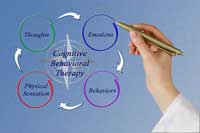
Evidence-based therapy to change negative thought patterns and behaviors.
Cognitive Behavioral Therapy (CBT) is one of the gentlest, most proven ways to quiet the anxious mind.
It starts with a simple truth: the thoughts that race through your head directly shape how you feel and act. When those thoughts are harsh, fearful, or stuck on “what if,” they can keep anxiety alive — even when there’s no real danger.
Together, we look at those thoughts with curiosity instead of judgment. We test them gently, reframe them kindly, and practice new ways of responding — small steps that add up to big relief.
CBT is practical, short-term, and deeply respectful of your pace. Many people notice less worry, fewer panic attacks, and a calmer nervous system in just weeks.
You don’t have to believe everything your anxious mind tells you — and we’ll prove it, one gentle step at a time.
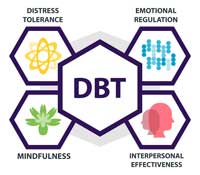
Skills-based therapy to manage intense emotions, reduce self-harm, and improve relationships.
Dialectical Behavioral Therapy (DBT) was created for people whose emotions feel too big, too fast, or too painful to carry alone.
It rests on a simple, powerful idea: you don’t have to choose between accepting yourself exactly as you are and growing into the person you want to become. You can hold both truths at once.
In DBT, you learn four life-changing skills — mindfulness, riding out intense feelings without making things worse, calming and balancing emotions, and communicating in ways that protect relationships and your own heart.
It’s especially gentle and effective for those who struggle with overwhelming emotions, borderline personality experiences, self-harm, or suicidal thoughts — many people say they finally feel understood and equipped for the first time.
You deserve to feel safe inside your own skin — and DBT helps make that possible, one kind, doable step at a time.

Our Dialectical Behavior Therapy (DBT) Skills Groups are small, supportive circles where you learn to hold your emotions gently, ride out the hardest moments, and connect with others in healthier ways.
Alongside your individual therapy, these weekly groups give you a safe place to practice mindfulness, emotion regulation, distress tolerance, and interpersonal effectiveness — with people who truly understand.
A spot is waiting for you — whenever you feel ready.

Gold-standard trauma therapy using bilateral stimulation to reprocess distressing memories.
EMDR — Eye Movement Desensitization and Reprocessing — is one of the gentlest, most powerful ways to help your brain finally release old pain.
You don’t have to talk through every detail. While you gently hold a difficult memory in mind, we use simple bilateral stimulation — side-to-side eye movements, soft taps, or quiet tones — to help your brain reprocess what happened in a safe, natural way.
Over a few sessions, the memory loses its sharp emotional charge. The nightmares fade, the body relaxes, and the old beliefs (“I’m not safe,” “It was my fault”) quietly shift into something truer and kinder.
Many people find EMDR especially helpful for:
→ EMDR for Phobias
→ and many other stuck places
Most people feel noticeably lighter, calmer, and more like themselves again — often after just a handful of sessions.
Exposure and Response Prevention (ERP) is the gold-standard, most effective treatment for Obsessive-Compulsive Disorder (OCD) and related anxiety struggles.
Instead of running from the thoughts that scare you, we gently walk toward them — together, at your pace, in a completely safe way — while learning not to do the compulsions that keep the cycle alive.
Each small, brave step teaches your brain a new truth: “I can handle this feeling without my ritual.” Over time, the obsessions lose their power, the anxiety drops, and life starts to feel spacious again.
ERP is always done with a trained therapist who truly understands OCD — someone who will never push, only guide, cheer, and keep you safe while you reclaim the freedom the obsessions stole.
Most people feel real, lasting relief in weeks — not years — and finally get their life back.

Evidence-based PTSD treatment using gradual exposure to reduce fear and avoidance.
Prolonged Exposure (PE) is one of the most effective, research-proven ways to help PTSD finally lose its grip.
Instead of staying away from the memories and places that feel unsafe, we gently — and only when you’re ready — begin to face them together, in the safest possible way.
You’ll revisit the memory in small, manageable pieces while I stay right beside you, and we’ll also practice stepping back into real-life situations you’ve been avoiding. Each time, your brain learns a new truth: “I can remember this and still be okay.”
Over just a few months, the flashbacks soften, the nightmares fade, and the world starts to feel safe again. You get your freedom back — one brave, supported step at a time.
Most people finish PE feeling lighter, calmer, and truly ready to live again.
Advanced Counseling and Research Services provides support for Trauma, Anxiety, Depression, PTSD, OCD, and other mental health concerns.
Psychotraumatology is the study of psychological trauma, focusing on the emotional and psychological effects of traumatic experiences.
Traumatology is the study, diagnosis, and treatment of physical injuries and wounds caused by trauma, such as accidents, violence, or natural disasters.
To find out more, click Psychotraumatology vs Traumatology
You can visit our homepage at https://www.advanced-counseling.com for detailed information about our services and contact options.
Individuals struggling with mental health concerns such as Trauma, Anxiety, Depression, PTSD, or OCD can benefit from the services provided by Advanced Counseling and Research Services.
Advanced Counseling and Research Services offers evidence-based therapy modalities, such as trauma-focused therapy, Cognitive Behavioral Therapy (CBT), Dialectical Behavior Therapy (DBT), EMDR Therapy, Exposure and Response (ERP) Therapy, Prolonged Exposure Therapy, Mindfulness Therapy for treating Anxiety, Trauma, Depression, PTSD, OCD, ADHD, and other mental conditions.
Yes. We provide trauma-informed treatment across the age spectrum to help address a variety of psychological and emotional needs, including adolescent trauma, family therapy, couples counseling and more.
You can schedule an appointment by contacting us by phone at 717-394-3994 or Online
Our team specializes in treating trauma-related issues, Anxiety, Depression, Post-Traumatic Stress Disorder (PTSD), Obsessive-Compulsive Disorder (OCD), and other mental health concerns.
Yes, we provide virtual therapy sessions for clients who prefer online counseling or are unable to attend sessions in person.
Trauma-Informed Care (TIC) is an approach to understanding and responding to the effects of trauma on individuals. To find out more, click Trauma-Informed Care.
Absolutely. All sessions are conducted in a confidential and safe environment, ensuring your privacy.
Our therapists are licensed professionals with extensive training and experience in providing counseling and therapy for a wide range of mental health issues.
We accept a variety of insurance plans. Please contact us to verify coverage or discuss payment options.
If you are experiencing emotional distress, Trauma, Anxiety, or other mental health issues that are impacting your daily life, counseling can be an effective way to get support and work through challenges with a qualified Advanced Counseling and Research Services therapist.


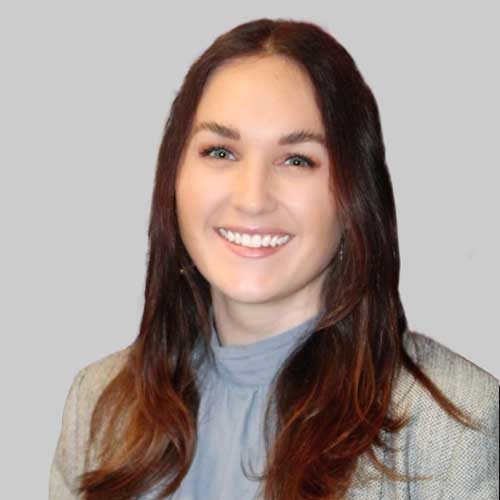
Practiced in artistic expressionism, specifically dance and other performing arts.
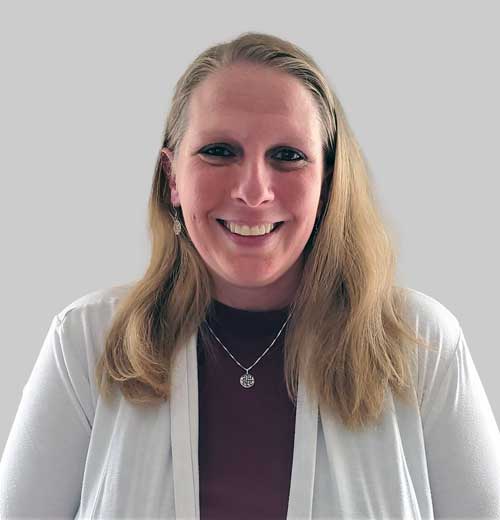
Experience working with adolescents, couples, the elderly population, blended families, and families in the adoption process.
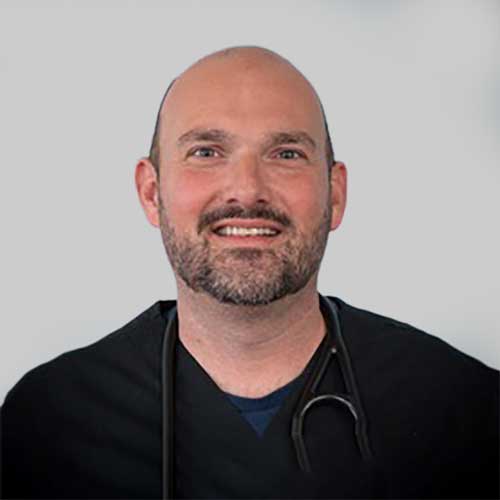


Our weekly Healing Techniques: A Veteran’s Story is a supportive virtual group created specifically for veterans navigating combat trauma, moral injury, and the challenges of post-service life.
In this safe, small-group setting you’ll gain practical skills for emotional regulation, learn about trauma’s impact on the nervous system, and process experiences alongside fellow veterans who truly understand.
You don’t have to carry it alone anymore.

We are reaching out to provide clarity regarding recent news reports involving a similarly named mental health organization.
You may have seen media coverage about **Advanced Counseling and Testing Solutions**, a company located in Wyomissing and Lancaster, whose owners, Dr. and Mrs. Lucas, were recently indicted for insurance fraud.
We want to assure you that **Advanced Counseling and Research Services (ACRS)** has **no affiliation or connection—past or present—with Advanced Counseling and Testing Solutions** or the individuals involved in that matter. Although they opened their practice years after ours, the similarity in name is purely coincidental.
We remain an independent organization with a distinct leadership, mission, and ethical commitment to our clients. Our team continues to uphold the highest standards of professionalism, clinical care, and integrity. If you have any questions or concerns, please do not hesitate to reach out. We thank you for your continued trust in us.
Warm regards,
Cheryl Wilson-Smith
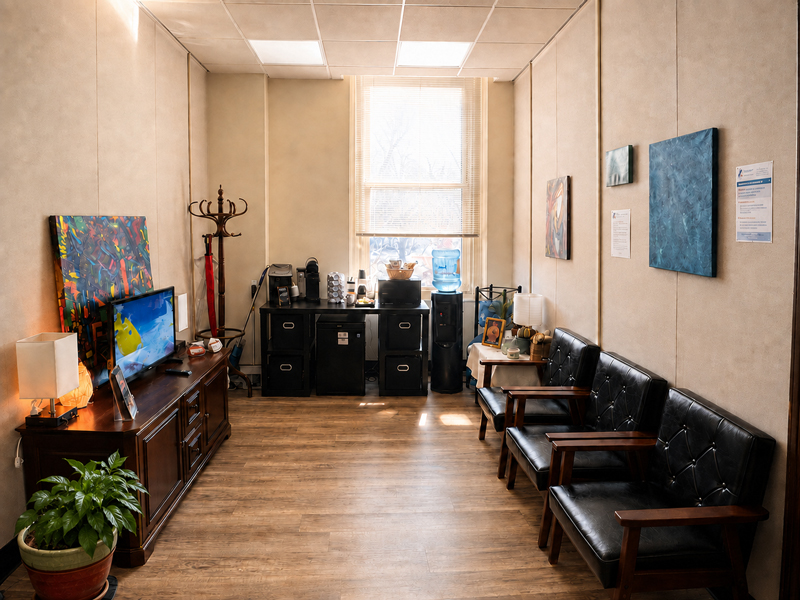
Walking into a new therapist's office for the first time can feel intimidating — so we would like you to see the space before you ever step through the door. Our in-person counseling office is located at Liberty Place, 313 W Liberty St, Suite 224, in downtown Lancaster, PA, with quiet, private treatment rooms designed for calm, comfort, and confidentiality.
Whether you are here for trauma therapy, neurofeedback, or a first consultation, this is the environment where your healing work happens.
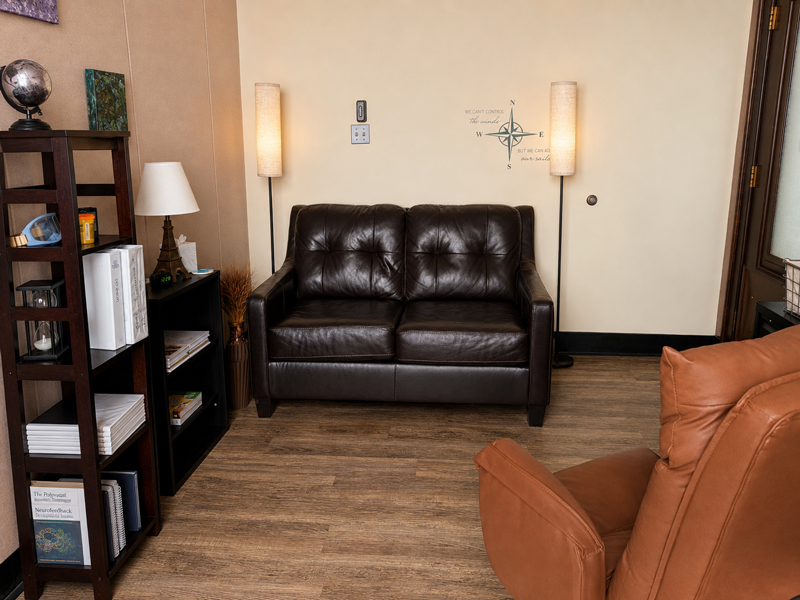
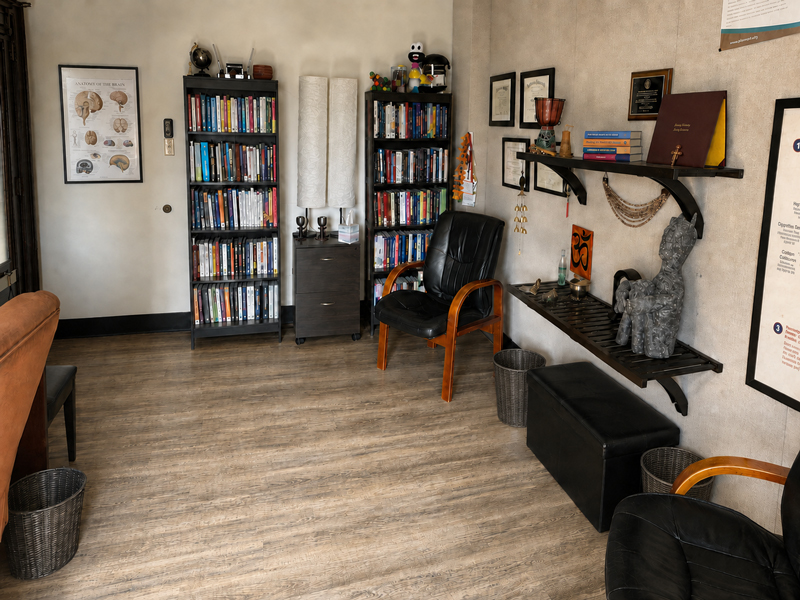
Ready to see it in person? Schedule your free 10-minute consultation and we will help you find the right starting point.