Montour County's communities β from Danville along the Susquehanna to Washingtonville, Riverside, and the farming townships of Pennsylvania's smallest county β deserve specialized trauma care delivered by Pennsylvania's most qualified traumatologists. A world-class medical institution in your county does not mean world-class trauma therapy is available to you. With telehealth, it is.
Montour County is Pennsylvania's smallest county by land area β a compact territory of roughly 130 square miles centered on Danville, the county seat, which sits at a bend in the North Branch of the Susquehanna River approximately midway between Bloomsburg to the east and Lewisburg to the west. Despite its small size, Montour County carries an outsized institutional identity defined almost entirely by one institution: Geisinger Medical Center, one of Pennsylvania's most prominent regional health systems, whose flagship campus in Danville draws patients, staff, and medical professionals from across a wide swath of central and northeastern Pennsylvania. Geisinger's presence gives Danville a profile in healthcare that belies the county's size β and creates a specific and important dynamic when it comes to mental health care that residents of Montour County deserve to understand clearly.
The presence of a major health system does not automatically translate into accessible, specialized, independent trauma care for county residents. Geisinger's mental health services are real but operate within the constraints of a large integrated health system β long wait times for initial appointments, providers who rotate in and out of the system, and an institutional environment that many trauma survivors find difficult to navigate. The smaller, rural communities of Montour County β Washingtonville, Riverside, Danville's surrounding townships β carry the same barriers to care as comparable communities throughout central Pennsylvania: the privacy concerns that come with seeking help in a small county where everyone knows everyone, the cultural expectation of self-reliance, the absence of certified clinical trauma professionals in independent outpatient practice, and an opioid crisis that has left its mark on communities whose mental health infrastructure was never built to absorb it.
At Advanced Counseling and Research Services, our licensed trauma specialists bring evidence-based, certified trauma therapy directly to you through secure telehealth β so you can access the highest-quality specialized care in Pennsylvania from the privacy of your own home, without waiting for a Geisinger appointment or driving across county lines. From Danville to the county's rural ridge communities, we meet you where you are.
You don't have to leave Montour County to find a certified clnical trauma professional. Healing starts here.
ACRS's certified clinical trauma professionals are trained specifically to work with complex, layered trauma β not just acute single-event PTSD. We meet you where you are.
The Geisinger Shadow β Why Montour County Still Needs Independent Trauma Care
Montour County's communities carry real and specific burdens that neither general counseling approaches nor large health system wait lists adequately address. Our certified clinical trauma professionals are trained to work with exactly these realities:
The Geisinger paradox β world-class medicine, underserved trauma care: Montour County residents live alongside one of Pennsylvania's most sophisticated regional health systems, and that proximity creates a subtle but real barrier to seeking care elsewhere. Many residents assume that because Geisinger is there, the mental health care they need must be available through it β and if they cannot access it quickly or comfortably, the problem must be theirs. In reality, Geisinger's mental health services, like those of all large integrated health systems, carry significant wait times, operate within the constraints of insurance networks and billing structures, and are not specifically oriented around the kind of specialized, certified clinical trauma care that ACRS provides. A Geisinger behavioral health referral is not the same as a certified traumatologist with advanced training in EMDR, Brainspotting, Prolonged Exposure, and the full range of evidence-based trauma modalities. Montour County residents deserve to know that specialized independent trauma care exists and is accessible to them through telehealth β they do not have to take what the system offers them or go without.
Healthcare worker and medical professional secondary trauma: Geisinger Medical Center and its affiliated facilities employ thousands of nurses, physicians, technicians, social workers, administrative staff, and support personnel in and around Danville. Healthcare workers are among the professional groups most affected by secondary traumatic stress β the cumulative psychological impact of repeated exposure to patient suffering, medical emergencies, death, and the moral distress of working within complex institutional systems that do not always allow providers to deliver the care they believe their patients deserve. The COVID-19 pandemic intensified and accelerated this dynamic enormously, leaving healthcare workers across the country β and in Danville specifically β with levels of burnout, moral injury, anxiety, and unprocessed trauma that the healthcare system itself is poorly equipped to treat. ACRS's certified clinical trauma professionals are specifically trained to work with secondary traumatic stress and moral injury in healthcare workers, and telehealth provides access that respects the privacy and scheduling realities of medical professionals.
Industrial history along the Susquehanna corridor: Danville and the Montour County river corridor carry a significant industrial history, anchored for much of the twentieth century by the Montour Railroad and iron and steel manufacturing that defined the local economy for generations before declining in the latter half of the century. The communities built around those industries β the working-class neighborhoods of Danville, the small boroughs and townships along the river β experienced the same post-industrial economic transition that has shaped trauma patterns across central Pennsylvania: the loss of stable employment, the erosion of community identity organized around a single industry, the intergenerational grief of families whose economic security was dismantled over decades. That historical economic trauma, layered beneath more recent pressures, rarely receives clinical acknowledgment.
The opioid and fentanyl crisis in a county with a complicated relationship to medication: Montour County, like virtually every county in central Pennsylvania, has been affected by the opioid epidemic β and the proximity of a major healthcare system creates a specific dynamic: communities with high concentrations of healthcare workers and medical patients exist alongside communities that have been deeply affected by opioid prescribing patterns and addiction. Every family touched by overdose, whether in Danville's river neighborhoods or in the county's more rural communities, carries grief, guilt, and unresolved trauma that requires specialized clinical care. Recovery from substance use disorder consistently fails without addressing the underlying trauma that drives it, and ACRS's certified clinical trauma professionals are trained to treat co-occurring trauma and substance use comprehensively.
Privacy in Pennsylvania's smallest county β where everyone knows your business: Montour County's small size creates a privacy dynamic that is among the most acute in Pennsylvania. The county is small enough that encounters at Geisinger, at a local therapist's office, or in any professional setting within Danville are essentially public events β known to neighbors, coworkers, and community members before the appointment is over. For many Montour County residents, this reality is a genuine and serious barrier to seeking mental health care. The stigma of being seen in a therapist's waiting room, the knowledge that a referral from a Geisinger provider will circulate through a system where healthcare workers and patients share overlapping social networks β these are not imagined concerns. They are the operational reality of living in Pennsylvania's smallest county. Telehealth eliminates all of it. Your session with an ACRS certified traumatologist takes place in your home, on your device, in complete privacy, with no waiting room and no community visibility.
Rural township isolation and the limits of Danville's reach: While Danville serves as the county's institutional center, Montour County's rural townships β Anthony, Cooper, Derry, Limestone, Liberty, Mahoning, Valley, West Hemlock β are farming and small-community territories where the distance from services is real and where the cultural expectation of handling difficulties independently is as strong as anywhere in rural Pennsylvania. Residents in these communities face the same barriers to specialized mental health care β limited local availability, the privacy concerns of small-community life, transportation challenges, and the cultural weight of self-reliance β that characterize rural Pennsylvania broadly. Telehealth provides access that the county's institutional concentration in Danville does not.
Veteran and first responder trauma in a county with strong service traditions: Montour County has a meaningful veteran population, and its emergency services β including the Danville Fire Department and local EMS providers β serve a community that includes a major regional hospital, creating an environment where first responders regularly work alongside Geisinger trauma teams at accident scenes, medical emergencies, and critical incidents. The cumulative psychological toll of that work, in a community where the intersection of volunteer emergency service and professional healthcare culture creates particular complications around help-seeking, is significant and rarely treated through channels outside the Geisinger system. Specialized PTSD care for veterans and first responders, independent of a large health system, is accessible through ACRS telehealth.
Domestic violence survivors navigating a small county: For domestic violence survivors in Montour County, the smallness of the county is not an abstraction β it is the daily reality that shapes whether leaving feels possible. Social networks in a county of fewer than 20,000 people are tight and overlapping. Healthcare providers at Geisinger may be neighbors, relatives, or members of the same church. The drive to a shelter or a counselor's office is through a county small enough that the car in the parking lot is recognizable. Telehealth provides a safe, private, home-based path to trauma-informed care that does not require any of the visible steps that in-person help demands β and that can be accessed by a survivor whose ability to leave home safely is limited.
Why Montour County Residents Choose ACRS
Personalized, Trauma-Informed Care β Delivered to Your Home
We work collaboratively with you to develop a Trauma-Informed Care Plan that addresses your specific needs and goals.
Specialized, compassionate PTSD care for Montour County veterans and active military families. You served β you deserve care that understands what you've been through, outside the walls of the system you may already navigate for your physical health.
Healthcare Workers & First Responders
Geisinger Medical Center's nurses, physicians, technicians, and support staff β and Montour County's fire and EMS personnel β work in environments of sustained emotional and physiological intensity. Our trauma specialists understand secondary traumatic stress, moral injury, and the compassion fatigue that accumulates over careers in patient care and emergency service, and provide confidential, effective telehealth care on your schedule, completely independent of the health system you work within.
Survivors of Domestic Violence
Individuals With Substance Use Disorders
Why Telehealth Works β Especially in Montour County
The case for telehealth in Montour County is unique in Pennsylvania. It is not primarily about distance β Danville is not a remote location, and neighboring Columbia County's Bloomsburg is just minutes away to the east on Route 11. The case for telehealth here is primarily about privacy, independence, and specialization.
In Pennsylvania's smallest county, seeking mental health care through local channels β whether through Geisinger's behavioral health system, a local therapist's office, or any provider visible within Danville β means accepting that people you know will see you, your car, your name on an insurance claim, or your referral circulating through a health system whose staff overlaps substantially with your own community. For many Montour County residents, that exposure is not a theoretical concern. It is the reason they have not yet sought the care they need.
You must be physically located in Pennsylvania during your telehealth session. Our Lancaster office is approximately 75β90 miles from Danville via Interstate 80 and U.S. Route 15 β and you are always welcome to visit us in person if you prefer.
Telehealth with ACRS eliminates that barrier entirely. Here's what Montour County clients tell us they value most:
Complete privacy β your session takes place in your home, with no waiting room, no parking lot, and no community visibility of any kind.
Independence from the Geisinger system β you are not a patient of the institution your neighbors work for, your family members have been treated at, or your employer operates. Your care is entirely your own.
Access to certified clinical trauma professionals with advanced specialization β EMDR, Brainspotting, Prolonged Exposure, DBT, and the full range of evidence-based trauma modalities β not general behavioral health intake services.
Sessions that fit around your schedule, including evenings through Thursday β no negotiating with a health system's scheduling department.
For healthcare workers, care that is structurally separate from your professional environment, without the complications of seeking help within a system you are also part of.
It works. Evidence-based telehealth therapy delivers outcomes comparable to in-person care for trauma, anxiety, and PTSD.
ACRS Treatment Modalities for Anxiety, Trauma, and PTSD
Brainspotting operates on the principle that where you look affects how you feel. A therapist helps you identify "brainspots" β eye positions linked to stored emotional experiences or trauma in the brain. By maintaining focus on the brainspot while fostering mindfulness and connection, the brain processes and releases unresolved emotions at a profound neurobiological level.
Brainspotting is effective for PTSD, Anxiety, Depression, chronic pain, and performance issues β and is particularly well-suited to the complex trauma of Montour County's healthcare workers carrying secondary traumatic stress, veterans navigating re-entry, survivors of institutional systems, and individuals whose wounds have never had the clinical space to be seen outside of a Geisinger waiting room or a small county where privacy has always felt impossible.
CBT is a short-term, goal-oriented psychotherapy that helps you identify and challenge unhelpful thought patterns and develop healthier coping mechanisms. It is highly effective for Anxiety, Depression, and PTSD β and its structured, practical approach resonates especially well with the problem-solving orientation of healthcare professionals, first responders, and individuals who value measurable, concrete progress.
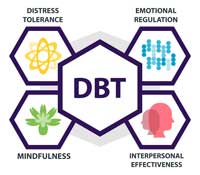
DBT teaches four core skill sets β Mindfulness, Distress Tolerance, Emotion Regulation, and Interpersonal Effectiveness β to help you navigate overwhelming emotions and build healthier relationships. Especially effective for borderline personality disorder, self-harm, and suicidal ideation.
EMDR (Eye Movement Desensitization and Reprocessing) is a gold-standard treatment for trauma and PTSD. It involves recalling disturbing memories while focusing on bilateral stimulation, helping your brain reprocess traumatic memories and reduce their emotional intensity. Effective for PTSD, Anxiety, Phobias, and other trauma-related conditions.
Exposure and Response Prevention (ERP) Therapy
ERP is the gold-standard, evidence-based treatment for OCD and related Anxiety Disorders. It involves gradually exposing you to feared thoughts or situations while helping you resist compulsive responses β breaking the OCD cycle and restoring your sense of control.
PE is a type of CBT used to treat PTSD and Anxiety disorders. It involves gradually confronting feared memories and avoided situations in a safe environment. Through repeated exposure, the anxiety associated with trauma triggers diminishes over time β helping you reclaim your life.
Other Therapy Techniques
Narrative Therapy: Encourages you to tell your story, helping you understand and reclaim your own experiences β including the stories of healthcare workers who gave everything and couldn't save everyone, veterans who came home changed, survivors who stayed in a small county where leaving always felt impossible, and individuals whose wounds have gone unspoken precisely because the community around them was too close, too familiar, too intertwined to confide in.
Somatic Experiencing: Focuses on your body's physical response to trauma and works to release stored tension β particularly valuable for healthcare workers, first responders, and others whose careers have required them to suppress physiological stress responses repeatedly and who carry those accumulated responses as chronic physical symptoms or persistent hypervigilance.
Mindfulness and Relaxation Techniques: Meditation and deep breathing to help manage trauma-related stress and Anxiety β practices that help Montour County residents find stability and groundedness outside the demands of high-intensity professional and personal environments.
Psychoeducation: Understanding trauma and its effects β including secondary traumatic stress, moral injury, institutional trauma, post-industrial grief, and the specific patterns associated with caregiving professions and emergency service β to help you make sense of your own experience in clinical terms that feel accurate, respectful, and genuinely useful.
Our Experienced Anxiety, Trauma, and PTSD Counselors
Our counselors are trained in Trauma-Informed Care and have extensive experience helping individuals heal from traumatic experiences β including the specific and layered trauma of healthcare workers, veterans, rural residents, and people in small communities whose wounds have never had a private place to be acknowledged and treated.
Choose Montour County's Anxiety, PTSD, and Trauma Experts
Specialized Expertise: Certified Traumatologists β not behavioral health intake staff with long Geisinger wait times. We treat trauma, PTSD, and anxiety as our primary focus, with advanced training and credentials that general health system providers rarely match.
Complete Privacy: Secure telehealth means no waiting room in a county where everyone knows everyone, no parking lot visibility, and no claim routed through a health system whose staff overlaps with your community. Your care is entirely your own.
Personalized Approach: We recognize that trauma in Montour County takes many forms β from healthcare worker secondary trauma and moral injury to post-industrial community grief, veteran PTSD, opioid-related family loss, and the specific weight of living in Pennsylvania's smallest county where privacy has always felt like something other people have. Your care plan reflects your unique experience.
Montour County residents live alongside one of Pennsylvania's most prominent health systems β and still deserve trauma care that is independent, specialized, and genuinely private. Those are not things a large institutional system can easily offer. They are things ACRS offers as a matter of course.
Contact us today to set up a free, confidential 10-minute consultation. We'll listen, answer your questions, and help you find the right path forward.
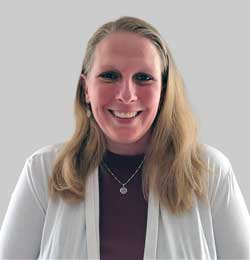
Cheryl has over 20 years of experience providing the highest-quality trauma and PTSD therapy to clients across Pennsylvania β including healthcare workers carrying the invisible weight of secondary traumatic stress, residents of small counties where privacy has always been the first casualty of seeking help, and individuals whose wounds have gone unaddressed precisely because they lived next door to a major health system and assumed that meant their needs were covered.
"Living in the shadow of a world-class hospital doesn't mean the care you need is actually available to you β especially when what you need is a certified traumatologist who will see you privately, on your terms, completely independent of the system your neighbors work in. That's exactly what we offer. Telehealth makes it possible for every Montour County resident to have that."